Register

Search Results for: general aviation inc

Accident Probes

Riding Shotgun

If you’re like me, one of the first goals I assigned myself after earning my private pilot certificate was to add the instrument rating. For other pilots, VFR-only flying may be where adding certificates and ratings stops but the education continues. The daunting task of putting trust fully into your instruments and air traffic controllers is a bridge some pilots won’t cross. But in the natural progression of pilot certificates and ratings, adding the instrument rating is a common goal after getting through the private checkride.

Read More »
Accident Probes

Airworthiness Concerns

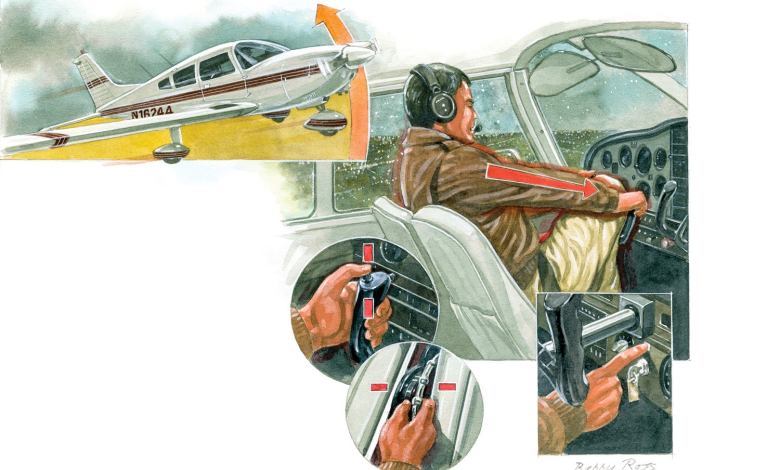
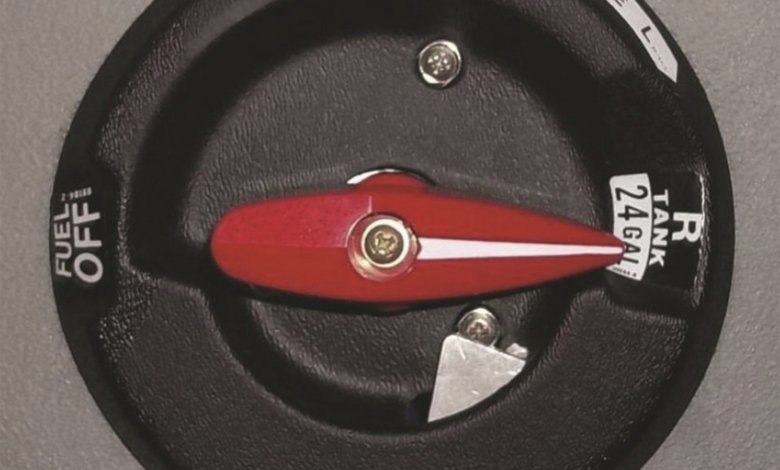
Yet, as with all airplanes as time marches on, wear and tear take a toll on the way various mechanisms work, and better designs often are available to replace them. That’s especially true when it comes to the PA-28 fleet’s sidewall-mounted fuel selector, the current design of which now is in its third generation. The original design-generation 1, or Gen1-did not have much in the way of a detent protecting against inadvertent repositioning, nor does it prevent over-rotation leading to unintended movement to the OFF position. These characteristics aren’t the most desirable in a fuel selector assembly, especially since the component is mounted in the sidewall under the pilot’s left knee, where it can be difficult to view.

Read More »
Pilot Proficiency

Flying Into Sun ‘n Fun

After moving full time to northern Florida, attending Sun ’n Fun in Lakeland was an easy proposition. My Connecticut friends were making the traditional trek from the Northeast, which made the event even more desirable. They are a motley crew with diverse experience levels from aerobatics to corporate jets, with me being the only airline […]

Read More »
News

Kings Inducted into NAHF at Colorado Enshrinement Ceremony

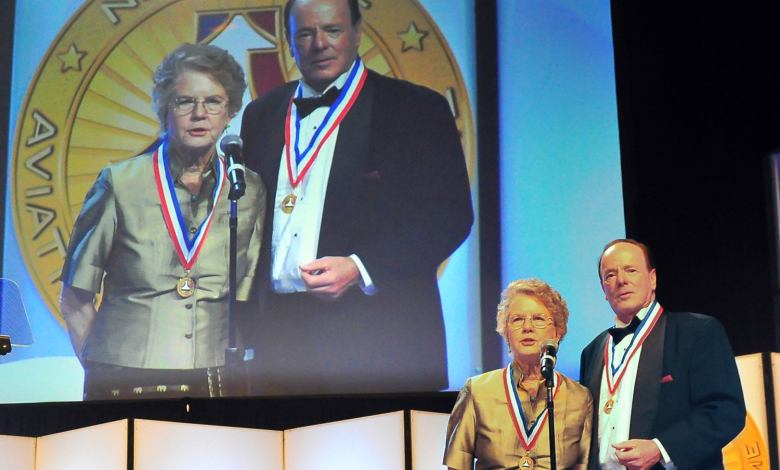
The Boeing Blue Sky Aviation Gallery at Wings Over the Rockies Air & Space Museum at Centennial Airport in Englewood, Colorado was a “breathtaking” venue for the National Aviation Hall of Fame (NAHF) to present their Enshrinement of the “Class of 2019” Inductees. Among the inductees at the 57th annual dinner and induction ceremony were […]

Read More »
Briefing

Briefing: October 2019

The Air Force and tech company DZYNE have created an ungainly-looking device that can take off, fly and land an airplane like a human pilot and without tearing the aircraft apart. The Air Force Research Lab (AFRL) Center for Rapid Innovation flew a Cessna 206 with the ROBOpilot at the controls for two hours on Aug. 9 and said the idea is to make the machine interchangeable with human pilots. Imagine being able to rapidly and affordably convert a general aviation aircraft, like a Cessna or Piper, into an unmanned aerial vehicle, having it fly a mission autonomously, and then returning it back to its original manned configuration, said Dr. Alok Das, senior scientist with the Center for Rapid Innovation, in a statement. A video with the news release shows the robotic pilot making corrections to keep the centerline during takeoff and a bounced, but ultimately safe landing.

Read More »
Readback

Readback: October 2019

First, we checked with Garmin and their equipment actually decodes the Morse code identifier rather than rely on GPS and the tuned frequency to look it up in the boxs database. So far, so good. We next checked with Mark Kolber, our regs guru, and he pointed us to AIM 1-1-3.c. That paragraph talks about navaid identification in general, pointing out that merely hearing Morse code isnt enough because it could be transmitting TEST. Likewise, live voice transmissions from FSS or ATC dont indicate a valid navigation signal. The prize, though, is in the paragraphs last sentence, If your equipment automatically decodes the identifier, it is not necessary to listen to the audio identification. So, Rick, youre right. If the box decodes and displays the Morse code identifier, you can rely on that.

Read More »
Technique

Spotting Traffic

TCAS II is the most comprehensive form of TCAS, but its range depends on what it is asked to do. Overall pulse detection range is 30 NM for Mode S transponders and 14 NM for Mode A/C units. Surveillance must be reliable within 14 NM, but TCAS II will only assess threats within 12 NM as possible RAs. TCAS II guarantees system reliability within at least 4.5 NM. Two TCAS II systems can coordinate RAs to maximize vertical separation, typically 300-700 feet. There is even a reverse RA if one aircraft fails to respond correctly in the latest version 7.1 software.

Read More »
I.L.A.F.F.T

Hazardous Attitude on Checkouts

Sometimes we face situations as pilots that we feel lucky to walk away from. In my case, I learned a valuable lesson in dealing with hazardous attitudes and forgoing a checkout on a similar airplane to the one I had been flying. Little did I know that this situation would become the catalyst for my […]

Read More »
Briefing

Briefing: September 2019

uAvionix is working on a wingtip ADS-B Out device that will work with satellite-based ADS-B systems that will be used in several countries and the U.S. system, which relies on ground stations. The skyBeacon X will pack upward and downward pointing antennas into a compact integrated device that will also replace a wingtip position light. The development project was spurred by contact from Canadian pilots who could be required to install ADS-B Out as early as 2023. Nav Canada, the not-for-profit corporation that supplies air traffic services in Canada, will use the Aireon satellite system for ADS-B surveillance and that requires antennas pointed skyward. Most ADS-B systems now available for GA aircraft are designed for the U.S. terrestrial system and the few that do offer the so-called antenna diversity required in Canada are significantly more expensive. uAvionix hopes to have the system ready for sale in 2021.

Read More »
Avionics and Gear

AIM Is Non-Regulatory

The Parts, Subparts and Sections of Title 14 of the Code of Federal Regulations, what we commonly call the Federal Aviation Regulations or FARs, are the only truly regulatory documents we have. These are the formal regulations adopted by the FAA. They are authorized by an Act of Congress. Sometimes the authorization is general. When created by the Federal Aviation Act of 1958, the FAA was given broad authority to issue regulations to carry out its functions. Sometimes it is specific like the Congressional mandates to increase ATP requirements following the 2009 Colgan crash or to create BasicMed.

Read More »
Pilot in aircraft
Sign-up for newsletters & special offers!

Get the latest stories & special offers delivered directly to your inbox.

SUBSCRIBE