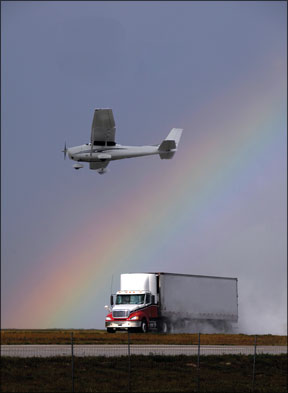
Scud running is the technique of flying very low to stay out of crummy weather. It was taught during flight training and regularly practiced for the first several decades of flight when, initially, instrument flight was not an option and, later, only a small proportion of airplanes had instruments. It was most successful in relatively flat territory and almost suicidal in any sort of mountainous terrain. The first professional pilots in the U.S. were airmail pilots. To avoid weather, they often flew but a few feet above the planet. Even in daytime, the accident rate was not pretty, especially in the Alleghenies and Rockies. Trying to fly without the benefit of good instrumentation (and training in how to use it) or radio navaids meant that foul weather flying was lethal. Nevertheless, particularly in the mid-section of the country, scud running could be practiced so long as the visibility wasnt too bad (fog and snow were killers) because a pilot could motor along 30 feet above a road knowing he was above the power lines and that broadcast antennas were located in the towns. All radio was AM, not limited to line of sight. For economy, the towers were put up on or beside the broadcast stations, not out in the country. In the late 20s, Henry Fords airline running between his auto manufacturing plants boasted on the order of a 95 percent on-schedule record, simply because the pilots could fly incredibly low and not have to worry about hitting anything.