Register

Search Results for: Lear 45

Accident Probes

Unsecured Cargo

One of the things primary students learn early during their ground-school training-perhaps before they ever get into an airplane-is that the items loaded into it can weigh no more than a certain amount, and have to go in certain places. Overloading the aircraft, and/or placing heavy items far from its nominal center of gravity, is bad, theyre told. Somewhere along the way, it might also be explained that those items need to be secured. But the common way we load airplanes-especially those in which the passenger cabin and the cockpit are the same space-is to throw some soft-sided luggage in the baggage compartment, maybe throw some heavy things in the back seats or the floorboard behind the front seats, and light the fires. Little thought usually is given to whether those items should be secured, or how. Thats in sharp contrast to how we treat the passengers.
Read More »
Accident Probes

NTSB Reports: July 2016

The airplane was destroyed at 1456 Eastern time shortly after takeoff. The flight instructor, the private pilot receiving instruction and the pilot-rated passenger were seriously injured. Visual conditions were reported. An air traffic controller who witnessed the accident reported that, when the airplane was at about 400-500 feet agl, it made a sharp right turn followed by a sharp left turn. It then entered a steep nose-down descent before disappearing behind a tree line. An explosion followed. The controller recalled the airplanes landing gear was retracted.

Read More »
Weather

Using Spherics

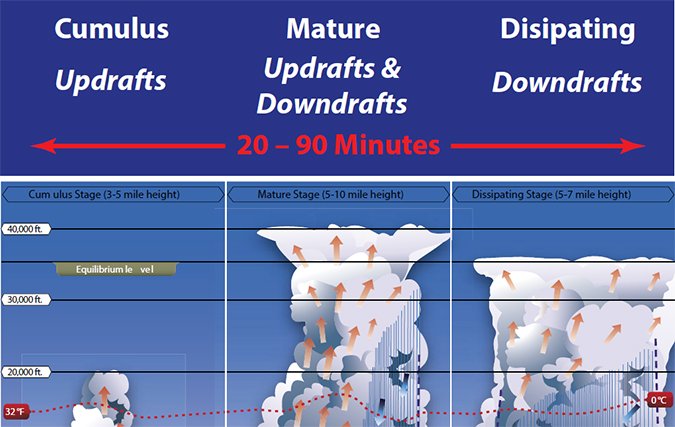
Both spherics and NEXRAD have blind spots and neither is infallible. Spherics devices can have false negatives because they dont see those static discharges until they happen. While most cells with dangerous opposing currents also produce significant static, nature is inherently unpredictable and the static discharges can lag. Of course, the delays in getting NEXRAD images to the cockpit can lead to significant errors. Plus, radar only seeing precipitation, not turbulence, can cause difficulty interpreting the image.

Read More »
Features

Turn Fundamentals

Arguably the most challenging of all the Wright Brothers multiple successes involved mastering roll control. Pitch and yaw came relatively easy, but absent the ability to command a roll for a coordinated turn, aviation could go nowhere-at least nowhere near the intended heading. Their solution-wing warping-allowed for affirmative roll control and completed their mastery over all three axes.

Read More »
Accident Probes

NTSB Reports

During his second solo flight, the student pilot encountered a gust of wind during the landing flare. The airplane ballooned and then bounced twice on its nosewheel. After the second bounce, the student pilot applied full power and aborted the landing. The subsequent landing was uneventful and he taxied to the ramp. Post-accident examination revealed substantial damage to the firewall.

Read More »
Training & Sims

There’s An Advisory Circular for That

Advisory Circulars are perhaps the least-read material published by the FAA, quite possibly due to their bureaucratic-sounding name. But if youre willing to go on a little scavenger hunt, youll likely find in-depth information on some of your favorite topics. There are hundreds of ACs, from how to build an airport to the inner workings of airworthiness standards. Of course, most of these have limited appeal, but if you just want some good nuggets about operating in the system, there are plenty of pilot-friendly items, too.

Read More »
Technique

Wake Turbulence: Silent But Deadly

A low morning fog crept onto the airport as I cleared a CRJ-900 regional jet for takeoff. The RJ lifted, passing just above the vaporous wall, and I switched him to Departure. I waited, watching for something I dealt with every day as an air traffic controller, but had never witnessed.

Read More »
Accident Probes

NTSB Reports: May 2016

At 2305 Eastern time, the airplane was substantially damaged during a ditching in the Setauket Harbor. The flight instructor, student and one passenger received minor injuries. One passenger is missing and presumed to be fatally injured at this writing. Night visual conditions prevailed. While cruising at around 2000 feet msl, the engine sputtered. Turning on the electric fuel pump and switching the fuel selector to the left fuel tank stopped the sputtering. The flight chose to divert to an airport 10 nm south.

Read More »
Pilot Proficiency

Technicalities: EAA Contest Aims to Stop Stalls

Cash prizes have been big motivators in aviation. The first flights across the Atlantic, the first man-powered flight, the first flight into space by a nongovernmental program — to name a few — were brought about, or at the very least hurried along, by the lure of a big payday. Not to say that honor […]

Read More »
Airmanship

Pattern Ops

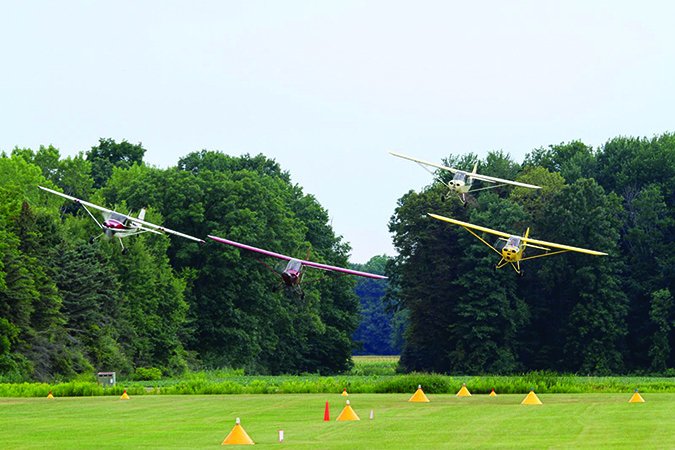
Spend enough time at a non-towered airport, as I have, and youll eventually see every traffic-pattern variation you thought possible. Traffic patterns at towered facilities, of course, are subject to ATC management. The controllers job is to sequence and separate traffic on the runway(s). In the absence of local controllers, non-towered airports use the traffic-pattern procedures first drummed into primary students during landing practice.

Read More »
Pilot in aircraft
Sign-up for newsletters & special offers!

Get the latest stories & special offers delivered directly to your inbox.

SUBSCRIBE