Register

Search Results for: Lear 45

Accident Probes

NTSB Reports

A witness observed the airplane make a normal landing aligned with the runway centerline. His attention was momentarily diverted and when he looked back, the airplane was established in a gradual left turn, maneuvering at a slow speed in a three-point attitude. The airplane then collided with the airport perimeter fence and came to rest about 600 feet past the touchdown point. The pilot stated that, despite application of brakes and right rudder, the airplane veered off the runway. Damage included the right wing strut.

Read More »
Accident Probes

Trajectories

As someone whos researched my share of aviation accident reports over the years, its frustrating to dissect those reports and pick out the various missteps made and the points at which a change in direction, a precautionary landing or other mitigation would have altered the outcome. Loyal readers of this journal understand that aviation accidents arent preordained and, instead, often result from a complex series of events occurring over time. Its often called the accident chain, a term recognizing how these events are linked. Often, individual events occurring in an accident chain, by themselves, would not result in a new accident report. The accident chain concept has great value, but Ive come to think of it as a trajectory instead of a chain.

Read More »
Accident Probes

Undoing An Upset

Lets start by dispensing with the obvious: Loss of control in flight is a lousy explanation, and not much better as a description. Eventually well come up with something better, which hopefully will reflect the myriad ways pilots can let aircraft get away from them. Spatial disorientation in IMC is as different from a moose stall as wake turbulence is from sloppily flown S-turns on final. At best, the ICAOs accident taxonomy-adopted by the FAA and NTSB, presumably in the name of harmonization-provides snapshots of how accident sequences end with negligible insight into what triggered them or how they developed. As a safety strategy, Dont lose control is about as useful as Dont let the engine quit.

Read More »
Avionics and Gear

Procedure Turn Basics

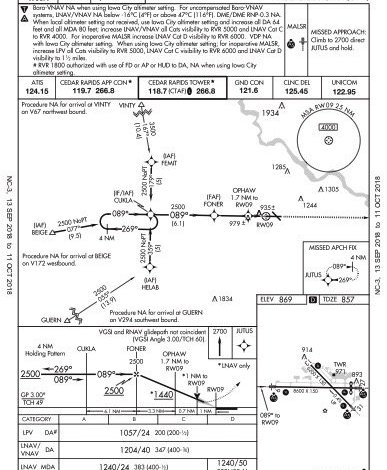
Teardrops are pretty rare (See Driving All Night, October 2017.) and permit aircraft to reverse course and lose a significant amount of altitude within a defined area (these are often found at military or joint-use airports). These are entered at the initial fix, proceeding outbound on the defined radial, and initiating a turn inbound at the defined point or distance. Think of it as a conventional procedure turn, but usually much larger and with explicitly defined segments.

Read More »
Avionics and Gear

VFR Flight Following

But, if you are going VFR, deciding if you want flight following should definitely be on your list. If youre going to pass through Class Bravo airspace you might as well; its virtually a requirement. Otherwise, if the weather is clear and a million, youre not going through any airspace requiring you to talk to ATC, and youve decided to go VFR, should you consider flight following? Long story short, and after all factors are considered, the answer is Yes.

Read More »
Avionics and Gear

Think Fast

Are you up for this after a few months of visual approaches? Youre current, comfortable with the aircraft, and familiar with the airport, so you dont see any problems. Besides, its time to launch and that low stuff is sure to start burning off by the time you get there as P6SM and SCT015 are forecast an hour after your arrival. In fact, you dont even need to look for an alternate now to meet 14 CFR 91.169 (b)(2) as the ceiling and visibility are expected to be better than 2000 feet and 3 SM at that time.

Read More »
Avionics and Gear

Winter Forecasts

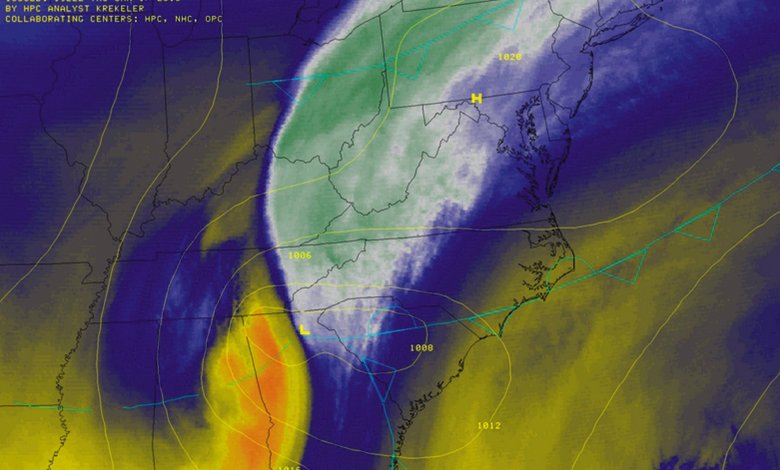
Lets start with the basics. In the cool season the North Pole is pointed away from the sun. As the polar regions lose solar heating and the days shorten, the atmosphere cools significantly, and we see a huge semi-permanent polar air mass covering much of Canada and northern Russia. Parts of it break off regularly as frontal systems and polar highs. The large expansion of the cold air mass boots the jet stream out of Canada, pushing it down into the United States.

Read More »
Avionics and Gear

Readback: November 2018

Mr. Bencini-Tibos excellent article, Regulation Fine Points in July might possibly leave the reader thinking that the safety pilot could log time when the flying pilot was not under the hood. FAA Office of Chief Counsel makes it clear in a legal interpretation on this matter dated June 22, 2009 to Jeff Gebhart, that the safety pilot can log only that time that the flying pilot is under the hood. Since the flight is made in an aircraft that does not require a SIC the safety pilot was not a required crew-member during the time the other pilot did not have the hood on, so the safety pilot does not get to log anything during that portion of the flight.

Read More »
Pilot Proficiency

Flying with Datalink Weather

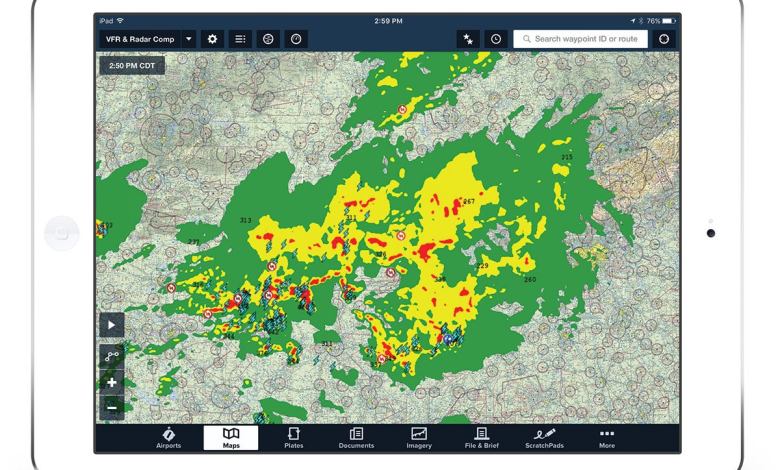
Here’s an emerging safety story that hasn’t received much attention: Fatal accidents caused by weather are declining. Nobody should be popping Champagne bottles just yet, but there is enough data to suggest a steady downward trend over the past few years. What’s the cause of this encouraging course reversal? There are probably many, but the […]

Read More »
Accident Probes

When To Go Visual

I had flown a full day with the new owner of a turbocharged Beech Bonanza, a recently retired airline pilot who also had been a U.S. Air Force tanker pilot. He was IFR proficient from the airline and wanted to focus on visual and hand-flying skills while orienting to his airplanes autopilot and avionics. He did a great job and got markedly more comfortable with the airplane as the day progressed. At the end of the day, I recommended he get more experience with the airplane before going IFR in it. We shook hands and I went to my office to complete my paperwork.

Read More »
Pilot in aircraft
Sign-up for newsletters & special offers!

Get the latest stories & special offers delivered directly to your inbox.

SUBSCRIBE