











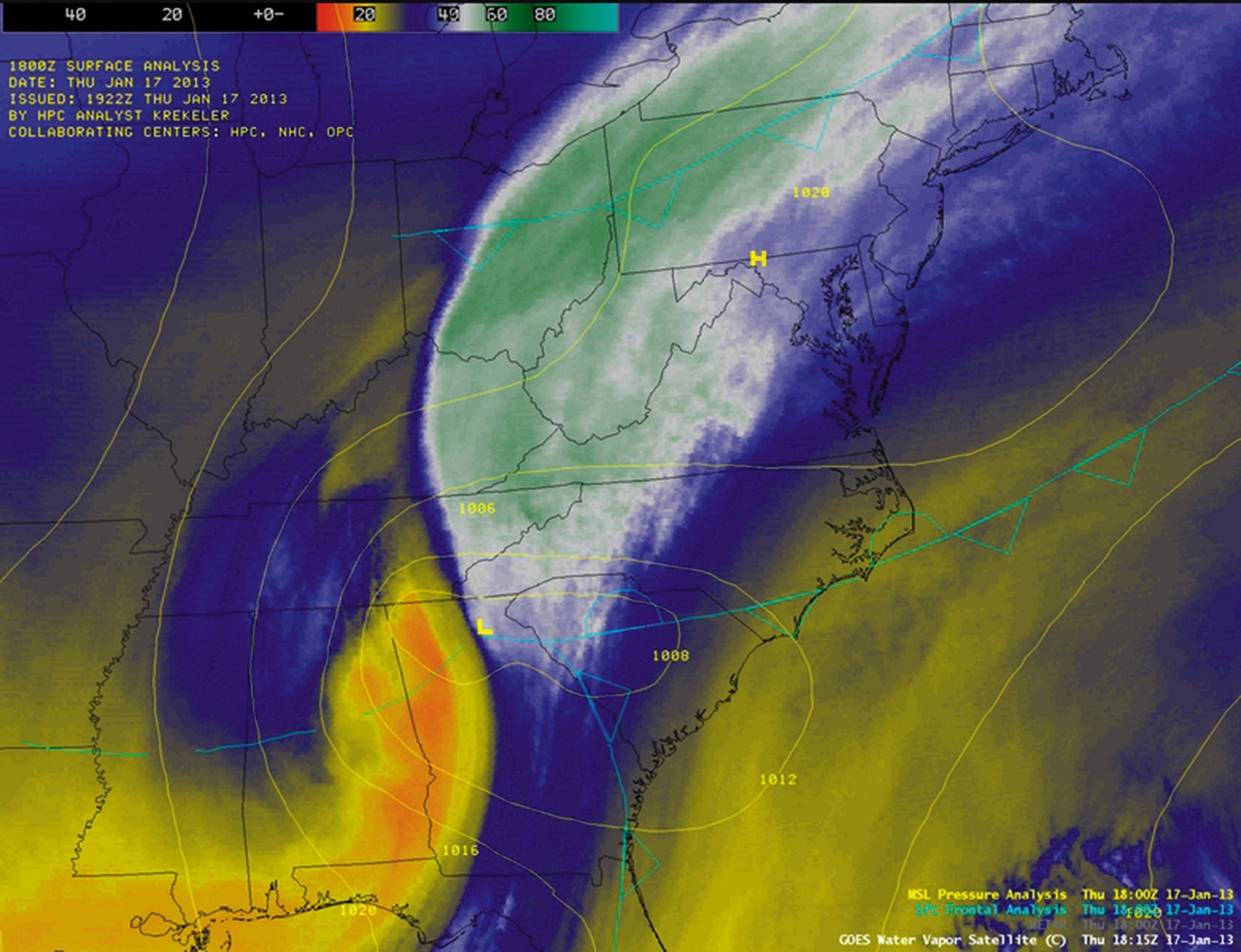


In WX SMARTS, rather than teaching weather safety, we put you at the forecast counter and immerse you in the preparation of TAFs, area forecasts, and advisories. In addition to knowledge gained, this allows you to select the tricks and techniques applying most to your flying. With November approaching, it’s a good time to review what changes we can expect.
Cooling Things Down
Let’s start with the basics. In the cool season the North Pole is pointed away from the sun. As the polar regions lose solar heating and the days shorten, the atmosphere cools significantly, and we see a huge semi-permanent polar air mass covering much of Canada and northern Russia. Parts of it break off regularly as frontal systems and polar highs. The large expansion of the cold air mass boots the jet stream out of Canada, pushing it down into the United States.

