Register

Search Results for: Citation X

Training and Proficiency

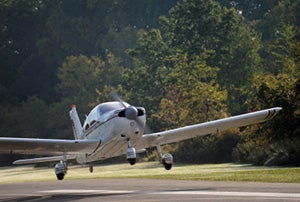
Flight School: The Touch-and-Go

Are touch-and-goes a good idea during flight training? William F. Ball_ has been an active flight instructor for 30 years and a designated pilot examiner (DPE) for 21 years. He conducts testing and certification activities for all FAA certificates and ratings. He has given more than 8,000 hours of flight instruction and is currently an […]

Read More »
Pilot Proficiency

Unusual Attitudes: Tales of a Tower

(August 2011) When the Brouhaha erupted over air traffic controllers dozing off on duty I couldn’t help wondering if it’s really important to have humans manning control towers at all hours of the day and night, even at places like Reno and Dulles. Do people have any idea how many airports routinely and safely accommodate […]

Read More »
Aircraft

Used Aircraft: The Art of Refurbishing

(August 2011) It’s certainly not hard to understand the allure of a new airplane. There’s nothing quite like the smile on the face of a buyer who has just been handed the keys to a brand-new bird. There’s an undeniable pride of ownership there, along with other advantages. New airplanes have the latest features, they’re […]

Read More »
Training and Proficiency

SimCom at 21

I recently got the chance to spend a couple of weeks doing some training at SimCom‘s Lee Vista training center (one of two such SimCom facilities in Orlando alone), and I had a great time. The great time was no coincidence: it’s part of SimCom’s business plan. No lie. SimCom got started as a pure […]

Read More »
Features

Maintaining Safety Margins

Students of introductory biology learn a basic lesson about sensory perception in a quirky behavior found in certain amphibians that has become common lore. By now we all know that if a frog is placed in hot water, he will immediately jump out to safety. However, if the frog is placed in cool water that is gently heated to boiling, the frog does not perceive the gradual rise in temperature or the impending danger. Likewise, when a pilot is presented with a problem or emergency that is an obvious attention-getter, he or she will react quickly to solve the immediate threat-a frog leaping from scalding water.

Read More »
Pilot Proficiency

Simulating Reality

My goodness, it’s black out there. “Better tighten your turn,” my copilot says. “Those mountains are close.” Yeah, but how close? I wonder. Checking the Cessna Citation Mustang’s terrain awareness and warning system provides cold comfort: The entire display is awash in red. The synthetic-vision system software update for this airplane, unfortunately, hasn’t yet been […]

Read More »
Pilot Proficiency

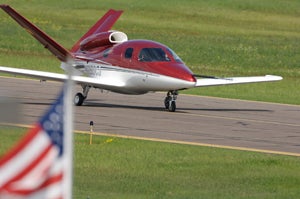
New Life for the Vision Jet

Like it or not, Cirrus is now officially a Chinese company. I know that’s a bitter pill to swallow for many who viewed the Duluth, Minnesota-based company as a unique triumph of American entrepreneurial and aeronautical spirit. But let’s face it, Cirrus has been owned, in essence, by Middle Eastern investors for the last decade. […]

Read More »
Learning Experiences

DenAlt Denial

Today, Im flying as PIC aboard a Citation II air ambulance, with another captain as my co-pilot. We carry a nurse, medic and enough equipment to handle any critical-care situation. Every flight requires weight and balance calculations based on actual weights, checking weather to not only confirm its flyable, but is comfortable for a patient on a life port and allows the medical crew to work on the patient in flight. Temperature considerations for power settings and takeoff/landing distances are critical, and a constant eye on changing weather conditions goes without saying. Although we train in our primary lessons on weight and balance, and how temperature and altitude play on the performance of our airplanes, we tend to rush through those calculations when we fly the same plane all the time.


Read More »
Accident Probes

Unapproved Mod

Almost any airplane more than a handful of years out of the factory has been modified to some extent. These pages have, on several occasions, discussed the difference between minor modifications requiring only a logbook entry, major mods accomplished as a field approval with an FAA Form 337 and more complicated additions necessitating a supplemental type certificate (STC). For my own airplane, which has been in service coming up on 50 years, I keep a three-ring binder documenting and preserving the Forms 337 and STC paperwork. The binder isnt full, but it wont take much before Ill need to find another place to keep all those important forms.

Read More »
Pilot in aircraft
Sign-up for newsletters & special offers!

Get the latest stories & special offers delivered directly to your inbox.

SUBSCRIBE