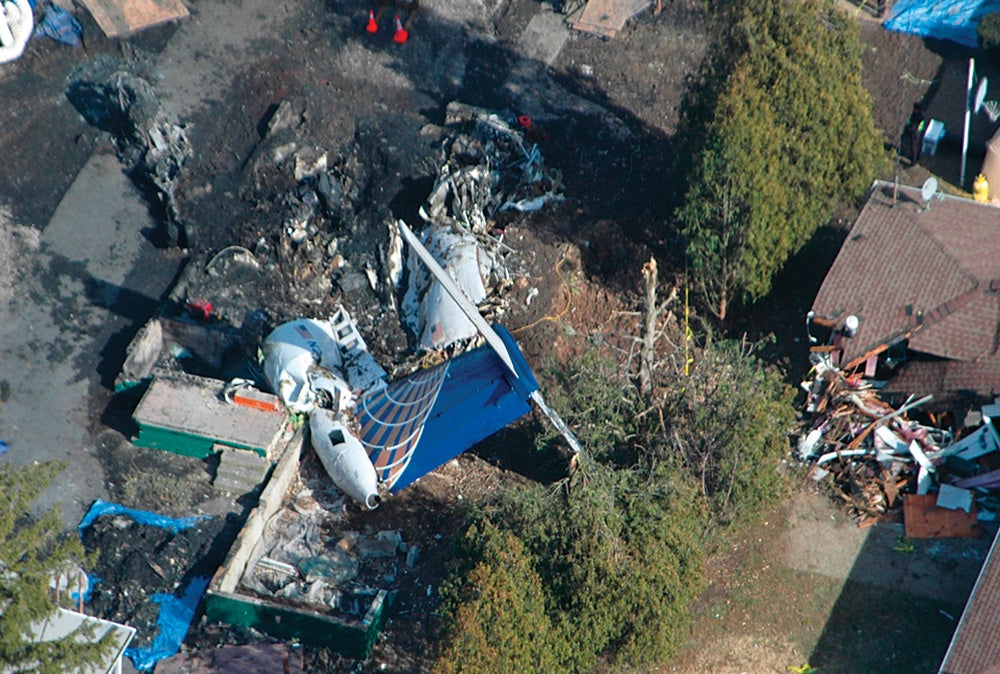


The crash of a Colgan Air regional twin turboprop at Buffalo, New York, in February 2009, in which 50 people died, received an unusual amount of media scrutiny, in part because of what the National Transportation Safety Board’s report revealed about the captain’s history of failed flight checks and about the seemingly bizarre lifestyle of the first officer, who lived in Seattle, commuted across the country for work, slept when and where she could and was paid a bit more than $15,000 a year for her pains. But news reports and even an hourlong Frontline documentary aired by PBS on Feb. 9 did nothing to explain how a professional pilot could have made the amateurish mistake that caused the crash.
By now we have grown accustomed to the banality of the causes of most accidents. Rather than highly technical failures of incomprehensible electronic or aerodynamic systems, many of them involve extremely basic errors of judgment or airmanship on the part of flight crews. The crashes of a Singapore Airlines 747 in 2000 and of a regional jet at Lexington, Kentucky, in 2006 were due to pilots trying to take off from the wrong runway, a blunder so fundamental and seemingly obvious that no technical means are in place to guard against it. The immediate cause of the Colgan Air 3407 crash was an error equally elementary. When the stick shaker warned of an impending stall, the captain did exactly the wrong thing: He pulled the control yoke back and kept holding it back all the way to the ground.