













Aviation, perhaps more than most other human endeavors, draws Type-A personalities. Add that most of those folks actively involved in commission of aviation acts have ultimate responsibility over their particular domain, and, well, sometimes we see things differently, to put it gently. One big aspect of professionalism is how we handle those different views.
It’s Natural
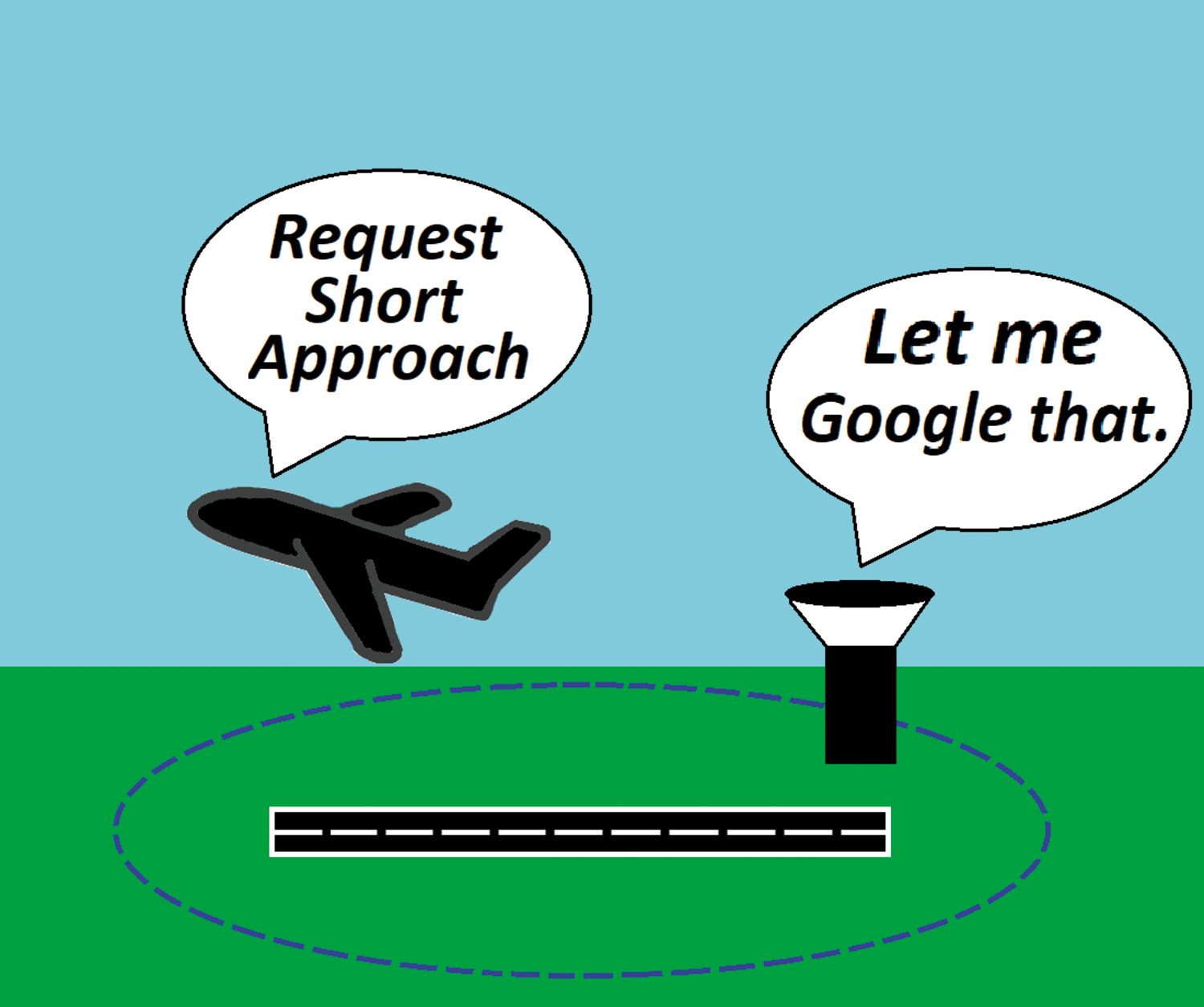
We humans naturally have disagreements with those around us, especially in aviation. Should I run rich-of-peak or lean-of-peak? Where do I turn my base? How does that match the recommended procedure? Tower said they Googled a short approach. Are they right? (More on this later.) At what point do you stop on frequency?

One big aspect of professionalism is how we handle those different views.
Don’t forget, only about 15 percent of controllers are pilots. While a lot of the rules for both pilots and controllers were written on the same principles, it’s not the job of a PIC to do Tower’s job, and a controller certainly can’t fly your airplane. Because of these natural differences and some people’s ability (or lack thereof) to cope with our counterparts’ requirements, professionalism on frequency occasionally, regrettably suffers.
Not sure that’s true? Just go to YouTube and type “air traffic controller and pilot argue” and you will find plenty of examples of what I’m talking about. I also write this article as humbly as possible as back in the day, I may have been one of the controllers who led pilots to test their own professionalism.
“It’s not what you say; it’s how you say it.” There’s a big difference between me telling pilots my requirement for runway separation politely, versus sternly telling them to comply with my requirement. I’m a lot better now than when I first started, and I continue trying to improve. However, I work with plenty of controllers around me who might benefit from exercising a bit more patience with pilots.
Some of you reading this might stop right here and think, “Oh yeah? Well, that controller (or pilot) was being a total jerk and deserved to be yelled at. What they were doing was impeding safety and they were clueless and need to wake up.” I have encountered this on the pilot side and seen it plenty of times on the ATC side. It’s a mix; in some of those scenarios, pilots were well within their right to call out ATC for poor service or unprofessional behavior.
Other times, well, perhaps the pilot was just angry. Projection toward the controller, then a quick shift to rationalization when corrected, happens all the time. And yes it goes both ways. It’s literally an endless “if, then” spiral of scenarios. Let’s go over one we’ve seen recently and weigh what we can.
Tower “Googled” It
Many of you may have heard about a conversation that happened on a Tower frequency not too long ago. (It made national news.) Someone was attempting to do a short approach for “Power off 180” training for commercial. They asked and Tower approved, then they flew what they needed and got yelled at because they did not turn their base “short enough.” The Tower controller said the pilot did not complete the short approach according to a Google search she did.
After hearing it for the first time, my mind was blown. How on God’s green earth does Google preside over the regulations, the AIM, the 7110.65, and any advisory circulars that apply? The definition of a short approach is most accurately covered in AC90-66B (Section 9.9.1). It clearly states; “A short approach is executed when the pilot makes an abbreviated downwind, base, and final legs turning inside of the standard 45-degree base turn. This can be requested at a towered airport for aircraft spacing, but is more commonly used at a non-towered airport or a part-time-towered airport when the control tower is not operating, when landing with a simulated engine out or completing a power-off 180-degree accuracy approach commercial-rating maneuver.” There ya go, verbatim. The keywords I take away from that are “inside of the standard 45-degree base turn.”
I believe the controller was being defensive because she wasn’t fully prepared for what she’d approved. The pilot on the other hand kindly explains what they are doing and what for, and even says he will look it up to make sure (great move by the pilot). She then continues to berate him saying he should ask for exactly what he wants, even though he did.
So, after this brief summary and maybe listening to the exchange, who was right and who was wrong? Okay, in this case it was clear who was right and wrong, however to exclude bias for a moment, we should ask ourselves if the controller had any legal or moral grounds for the information exchange as well as if anything was gained from what she said.
Let’s break it down. In this case, there was no other traffic that affected the decision, so that’s safety concern number one. Next, with this controller’s years of experience, we would think she had encountered a short approach before and probably even approved many of them in the past.
The pilot asked; she approved; the pilot then executed what he’d requested, and she wasn’t happy. She said the pilot should’ve turned the base abeam the numbers, then (in this case) a conversation ensued instead of an argument. The CFI is the one who nicely tried to explain, then she asked him to call her. I read unconfirmed rumors that it was a commercial checkride. I was unable to listen to the phone conversation, but I would hope the PIC found the AC before calling, and then cited it. Either way, I think we can conclude that in this case, “Googling” a short approach and the resultant dialog on frequency had no place.
Professionalism… Or Not
From a safety-of-flight perspective, arguments and disagreements on frequency should be minimized to zero. If ATC tells you to do something that you can’t do, simply say, “Unable.” Of course, it’s best to tell them what you can do to help make it work. Also, don’t forget your mandatory reporting points in and out of a radar environment.
At the end of the day, ATC isn’t flying your plane. You are. From a who is right and who is wrong perspective, I’d recommend only going so far before losing the edge. Am I saying never argue with ATC? Yes and no. Yes, so when the tape hits YouTube, you don’t look like you busted the Bravo going to Vegas. No, because if ATC is wrong (we’re humans too), the PIC is best advised to say only what is needed to get the point across. I personally learned this lesson the hard way… years ago.
In the previous example, we discussed a controller who had no idea what she was talking about, yet was yelling at the pilots to cover her lack of knowledge. How do you handle a controller who talks to you like you’re a baby? On my ATC side, if I have the time, I will get them on the ground (See the sidebar.) and talk about it later, if I even need to. Honestly, most often, it’s not worth my effort.
If I don’t have the time and if I get a pilot who is unprofessional to the point of compromising safety, I will tell them to exit the airspace and stay off frequency. Yes, I’ve had to do that twice in my career. From the pilot’s side, most professional pilots will do what is required to properly complete the flight. An ego battle on frequency simply is not productive and could lead to further consequences.
For the newer pilots reading this, if you cannot say what you need to say using standard phraseology, just revert to plain and simple English. Believe it or not, since some pilots are scared of ATC, they use technical words that don’t really make sense and are not phraseology, clogging up the frequency even more. Just say what you need and keep it simple. ATC will work with you to make it happen. Controllers will do the same thing if an instruction is not understood. I’ve literally had to talk a student pilot down due to the pilot’s “brain fart” and they just went blank. Effective communication is the goal; prescribed phraseology is but one way to meet that goal.
The Last Word
If you encounter a lack of professionalism—yours or a controller’s—take a second to think about how the perceptions seem and weigh that against what you want to say. In some cases, if you keep it cool, it’s a valid point, and applies to safety of flight. If it’s just a disagreement on something irrelevant, maybe just get a number and talk about it later over the phone.
Like all humans, Elim Hawkins makes mistakes. However, he always tries to maintain proper etiquette on frequency and encourages the same of others.


