













Register

Predicting Future IFR

Sometimes the standard forecasts just arent enough. The area forecast (FA) and terminal forecasts (TAFs) are fine for anticipating the weather for the next day or so, but they simply dont extend out far enough in the future to tell you if IFR conditions might mess with your plans three days down the road.


Gemini Sparkle

Key Takeaways:

  • Standard aviation forecasts (TAFs, FAs, short-range prog charts) are inadequate for predicting IFR conditions several days in advance due to limited range and lack of specific ceiling/visibility information.
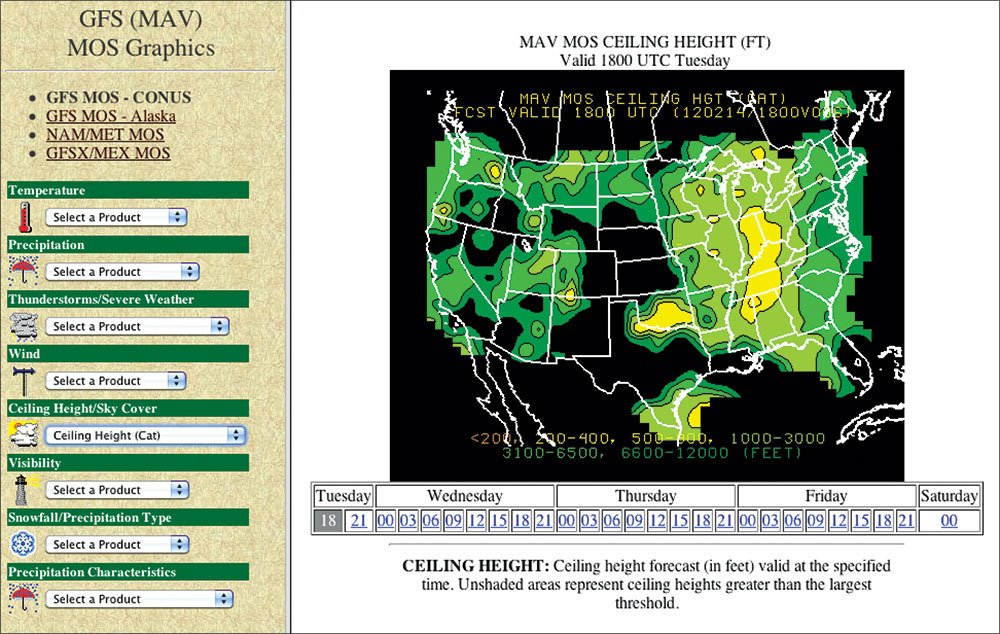
  • For long-range IFR planning (up to three days out), pilots should use Model Output Statistics (MOS), particularly GFS MOS (MAV) graphical charts, which provide detailed categorical forecasts for ceiling height and visibility.
  • Combine MOS data with longer-range prog charts and Area Forecast Discussions (AFDs) to gain a comprehensive understanding of widespread low IFR events, such as cold air damming, and make informed flight decisions.
  • MOS charts also uniquely identify Very Low IFR (VLIFR) conditions (ceilings <200 ft and/or visibility <1/2 sm), offering critical detail not typically found in other online aviation weather sources.
See a mistake? Contact us.

Getting real utility out of your aircraft requires confidence you can get home after several days away. Here’s how to see LIFR coming days in advance.
Sometimes the standard forecasts just aren’t enough. The area forecast (FA) and terminal forecasts (TAFs) are fine for anticipating the weather for the next day or so, but they simply don’t extend out far enough in the future to tell you if IFR conditions might mess with your plans three days down the road.

Ready to Sell Your Aircraft?

List your airplane on AircraftForSale.com and reach qualified buyers.

List Your Aircraft
AircraftForSale Logo | FLYING Logo
Pilot in aircraft
Sign-up for newsletters & special offers!

Get the latest stories & special offers delivered directly to your inbox.

SUBSCRIBE