Register

Pilot Proficiency

Readback: September 2018

Dont Mess with IceI enjoyed the Me Too letter by Harry Dill in the July issue. I think we tend to forget that moderate ice is not like moderate turbulence. It is right below severe. Also, we all talk about how unpredictable ice is, so having forecast or PIREPed moderate ice turn into severe is common. Oh, and really bad. Harry gave good consideration to clouds and icing, and he made it out okay. However, I would not mess with moderate ice at all. Stick with trace and light, and maybe the worst youll see is moderate. Harry can stop at our place in Maryland for a crab cake and wait for better weather on his way up coast from North Carolina.

Read More »

Finally: Revised REGs

Back in May 2016, the FAA issued a notice proposing changes to Title 14 of the Code of Federal Regulations, commonly referred to by pilots as the FAR. They were generally favorable to pilots. Many had been discussed in the aviation press and by pilot groups earlier. In late June 2018, the FAA published the Final Rule incorporating the changes, some with modifications based upon comments received. Lets look at some of the changes, paying special attention to those relevant to instrument training and instrument currency.

Read More »

Using Your Autopilot

The point here is that once George is flying, our mental paradigm becomes letting him fly and just telling him what to do. This occasionally results in way too much energy and button-mashing to make a last-minute change. Its ever so much simpler to be hand flying in the first place and, well, aim elsewhere. So, pick an altitude below which youll always hand fly. Perhaps its 1000 feet AGL, or maybe all the way down to 400 feet (but no lower).

Read More »

One In or One Out

Before I can clear an airplane for a visual approach, I have to ensure the pilot has either the landing runway, the airport, or preceding aircraft in sight. Obvious, right? If youre landing on it or following it, ATC must ensure you can see it. For instance, if there are clouds in the way or the preceding aircraft gets lost in ground clutter or weather, theres no guarantee youll be able to safely navigate visually to the runway.

Read More »

Ya Gotta Fly a DME Arc

A DME arc is a curved track at a constant distance around a facility that offers omnidirectional course information and DME, such as a VORTAC, VOR/DME or NDB/DME. This eliminates ILS or LOC DMEs. An arcs radius is 7- 30 NM and is 5-15 NM long, with 10 NM preferred. Thus, arcs can be lengthy and inefficient. The primary area required obstacle clearance is 1000 feet within four NM of the arc along the initial segment, with a 500-foot secondary clearance extending another two NM. In the intermediate segment, the clearance drops to 500 feet.

Read More »

Back to Back

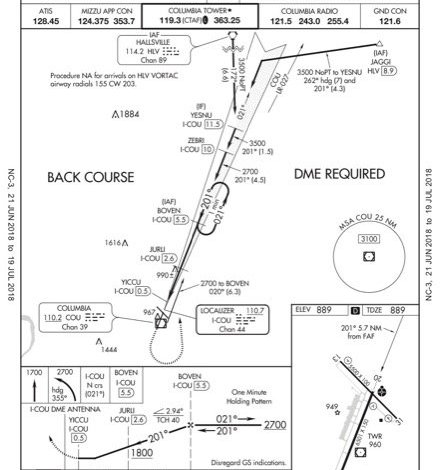
This is your third trip to Columbia, Missouri (KCOU), where youre flying in from the northwest in your trusty but basic Cessna 182. Equipment includes dual nav receivers, one glideslope receiver and DME. (For those of you watching at home, this is pre-RNAV Distance Measuring Equipment.) A portable GPS offers limited capabilities to navigate outside of your raw-data setup. No big deal; youve been flying this plane and panel for years and are a pro with ILS approaches. The filed route, which will be reversed to get home, departs from Watertown, South Dakota (KATY) and is: POEMS OTG V175 HLV.

Read More »

Skew-T Log-P Diagrams

An upper air sounding from the Slidell, Louisiana, NWS site, located about 85 SM west of the accident site, depicted a moist low-level environment with saturated conditions from 500 feet AGL to 6000 feet with a capping inversion. The freezing level was identified at 14,700 feet. The wind profile indicated calm surface wind with wind from the south-southeast veering to the southwest and west through 18,000 feet. A low-level wind maximum or low-level jet was identified near 5000 feet at 215 degrees at 25 knots, with winds less than 10 knots below 1000 feet AGL.

Read More »

On The Air: September 2018

I had this exchange on a flight back to a rural Arkansas airport from Florida. I usually fly IFR even in VFR conditions. I was at 6000 feet, with a broken layer below me. I usually cancel about 20 miles in advance, as Memphis Center cannot see me on radar, or communicate with me once I descend below 3000 feet.

Read More »

How Seaplane Floats Work

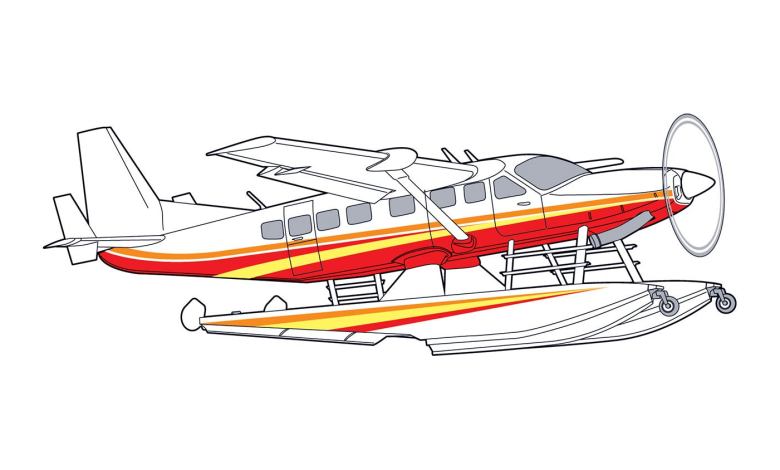
Floats look very much like small boats slung beneath the fuselage of an aircraft in place of the original wheels and landing-gear struts. Adding floats transforms a land-based machine into a multipurpose recreational water vehicle, opening the door to thousands of small bodies of water not accessible by traditional aircraft. Floatplanes also serve as vital […]

Read More »

Are Airlines Training Pilots for the Real World?

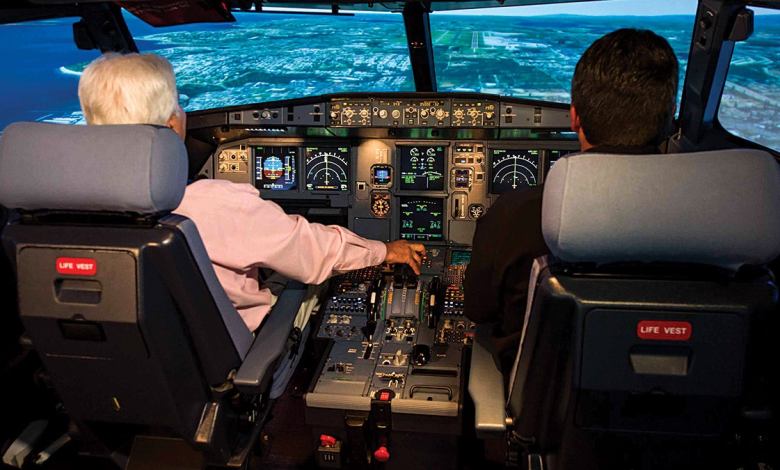
Aloud, muffled boom is heard from within the cockpit. The airplane begins to buffet. The two pilots exchange wide-eyed glances. From years of routine and training, they simultaneously turn toward the center instrument panel and begin to focus their attention on the electronic engine displays. The needle of the left engine N1 gauge is gyrating […]

Read More »
Pilot in aircraft
Sign-up for newsletters & special offers!

Get the latest stories & special offers delivered directly to your inbox.

SUBSCRIBE