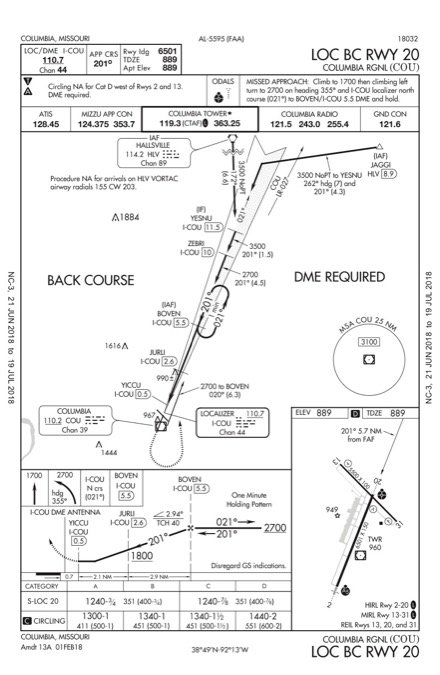
This is your third trip to Columbia, Missouri (KCOU), where youre flying in from the northwest in your trusty but basic Cessna 182. Equipment includes dual nav receivers, one glideslope receiver and DME. (For those of you watching at home, this is pre-RNAV Distance Measuring Equipment.) A portable GPS offers limited capabilities to navigate outside of your raw-data setup. No big deal; youve been flying this plane and panel for years and are a pro with ILS approaches. The filed route, which will be reversed to get home, departs from Watertown, South Dakota (KATY) and is: POEMS OTG V175 HLV.
Pilots can encounter unfamiliar approaches, like a Localizer Back Course, unexpectedly due to factors such as weather, traffic, or aircraft equipment, necessitating adaptability.
These less common procedures require careful attention to unique techniques (e.g., reverse sensing) and specific chart details that may not be immediately obvious.
Mastering a variety of approach types, including back courses, provides pilots with valuable alternatives and comparable landing minimums, enhancing operational flexibility and safety.
New airports often mean flying procedures, or parts thereof, you might not have flown before. Unfamiliar approaches can also pop up at airports you thought you knew well. When you’re down to one choice due to weather conditions and limited equipment, well, then, you’re just gonna have to decide if you’re up for trying something new.
Planned and Unplanned
CREATE A FREE ACCOUNT
Sign up to keep reading
Create a free account to continue. Already a member? Sign in below.