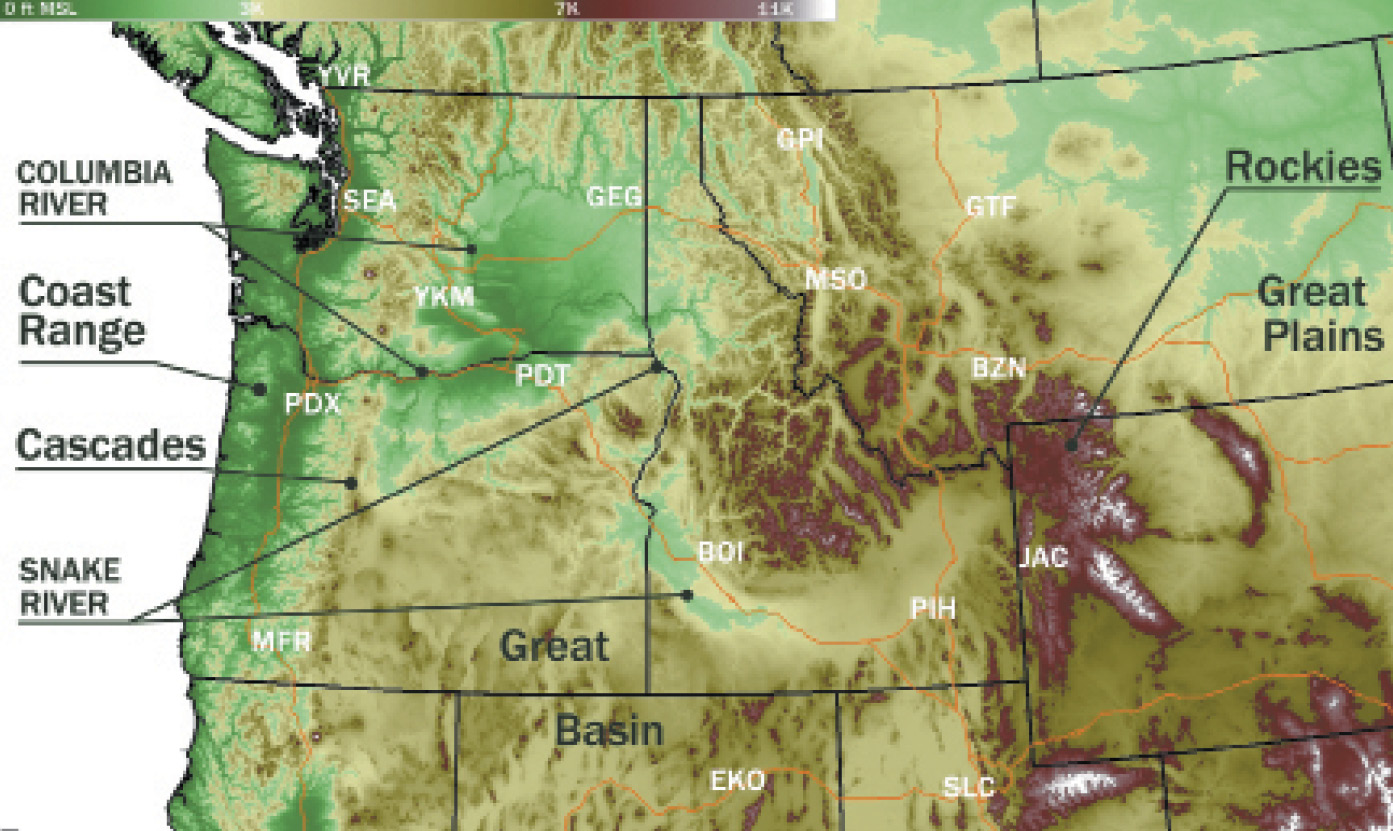
Terrain is the most significant factor in the Pacific Northwest weather.
Key Takeaways:
The diverse and mountainous geography of the Pacific Northwest profoundly shapes its weather by influencing air mass movement and creating varied local conditions.
Seasonal shifts between oceanic high pressure (Pacific High in summer) and inland heating/cooling dictate prevailing winds, the presence of the marine layer, and the nature of frontal systems.
Key weather phenomena include summer marine pushes (stratus surges), seasonal wildfires, and monsoon moisture, contrasting with winter's powerful frontal cyclones, atmospheric rivers bringing heavy precipitation, and occasional cold outbreaks from the east causing valley fog and strong foehn winds.
For those of us who dwell in the southern and eastern states, Seattle makes us think of craft beer, grunge music, sprawling Boeing factories, and relentless drizzle and fog. I won’t comment on Pearl Jam or what’s new at Boeing, but I can definitely help decipher the weather. Fortunately the basics are easy to understand. Let’s take a look.
Some Background
CREATE A FREE ACCOUNT
Sign up to keep reading
Create a free account to continue. Already a member? Sign in below.