











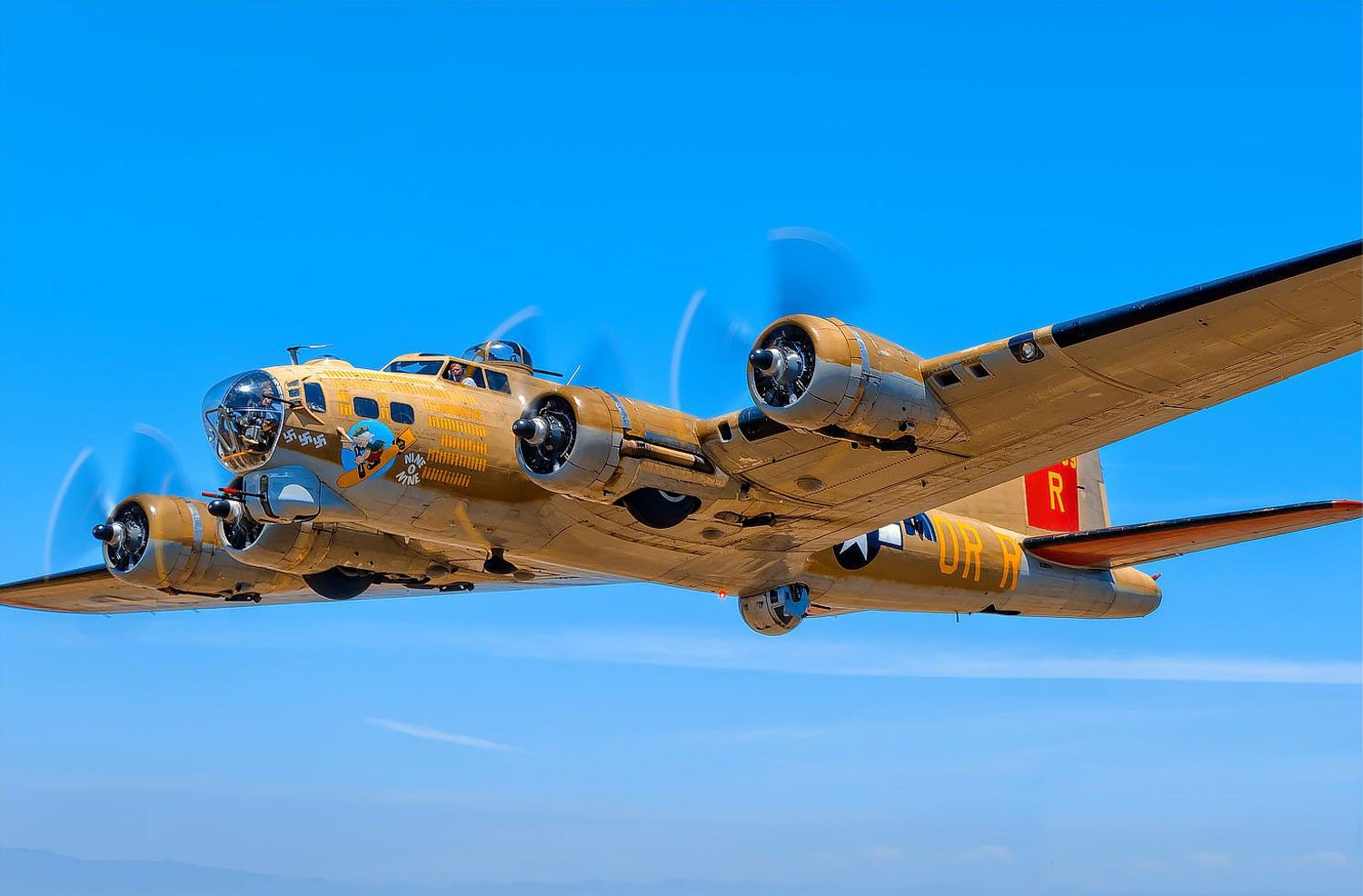
As the Collings Foundation’s crippled B-17, N93012, was approaching Runway 6 at Bradley Windsor Locks, Connecticut, a few weeks ago, the crew was already desperately pressed for altitude to try and align the World War II bomber with the runway for landing. Shortly after takeoff from Runway 6 just minutes before, the airplane never climbed above 500 feet agl before it began a return to the field with a mechanical problem reported in the number four engine. By the time the airplane was on downwind, its altitude had dropped to 300 feet. During the turn from base to final, the Boeing continued losing altitude, eventually striking the airport approach lights 1,000 feet short of the hard surface before it veered right and struck a number of vehicles, as well as a deicing fluid tank sitting 1,100 feet right of the runway threshold.
NTSB Offers Preliminary Information on B-17 Accident at Bradley

Key Takeaways:
- A Collings Foundation B-17 crashed during an emergency return to Bradley Windsor Locks airport after experiencing a mechanical issue with its number four engine, resulting in seven fatalities and multiple injuries.
- The aircraft struggled with altitude after takeoff, ultimately striking airport approach lights and ground vehicles short of the runway, followed by a significant post-impact fire.
- Preliminary NTSB findings indicate the B-17 was well-maintained and had clean fuel, but its final approach was conducted with flaps up, and the crew initially declined ATC assistance.
Key takeaways sponsored by Aviator Pro | Start Your Training ->
See a mistake? Contact us.

