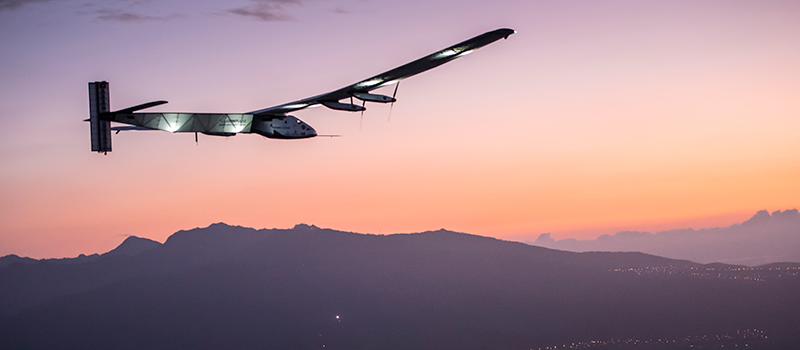


A feat that many thought unachievable with today’s technology has been done. Last week, André Borschberg completed the most arduous leg in the planned round-the-world flight of the all-solar-powered Solar Impulse Si2, crossing the Pacific Ocean from Nagoya, Japan to Kalaeloa Airport just west of Honolulu, Hawaii. The marathon flight took nearly 117 hours and 52 minutes to complete, going down in the record books as the longest solo flight in the history of flight. By comparison, Charles Lindberg’s pioneering transatlantic flight took 33 hours and 30 minutes.
The Si2 traveled nearly 3,900 nm over the water and passed two cold fronts, making the success of the journey questionable as the battery levels dropped with a cloud cover preventing the critical recharging process during the daylight hours. Aside from the Si2’s limited speed capabilities, one reason for the lengthy flight was that Borschberg had to circle over Japan for several hours to allow the team to complete an analysis of the airplane prior to committing the pilot to the point of no return for the flight. One wing was damaged during the unplanned landing in Nagoya on June 1.