













Register

More Chart Reading

Learn some tips and tricks from a veteran aviation forecaster about what to look for on even those basic weather charts.

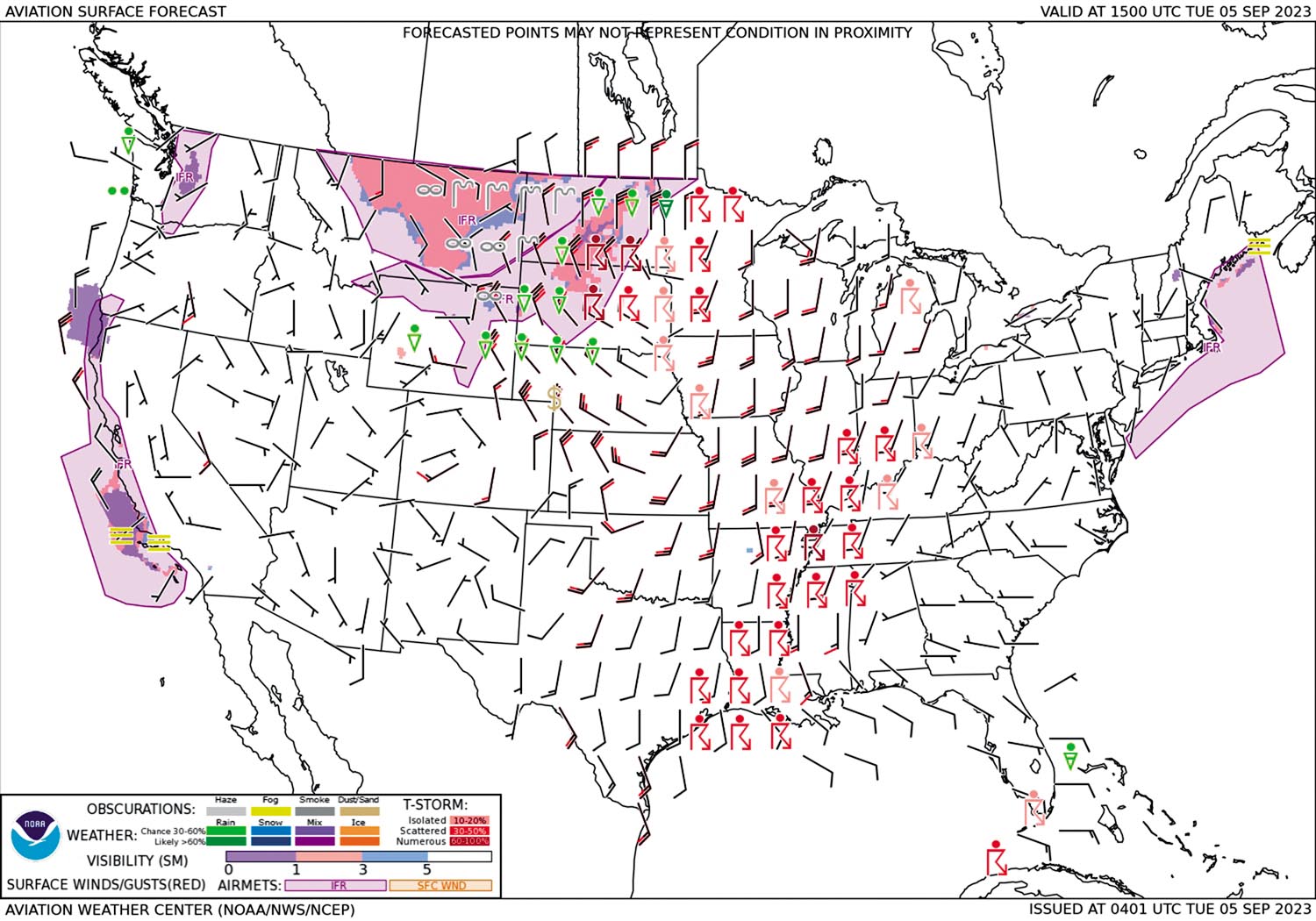
This example chart is analyzed in the article.
Gemini Sparkle

Key Takeaways:

  • Forecasters begin by identifying visually prominent weather hazards like AIRMETs, MVFR/IFR conditions, and specific weather symbols (e.g., thunderstorms, smoke) indicated by colors and patterns on aviation charts.
  • They then analyze wind barbs to determine air mass movement and locate fronts through wind shifts, using this to infer underlying atmospheric processes such as warm advection and stability.
  • This comprehensive chart analysis allows forecasters to build a complete picture of prevailing air masses, pressure systems, and the influence of geographical features (like coastlines or the Great Lakes) on seasonal weather phenomena.
See a mistake? Contact us.

Come on in and pull up a chair. From time to time when I worked the forecast desk I used to get curious pilots wandering in with questions. Usually it was a B-1B Lancer crewmember who was delayed by a crowd of other pilots at the base operations counter. Since the weather station was 20 feet away it provided them with an opportune time to get all those questions answered that popped up at 30,000 feet.

One of the more interesting questions I’ve occasionally had is about our charts. Not what the markings mean, but what do we see? What are we thinking when we look at those charts? While there’s no way we can cover all the basics in this article, one thing I can do is walk you through a chart sequence and explain how it all comes together. The basics aren’t really that difficult so I’m confident you can learn a few things too.


Ready to Sell Your Aircraft?

List your airplane on AircraftForSale.com and reach qualified buyers.

List Your Aircraft
AircraftForSale Logo | FLYING Logo
Pilot in aircraft
Sign-up for newsletters & special offers!

Get the latest stories & special offers delivered directly to your inbox.

SUBSCRIBE