











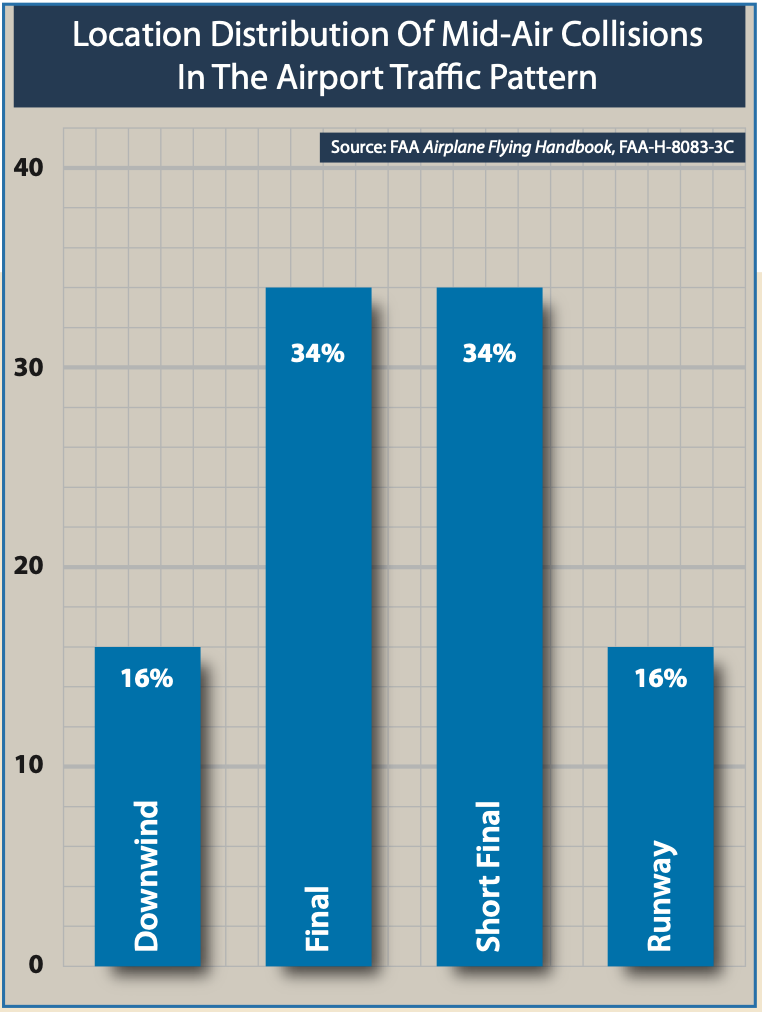


A Cessna 340, apparently making a low-altitude, high-speed pass over the runway at Watsonville, Calif., catches up to and collides with a Cessna 152 on final approach, killing four. A Piper Meridian overshoots the turn to final for Runway 30L at North Las Vegas and flies into a Cessna 172 on final for 30R, also killing four people. A Boeing Stearman lands on top of another Stearman during a passenger-hopping event at a grass field in Virginia, putting the pilots and passengers of both airplanes at risk.
Perhaps it’s the seemingly uncontrolled nature of mid-air collisions, both before and after colliding, that makes them one of the greatest fears among pilots. Most discussions of collision avoidance center on the rules for flying a visual traffic pattern. Knowing and following the rules is vital. But these recent accidents and many more like them demonstrate it’s not enough to review the regulations and best practices, then admonish pilots who deviate from the rules either by accident, by unintentional error or by wanton violation. It’s up to us all to raise our defensive shields with techniques not only to see and avoid compliant pilots, but also to expect and deconflict from those who aren’t doing what they’re supposed to do, intentionally or not.

