











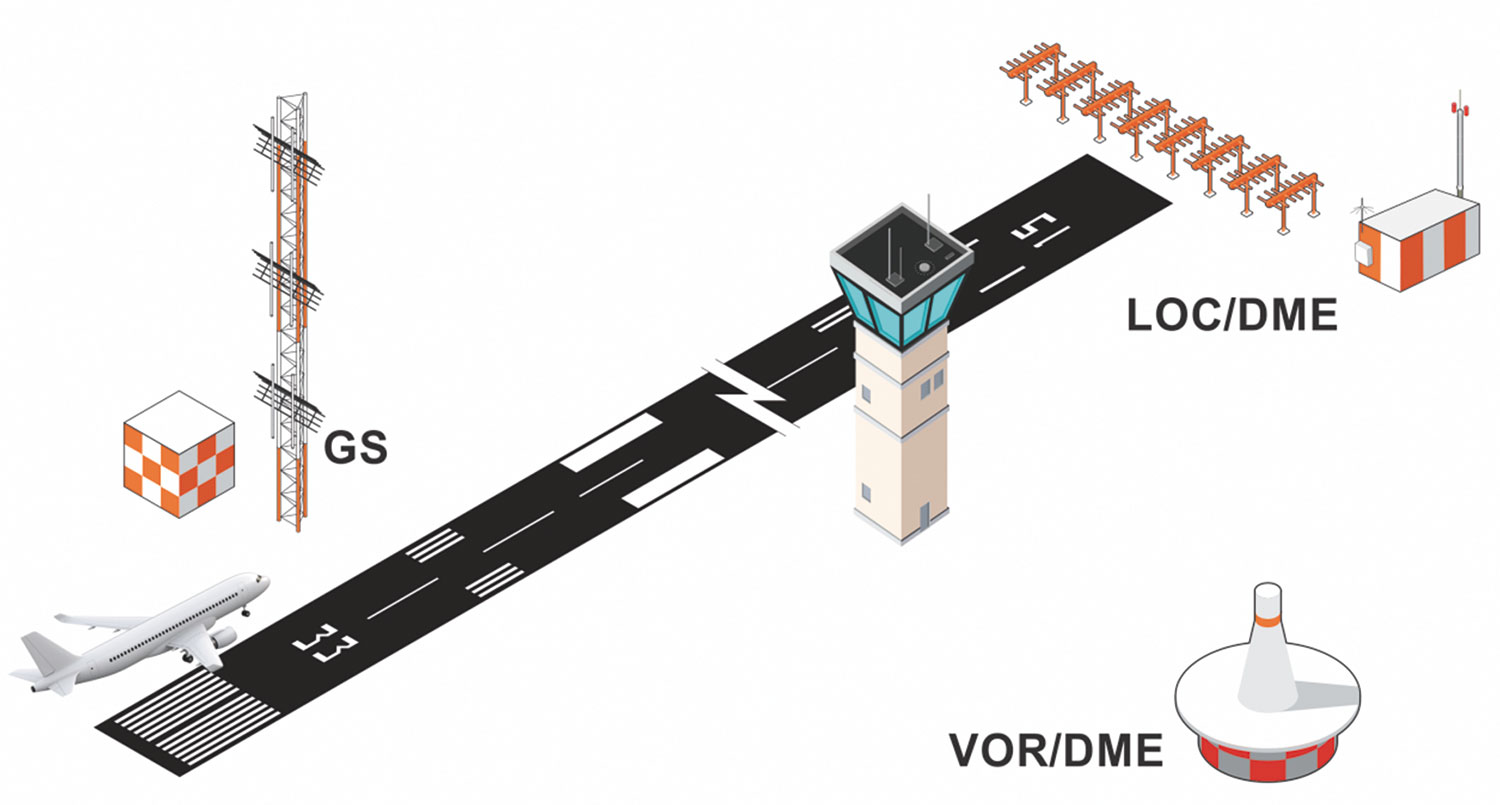


Perhaps it’d be best if we first take a broad look at the differences between an ILS and an LPV approach. A significant difference between the ILS and LPV is that the ILS is a ground-based system with several components that operate as a federated system to provide approach guidance. On the aircraft side, you must have a VHF localizer receiver, a UHF glideslope receiver, or a multimode receiver that incorporates both, and a method to determine noted distances from the runway threshold (marker beacon, compass locator, DME, radar, VOR cross radials).
The LPV approach is satellite-based; however, it also requires a ground-based station(s) to determine any errors in the “raw” GPS position and broadcast a correction. The detection of errors in the GPS position is the basis for the wide-area augmentation system (WAAS). GPS errors are also monitored via receiver autonomous integrity monitoring (RAIM), but WAAS makes it redundant. Let’s dig into this in more detail.

