











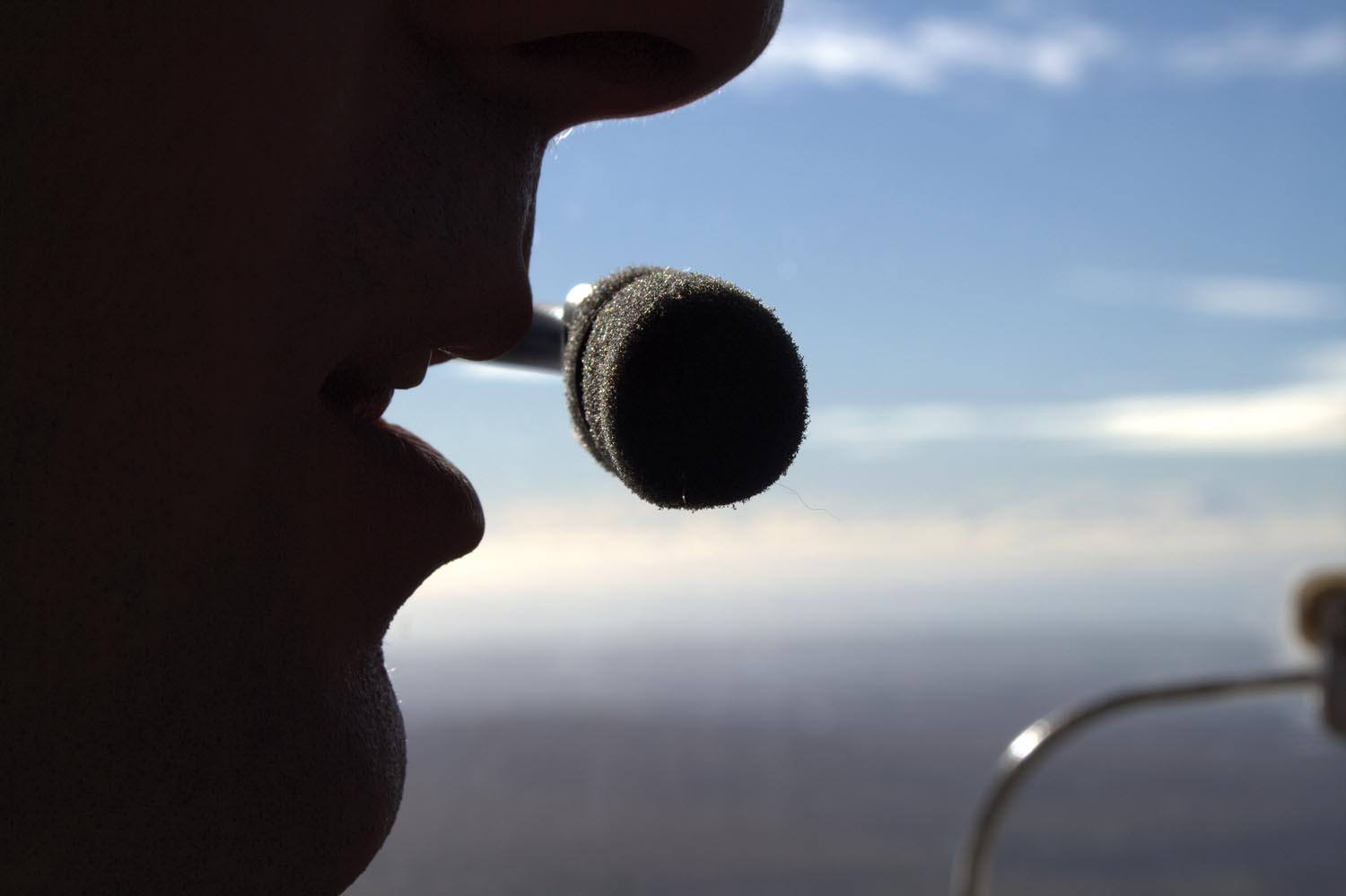


Communication is generally defined as the imparting or exchanging of information or news. Instrument flying requires operational two-way radios, because the simplest way of exchanging accurate information in a timely manner is through the spoken word. As aviators, we become fluent in “aviation English.” Show a clip of a busy tower or approach frequency to someone who has never flown an aircraft before, and it is borderline gibberish. It is obviously words they understand, but the cadence and meaning is lost. An appreciable portion of instrument training is improving these communications, so all parties have a mutual understanding of the intended flight path.
So when an event occurs and that two-way communication is lost, how does it usually shake out? With primary instrument students, I will usually run several scenarios to ensure they understand what ATC expects of them when they can no longer reach the aircraft. During IPCs, I start talking about lost comms by asking if the pilot had experienced this at any point during their flying career. Frequently, there was a story where a headset did not work correctly, or a radio panel failed and comm two was pulled up to save the day. Only two (so far) had fully lost communications, and one was completely VMC and returned to the departure airport with no issue. The other was on final already and landed. A quick review of the lightgun signals on their kneeboard and they made it back to the ramp without further incident, albeit with a bit more stress than usual. See the sidebar below for more.

While it may sound like I am diminishing the risk of a lost communications event with the examples above, I mention it for two reasons. First, true communication breakdowns are rare. Second, the situations for lost comms vary so much that while there is guidance for pilots to follow so that they perform as ATC expects, it is far from binding. It is actually one of my favorite scenarios because, depending on how the student chooses to progress, it can lead down numerous paths and demonstrate CRM and ADM as well as highlight any potential gaps in knowledge.
How Do You Read?
The first step is admitting (or realizing) you have a problem. Sometimes it is extended silence after a handoff would have been expected. Other times there might be an audible problem like static, squealing, a stuck mic on the frequency or feedback. If a problem is suspected, a good place to start would dropping a quick “radio check” on whatever frequency was last used (and worked properly). Guard, or 121.5, is generally monitored by local ATC and pilots who can relay a message if the aircraft has drifted out of service range of the last assigned frequency.
A few things might happen. In an ideal world, a handoff was missed and a new frequency will be issued and the flight will continue uneventfully to its destination. It is not unheard of to be able to receive OR transmit, but not both. If you cannot receive, odds are you will not be able to verify transmissions. It is still worth transmitting intentions on guard or the last assigned frequency because if it is possible to state your intentions to ATC, or at least another aircraft. If they can be reached, a local FSS can also relay information between a flight crew and ATC.
As with any irregularity, it is important to aviate, (then) navigate and (then) communicate. Communication, while important, is priority three on the list. Aircraft with little or no automation can require a lot of bandwidth to keep on track. Remember: Losing situational awareness and/or aircraft control followed by CFIT if one is too distracted by troubleshooting is a greater hazard than landing NORDO at the nearest airport without a clearance. Take a breath and slowly begin to work the problem. Take another breath and then slowly begin to work the problem.
Check the volume, the PTT, frequency, squelch, attempt contact on the second radio if you have one. Unplug and plug in the headsets, see how the connectors feel. Depending on how they are installed, they can work themselves loose. A quick finger tightening in flight may do the trick, but have it looked at after landing. If you are like me and spend 99 percent of your flying with a headset on, it is worth occasionally checking the hand mic and speaker if installed. There is nothing worse than finally needing that dusty hand mic and finding out it doesn’t work either.

Once it is confirmed there is a communication issue, squawk 7600. As discussed in the sidebar on the opposite page, there are a number of ways to communicate outside the conventional radios. Abnormal becomes the new normal, and out of the silence comes a plan. Let’s discuss managing the vertical and lateral navigation while dealing with a two-way radio failure, summarized in the two sidebars below and opposite.
Rules Of The Road: Routing
I always recommend a review of the source material straight from the horse’s mouth. In this case, FAR 91.185 and AIM 6-4-1 outline the expectations. There are a couple of general rules to cover that can get lost in the acronym soup of instrument training.
It is a pilot’s determination whether the two-way radio communication failure warrants exercise of a pilot’s emergency authority. It is expected that the pilot follows the regulations but no set of regulations can meet the requirement of every situation. Sound judgment is key.
Stay in VMC if possible. From the AIM: “If the failure occurs in VFR conditions, or if VFR conditions are encountered after the failure, each pilot must continue the flight under VFR and land as soon as practicable.”
Once the routing hierarchy in the sidebar on the opposite page is exhausted, you have arrived at your clearance limit. As part of preflight planning, it can be helpful to use a combination of current and forecasted weather with Notams to anticipate an approach at the destination. If the clearance limit is a fix from which the anticipated approach begins, attempt to begin the descent and approach from that fix either at the EFC time or the ETA, whichever makes the most sense. If the clearance limit does not contain a fix on the approach, depart the clearance limit toward a fix on the approach as close to the EFC or ETA as possible.
Generally, ATC will be moving traffic out of your way and, in a radar environment, they will have a good idea of where you are headed, so the foregoing paragraph often boils down to gobbledygook. Keeping the above times is ideal, but it will not always work out to the letter.
Rules Of The Road: Altitude
Meanwhile, there’s also the issue of what altitude to fly. If the MEA for a route is 7000 feet and you were told to expect 9000 feet at XYZ, initiate a climb at XYZ. One of the biggest challenges here can be descent planning. Often, we rely on ATC to manage our descent from cruise to the approach phase. As previously mentioned, pilot judgment is vital because every situation is unique.
If you are on an RNAV arrival with an approach VIA, you can descend on-profile to be at the FAF altitude right on schedule. Conversely, if you are /U and your approach fix is a VOR, you may need to descend in a hold to the altitude published on the approach plate.
Talk the Talk
Guidelines, regulations, training, articles, thought exercises…they are all great recourses for chair-flying situations like communication failure. I have mentioned sound judgment several times in this article because proper ADM combined with knowledge of the regulations creates the best chance of a safe, predictable outcome.
Personally, I would try to get in touch with any ATC facilities afterward to thank them for facilitating a safe path for me to land. I would also fill out an ASRS report, because additional data points can be extremely useful, especially with uncommon events.


