Register

Technique

Readback: April 2017

In your January 2017 issue you have an interesting article about flows, checklists, do-lists and callouts. However, that sample checklist you provide misses one important aspect: numbering.Try saying (or verbalizing) 1 Switches Set, 2 Fuel Totalizer Set, 3 Altimeters Set, 5 Transpo…..You wont get through the Transponder item without realizing that there should have been a number 4.

Read More »

In The Hot Seat

Aviation widely relies on the transfer of institutional knowledge. The flight instructor teaching you to fly didnt acquire all his/her skills alone. Someone taught them the basics, who in turn was taught by another individual, and so on. Lessons from past experience (a.k.a. mistakes) enlighten future generations.

Read More »

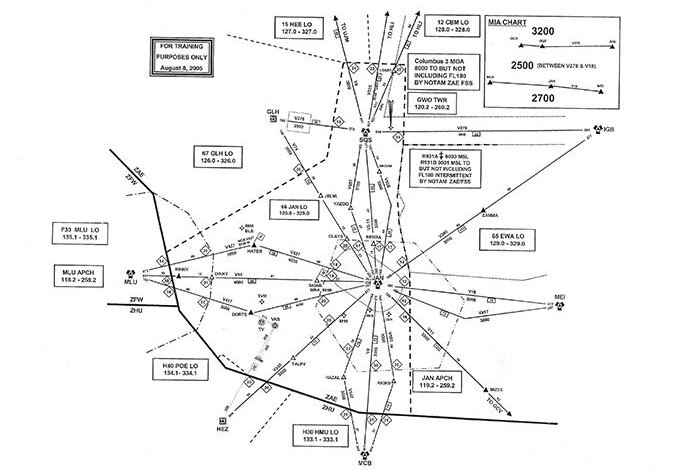
DIY Weather Briefing

The old saying tells us you cant be cleared for takeoff until the gross weight of the paperwork exceeds that of the aircraft. That hasnt changed much since Flight Service received reports on Teletypes necessitating cryptic abbreviations to conserve precious bandwidth on 75-baud lines. Calling Flight Service used to be required to file a flight plan and get a weather review from a specialist with information unavailable anywhere else. Technology has changed all that.

Read More »

Do You Need EFIS?

Most instrument pilots flying today probably learned with conventional six-pack flight instrumentation. But, thats changing. Rare is a new aircraft available without EFIS and popular shops are installing glass retrofits nearly as fast as theyre installing ADS-B systems. Do you need EFIS? Should you consider upgrading your six-pack panel to a fancy electronic package?

Read More »

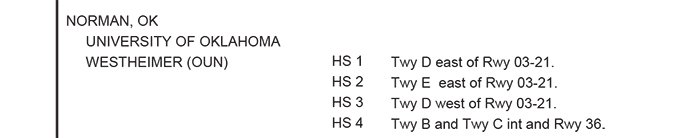
Runway Incursions

With all the distractions in the cockpit-whether its loading the navigator, copying a clearance or simply dropping the only pen you brought along-its no surprise that close calls on the ground are still common. Perhaps not surprising, but not acceptable either. After all, we have a lot of tools to help us remain safe on the ground. Weve had ground-safety procedures drilled into our heads in recent years. GPS is common now for taxiing, along with lots of signs and lights to guide us. So runway incursions and related incidents ought to be on the decline. As it turns out, though, things havent improved.

Read More »

Capital Line Items

Just like Albany in New York and Sacramento in California, you wont find Maines capital buildings anywhere in the states thriving metropolis. Of course, thats because Maine doesnt really have a thriving metropolis. (Our biggest city, Portland only has 67,000 people and has issues, being dubbed the other Portland.) However, we do have a capital in our eleventh-largest town of Augusta, population 18,000. Im told 17,993 of them are lawyers. Of the remaining seven, perhaps youre visiting the guy who paints watercolors of the lovely view overlooking the Kennebec River.

Read More »

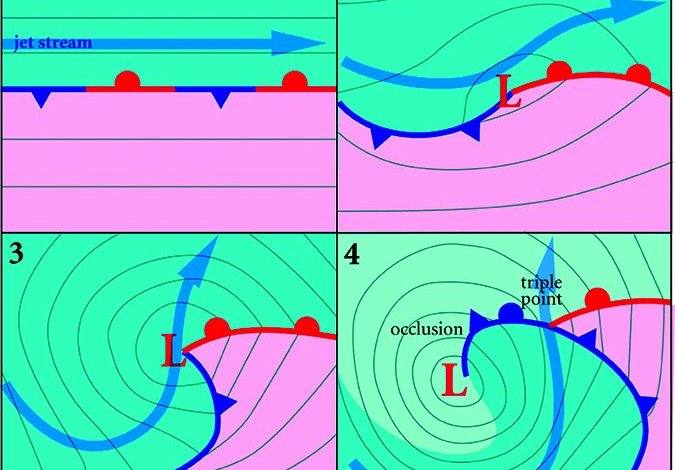
Fronts

Fronts in TAFs and weather briefings often mean a day of delays and canceled plans. Considering the impact that they have on flight operations, we should understand fronts. Lets study them so you can make a good guess about the resulting weather. Our modern knowledge of fronts began around 1910 in the Bergen School of Meteorology in Norway. Their early work laid out the mathematics of forecasting and described fronts, showing that they are defined by a change in air mass density. Changes in wind speed, humidity, or pressure are all secondary.

Read More »

On the Air: March 2017

Flying our Cessna Caravans into Chicago OHare daily, frequently provides some interesting situations. Our redline is 175 knots and most of our planes can only do 150 knots in level flight. The controllers there are absolutely amazing and do what they can to make use of the fact that we are small and nimble. Here are a couple examples.

Read More »

Readback: March 2017

Jeff Van West is one of my favorite modern-day aviation writers. His article, Seeing Double in the November issue is a fine example of Jeff taking us by the hand through important, but oft overlooked and esoteric aspects of our IFR life. But his use of the word declination instead of the correct word, variation, is a fingernail on the blackboard kind of irritant, if you remember blackboards. I have these old yellowed books that I studied in the 50s: AF Manual 51-40, Air Navigation Vol 1, by the Department of the Air Force (1959), page viii, and The American Flight Navigator by John Dohm (1958) page 324.

Read More »

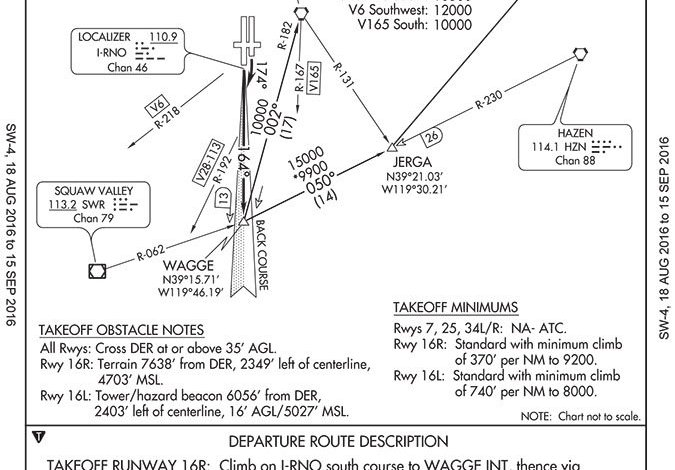
Hold Vs. HILPT

A reader, a helo pilot from the U.S. Coast Guard, wrote to ask some interesting questions. It seems theyd just had an FMS upgrade that enables them to fly RNAV (GPS) approaches. All the approach holds that are course reversals (hold in lieu of procedure turn, HILPT) are shown with four-nautical-mile legs. He asked if it is required to fly the entire leg length. The e-mail discussion evolved to ask if a charted hold, such as a missed approach hold, also had mandatory leg lengths. These probing questions prompted some interesting virtual discussions at IFR.

Read More »
Pilot in aircraft
Sign-up for newsletters & special offers!

Get the latest stories & special offers delivered directly to your inbox.

SUBSCRIBE