Register

Technique

Points in Space

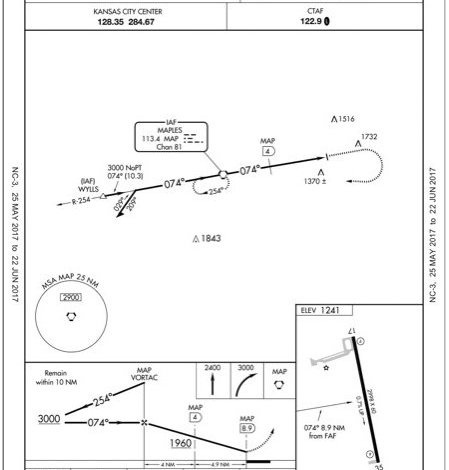
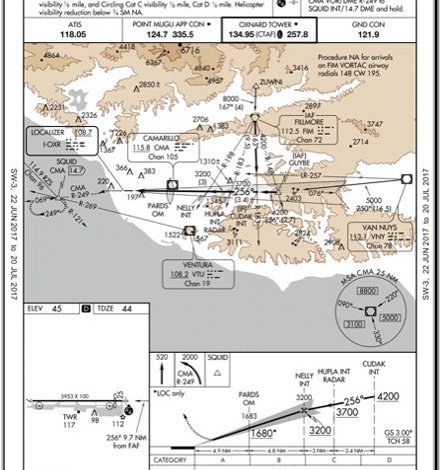
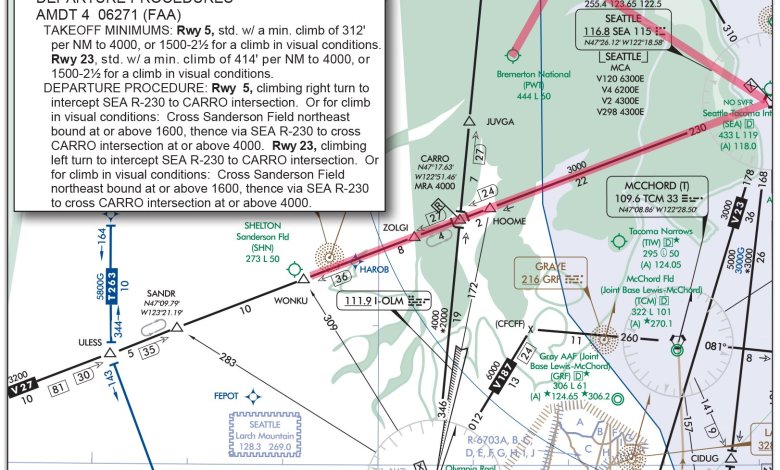
The first GPS I used in the air was a Garmin 95 portable. Brick-shaped and nearly brick-sized, its etch-a-sketch screen was a still a revelation. We could go direct to airway fixes and watch the little black pixels approach just as the CDI needles swung to center. This was back when we taught instrument students how to eyeball a course direct to a fix defined by two VOR radials.
Read More »

RNAV Versus RNP

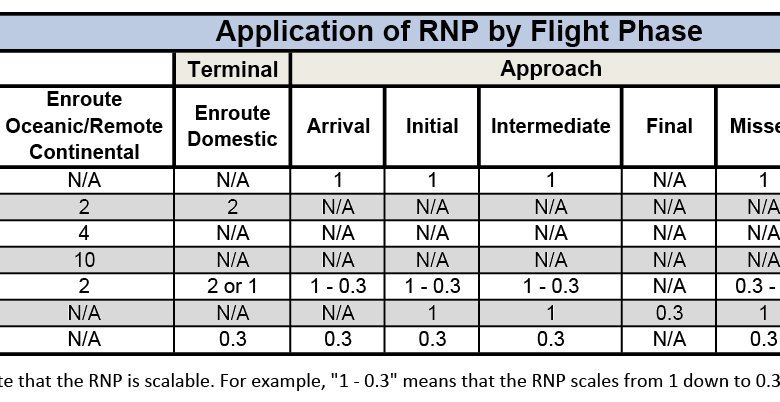
Shakespeare elegantly downplays the importance of naming in Romeo and Juliet, writing: Whats in a name? That which we call a rose by any other name would smell as sweet. What matters is the subject and not what the subject is called. But this is an over-simplification because changing the subject would make the quote non-sense: That which we call a fish by any other name would smell as sweet. Words have meaning.

Read More »

TAA Ruin Your Scan

Situational awareness is critical when youre on the gauges, right? Few of us will argue that with a good EFIS its childs play to maintain that situational awareness, regardless of the quality of your scan. So far, so good.

Read More »

Misfortune of Others

While some readers probably welcome a refresher on turbulence, shear, and thunderstorm dangers, others might see it as beating a dead horse. But Wx Smarts is that intersection between my 30 years of forecasting and your thousands of hours of instrument time. Within these articles I guarantee theres always something that wasnt fully covered in flight school or the FAA circulars. Whether its more detail or just an unusual situation, the goal is to keep you interested, thinking outside the box, and having more insight into aviation meteorology than the average pilot.

Read More »

Which Way to Turn?

You are flying the VOR-A approach into Salem Memorial (K33) in your Cessna 182. The airport has no tower, with Class E airspace starting at 700 feet AGL. The winds favor Runway 17. You dive n drive after the DME stepdown and break out at 680 feet AGL with the runway in sight two miles ahead. Do you (a) cross midfield and make left downwind to 17, or (b) turn right to the upwind leg for Runway 17 and make left traffic from there, or (c) turn left before reaching the airport and make right traffic for 17.

Read More »

ATC History

Which came first: the chicken or the Federal Egg Administration? Impossible to say. Physics teaches us that when Bernoulli found lift, his nemesis, Newton, said there must be an opposing reaction. So, when the Wright brothers flew, government pondered how to keep them from impacting all those other aeronauts. Little happened because of Newtons Law of Administrative Inertia: An agency at rest remains at rest until acted upon by an un-ignorable force. …

Read More »

GPS: Safety of Flight

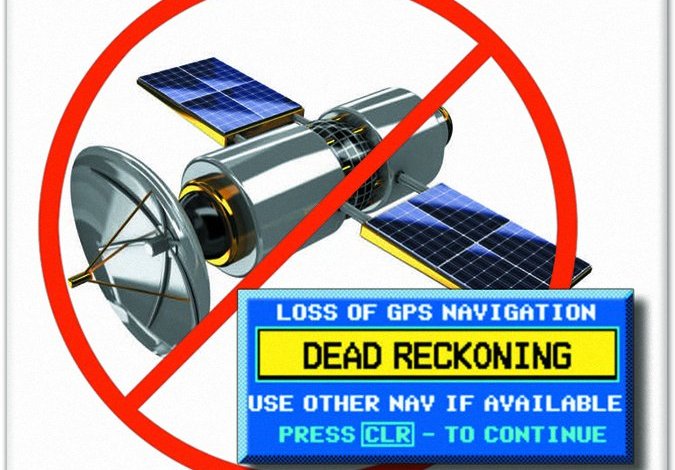
If you live west of the Mississippi, out where most of the military airspace and where most of the testing is done, youre well familiar with those pesky NOTAMs announcing interference testing of GPS or outright loss of the GPS signals. Most of us ignore them.

Read More »

Briefing: August 2017

The Paris Air Show opened in June with the usual displays of military hardware and the latest passenger jets, but new and emerging technologies also attracted a lot of attention. Volocopter, a German company that has been developing a two-seat electric VTOL, announced it will work with the government of Dubai to test fly semi-autonomous air taxis by the end of this year. Boom unveiled the final design for a subscale prototype of its supersonic airliner, and said it will fly next year, with three GE engines. Airbus said its working on a new helicopter with a box-wing design that will cruise at 215 knots while maximizing efficiency. The Racer demonstrator will fly in 2020, Airbus said.

Read More »

Readback: August 2017

In April Killer Quiz, The Prof and the Pilot, I dont think that the answer to the last question is correct. With tailwind, one should reduce the airspeed below best glide speed, which in turn reduces the sink rate. Gliders pilots are very familiar with these concepts.Unfortunately, Cessna doesnt publish sink rates at various speeds to compute that accurately, so we are left to back-of-the-envelope calculations. We know that at best-glide speed (65 knots.

Read More »

An IPC through WINGS

There are three levels of WINGS: the Basic, Advanced, and Master phases. Each level has multiple phases. Unlike the previous program, multiple phases can be earned each year. To complete a phase, pilots must get three flight and three ground credits which can be chosen from a wide range of activities.

Read More »
Pilot in aircraft
Sign-up for newsletters & special offers!

Get the latest stories & special offers delivered directly to your inbox.

SUBSCRIBE