IFR Magazine

Will the last one out the door …

One of the beautiful things about Oshkosh is the self-deception: Stand in the middle of the crowded grounds, teaming with people and aircraft, and you can enjoy the momentary illusion that aviation is actually a popular, well-attended activity.

Read More »

Automation Awry

An increasing amount of instrument flying is done using technologically advanced airplanes and sophisticated avionics. Correct use of automation improves safety immensely by giving pilots the time to monitor systems, gather information, and plan ahead. But researchers have found that as a group we do not use automation effectively. Automation presents additional challenges. Over reliance […]

Read More »

Resume What Speed?

Back in February we took a look at the PUFFR ONE arrival into Denver Centennial and highlighted how a “descend via” arrival clearance with multiple speed and altitude restrictions works in a perfect world in which procedures are flown exactly as charted. Just as often, however, pilots are given vectors off the arrival or additional […]

Read More »

The Invisible Hand

Imagine a Piper J3 Cub parked beside a mighty double-decker Airbus A380. The two airplanes couldn’t be more different, yet both function on the same four principles: thrust, drag, lift, and weight. The 1.2 million pound Airbus just scales them up a thousand times over the 1,200 pound Piper. If the Command Center determines that […]

Read More »

Dont Fear The Red X

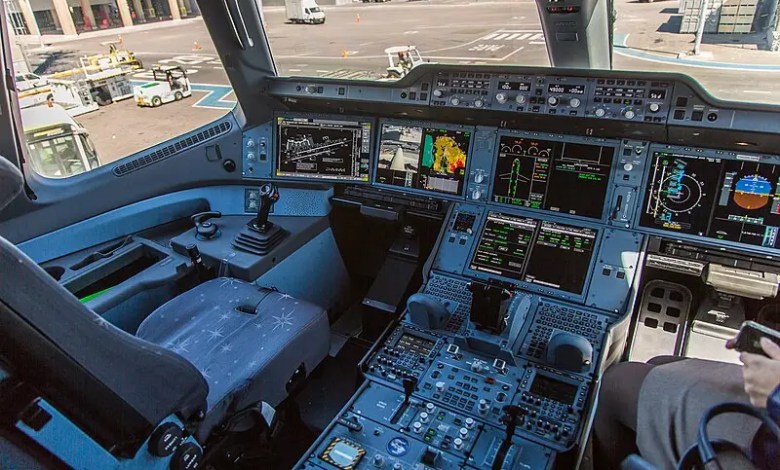
As a technician, I think of EFIS in terms of failures. While most pilots don’t need to dig deep into system schematics, a little tech savvy can help you recognize and understand the implications of a failed EFIS. It doesn’t matter if it’s a component failure, wiring problem or software glitch—a proper understanding of the […]

Read More »

On The Visual

Instrument training is naturally geared towards technology-heavy procedures like ILS, VOR and RNAV approaches. In poor weather these instrument procedures are the only way to land, but when the weathers good, theres another option.

Read More »

Plan a Safe Departure

Many of us would rather fly an approach to minimums in harsh conditions than depart in the same weather. Perhaps one of the reasons is that we thoroughly brief the approach and have the opportunity to make sure we’re stabilized on the approach. But on a departure, it all seems to happen at once. We’ve […]

Read More »

ipad mini for plates

If youre still using an iPad in the cockpit, youre about to be so 15 minutes ago. Well, maybe. As we go to press this month, Apple has been pumping the new iPad mini into the market for about two weeks and after a couple of flight trials, we like what we see.

Read More »

Theres No Free Lunch

The primary purpose of Automatic Dependent Surveillance-Broadcast (ADS-B) is to provide the FAA with the next generation of ATC surveillance capability at lower cost. ADS-B can be more accurate while simultaneously reducing the installation and maintenance costs of existing radar systems. It permits greater coverage where radar isnt practical, such as in mountainous areas and over the Gulf of Mexico. With ADS-B, ATC expects to safely handle more traffic in the same airspace. Much of the cost justification is based on the elimination of about half of the current radar installations. But dont plan on tossing your transponder yet. Radar will still be used as backup to the ADS-B system and for TCAS.

Read More »

RADIAL SIDS with GPS

Fly IFR in busy airspace and eventually youll have one of those much ado about nothing experiences. It starts with a clearance you dutifully put in your navigator-and then repeatedly change or completely ignore until you get a clearance to resume the plan you were given at the start.

Read More »
Pilot in aircraft
Sign-up for newsletters & special offers!

Get the latest stories & special offers delivered directly to your inbox.

SUBSCRIBE