











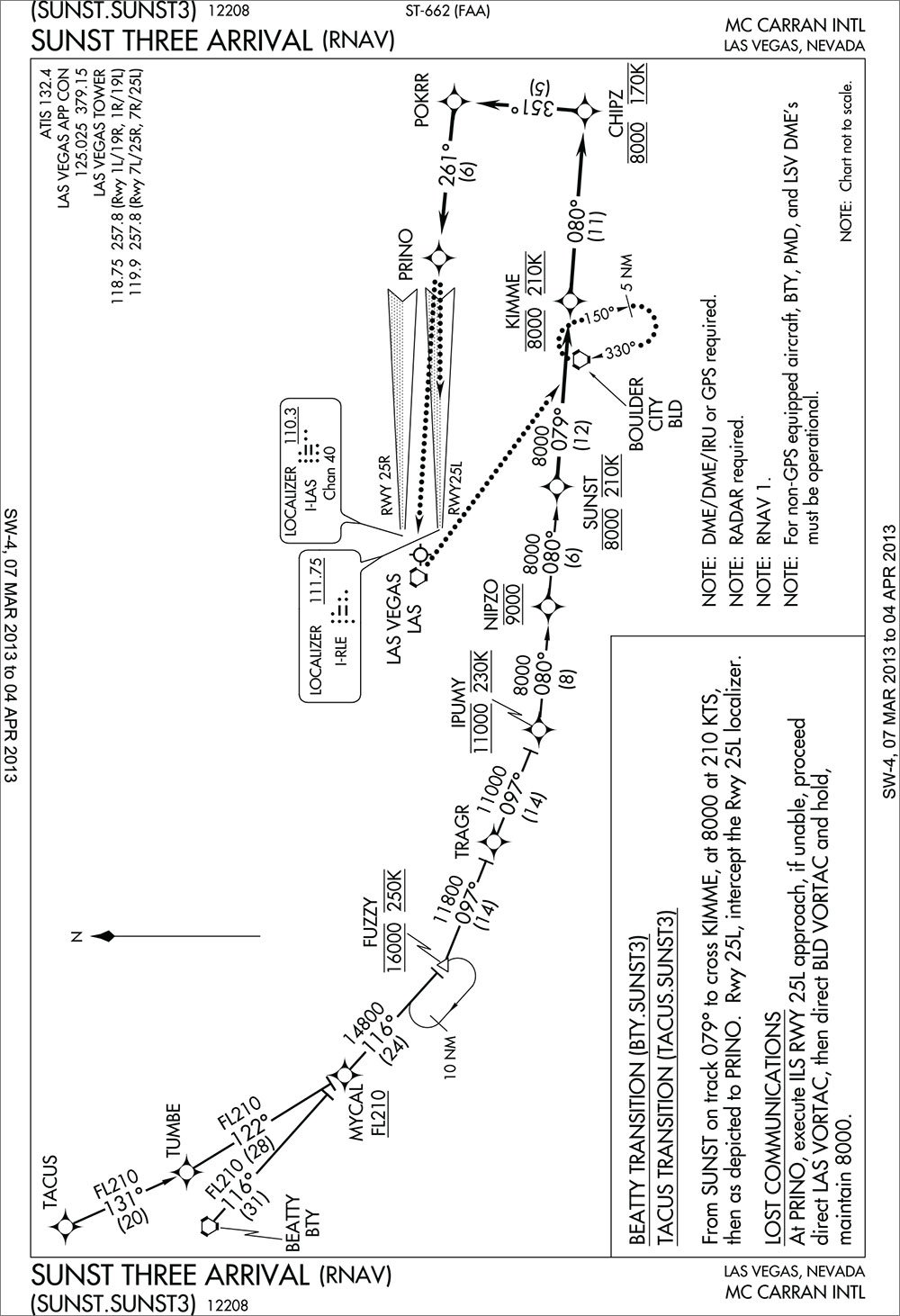


Back in February we took a look at the PUFFR ONE arrival into Denver Centennial and highlighted how a “descend via” arrival clearance with multiple speed and altitude restrictions works in a perfect world in which procedures are flown exactly as charted. Just as often, however, pilots are given vectors off the arrival or additional speed or crossing restrictions that are not charted.
These ATC instructions could be due to a local playbook change that the TERPS folks haven’t gotten around to charting yet, it could be just due to an aircraft up ahead that botched the flow, or it could be just one of those days. In any case, the interplay between the charted procedure restrictions and any additional ATC instructions is not always clearly understood and can easily lead to a pilot deviation.
What is Normal?
Much of this confusion can be attributed to the often-heard ATC instruction to “resume normal speed.” Receiving such an instruction should make a pilot pause to ask the existential question of “what is normal?” Until recently, the answer depended on whether there was a published speed restriction that applied to your route or not. If there was, the pilot should comply with it, otherwise the pilot should choose an appropriate speed. The problem was that too many pilots heard “normal speed” and thought “unrestricted speed.”
Last year, the FAA revised its ATC phraseology to clarify expectations following the termination of a speed restriction. Since then, that change has been hiding as a graphic notice in the NOTAM publication, but should be published in the Pilot/Controller Glossary by the time you read this. The update changes the definition of “normal speed,” and introduces additional instructions that may be issued depending upon the situation (see sidebar).

