On the Air

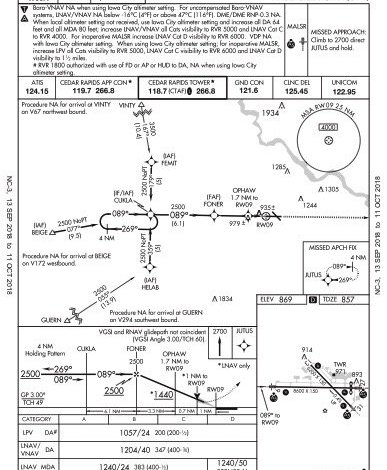
Procedure Turn Basics

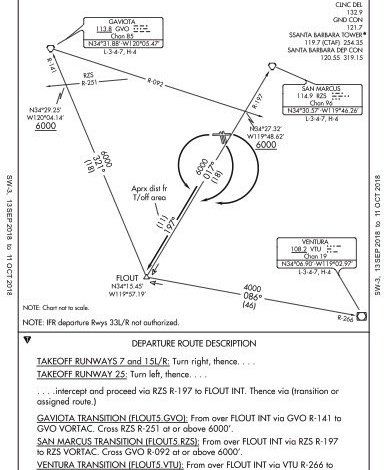
Teardrops are pretty rare (See Driving All Night, October 2017.) and permit aircraft to reverse course and lose a significant amount of altitude within a defined area (these are often found at military or joint-use airports). These are entered at the initial fix, proceeding outbound on the defined radial, and initiating a turn inbound at the defined point or distance. Think of it as a conventional procedure turn, but usually much larger and with explicitly defined segments.
Read More »

Alpha Dog

This sim challenge is inspired by our good friends over at PilotEdge. PilotEdge provides live ATC services for flight simulation. You will be on your simulator, but a real human controller vectors you through virtual airspace with the correct phraseology and skill. Theres no pause button and no spawuming your aircraft on 10-mile final. You start cold and dark on the ramp and need to use the radios to get a clearance, permission to taxi, and so on. It adds a significant element of realism and authenticity to your simulated flight.

Read More »

VFR Flight Following

But, if you are going VFR, deciding if you want flight following should definitely be on your list. If youre going to pass through Class Bravo airspace you might as well; its virtually a requirement. Otherwise, if the weather is clear and a million, youre not going through any airspace requiring you to talk to ATC, and youve decided to go VFR, should you consider flight following? Long story short, and after all factors are considered, the answer is Yes.

Read More »

Think Fast

Are you up for this after a few months of visual approaches? Youre current, comfortable with the aircraft, and familiar with the airport, so you dont see any problems. Besides, its time to launch and that low stuff is sure to start burning off by the time you get there as P6SM and SCT015 are forecast an hour after your arrival. In fact, you dont even need to look for an alternate now to meet 14 CFR 91.169 (b)(2) as the ceiling and visibility are expected to be better than 2000 feet and 3 SM at that time.

Read More »

Winter Forecasts

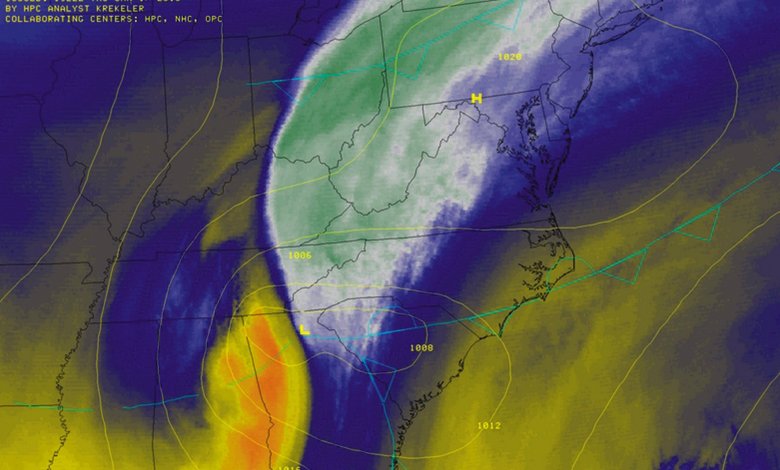
Lets start with the basics. In the cool season the North Pole is pointed away from the sun. As the polar regions lose solar heating and the days shorten, the atmosphere cools significantly, and we see a huge semi-permanent polar air mass covering much of Canada and northern Russia. Parts of it break off regularly as frontal systems and polar highs. The large expansion of the cold air mass boots the jet stream out of Canada, pushing it down into the United States.

Read More »

On The Air: November 2018

One Friday I shot the GPS 7 approach into Gwinnett County, Georgia (KLZU). As I was briefing the approach, I wondered how I would pronounce CURAP, the FAF, if I was asked to report it. Thankfully, that situation did not arise since I was cleared for the approach earlier and sent over to Tower shortly thereafter.

Read More »

It Did Happen To Me

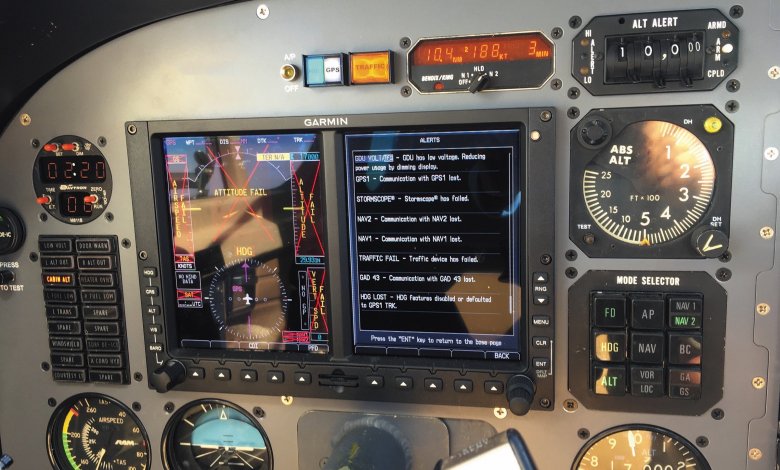
I installed a G500 on the left-side flight panel. Wanting some real redundancy-not just backup-the limited space on the right panel was perfect for Aspens PFD. This way, if my G500 ever croaked, Id just hop over to the right seat and fly using the Aspen. That also had the advantage of giving any planned right-seater good PFD information should that ever be necessary. I was set.

Read More »

Readback: November 2018

Mr. Bencini-Tibos excellent article, Regulation Fine Points in July might possibly leave the reader thinking that the safety pilot could log time when the flying pilot was not under the hood. FAA Office of Chief Counsel makes it clear in a legal interpretation on this matter dated June 22, 2009 to Jeff Gebhart, that the safety pilot can log only that time that the flying pilot is under the hood. Since the flight is made in an aircraft that does not require a SIC the safety pilot was not a required crew-member during the time the other pilot did not have the hood on, so the safety pilot does not get to log anything during that portion of the flight.

Read More »

Pilot Shortage?

The normal path for a fledgling airline pilot is to build his/her hours-traditionally as a CFI for pitifully low pay-and get a job with a regional carrier. That new first officer had an average starting pay in the mid-$20/hour range just a few years ago, before the hype of the pilot shortage. Second-year pay jumped nicely, sometimes as much as 50%, but then it stagnated at a few percent a year. A fifth-year first officer might have been making into $40-some/hour.

Read More »

Readback: October 2018

Many pilots want to fly IFR more often but dont quite remember how. If you addressed more of the basics and less of the quirky and obscure perhaps more pilots would actually benefit. One example would be to have a product published for particular regions or states of the country and present examples each month of airports and approaches for that particular area. This would give the local pilot community more opportunity to fly their local approaches and visit our local airports more often.

Read More »
Pilot in aircraft
Sign-up for newsletters & special offers!

Get the latest stories & special offers delivered directly to your inbox.

SUBSCRIBE