On the Air

Communication Clarity

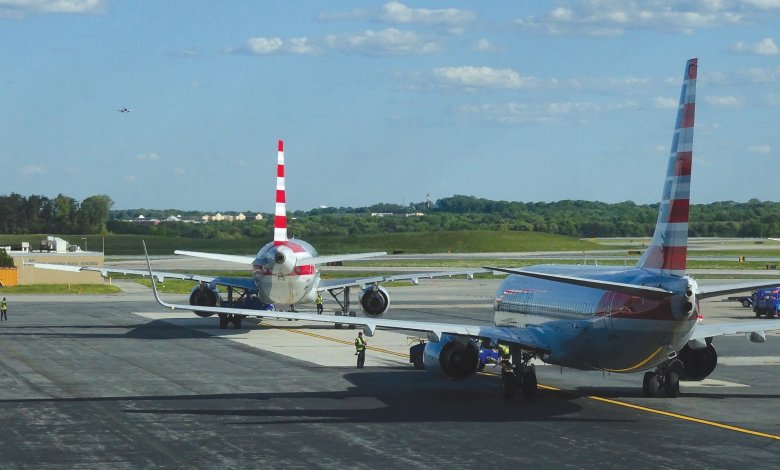
How about airplanes already on the ramp? Maybe an airliner advises hes pushing back, but another ones already pushed in his way. Well say, Use caution, Boeing 737 pushed back behind you. Advise ready to taxi. Its both a safety and a time reminder. Watch out for the other guy, and it may be a couple minutes before he can push. Were well aware airlines typically have ramp personnel wing-walking beside them, checking for obstacles. However, stuff happens. Were just covering our bases.

Read More »

Avionics Human Factors

Pilots were (and still are) over using automation, resulting in too much head-down button-pushing. The result was (is) an increase in situational awareness errors and loss-of-separation in particular. One flight crew got so absorbed entering a simple runway sidestep that they landed without a clearance. As the presenter advised, sometimes its better to reduce the level of automation for a given task. He summed it up nicely-were pilots, not automation managers; fly the plane first and keep up those manual skills.

Read More »

On The Air: October 2018

Last week my wife and I departed Deer Valley Airport, in Phoenix in our Cessna 177RG. Before departing we received a complicated taxi clearance to what looked like a parking lot at the end the active runway. Deer Valley calls itself the busiest general aviation airport in the country with lots of flight training. The parking lot was just a run-up area, able to handle lots of planes.

Read More »

Finally: Revised REGs

Back in May 2016, the FAA issued a notice proposing changes to Title 14 of the Code of Federal Regulations, commonly referred to by pilots as the FAR. They were generally favorable to pilots. Many had been discussed in the aviation press and by pilot groups earlier. In late June 2018, the FAA published the Final Rule incorporating the changes, some with modifications based upon comments received. Lets look at some of the changes, paying special attention to those relevant to instrument training and instrument currency.

Read More »

One In or One Out

Before I can clear an airplane for a visual approach, I have to ensure the pilot has either the landing runway, the airport, or preceding aircraft in sight. Obvious, right? If youre landing on it or following it, ATC must ensure you can see it. For instance, if there are clouds in the way or the preceding aircraft gets lost in ground clutter or weather, theres no guarantee youll be able to safely navigate visually to the runway.

Read More »

Back to Back

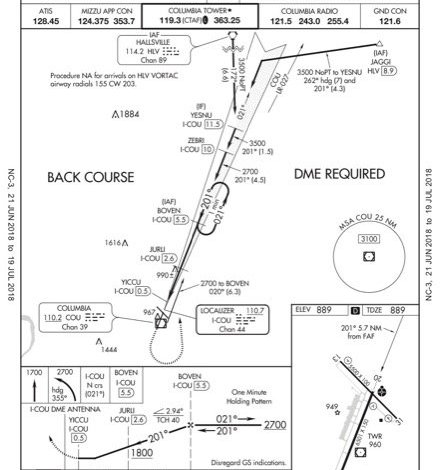
This is your third trip to Columbia, Missouri (KCOU), where youre flying in from the northwest in your trusty but basic Cessna 182. Equipment includes dual nav receivers, one glideslope receiver and DME. (For those of you watching at home, this is pre-RNAV Distance Measuring Equipment.) A portable GPS offers limited capabilities to navigate outside of your raw-data setup. No big deal; youve been flying this plane and panel for years and are a pro with ILS approaches. The filed route, which will be reversed to get home, departs from Watertown, South Dakota (KATY) and is: POEMS OTG V175 HLV.

Read More »

Skew-T Log-P Diagrams

An upper air sounding from the Slidell, Louisiana, NWS site, located about 85 SM west of the accident site, depicted a moist low-level environment with saturated conditions from 500 feet AGL to 6000 feet with a capping inversion. The freezing level was identified at 14,700 feet. The wind profile indicated calm surface wind with wind from the south-southeast veering to the southwest and west through 18,000 feet. A low-level wind maximum or low-level jet was identified near 5000 feet at 215 degrees at 25 knots, with winds less than 10 knots below 1000 feet AGL.

Read More »

On The Air: September 2018

I had this exchange on a flight back to a rural Arkansas airport from Florida. I usually fly IFR even in VFR conditions. I was at 6000 feet, with a broken layer below me. I usually cancel about 20 miles in advance, as Memphis Center cannot see me on radar, or communicate with me once I descend below 3000 feet.

Read More »

Master and Commander

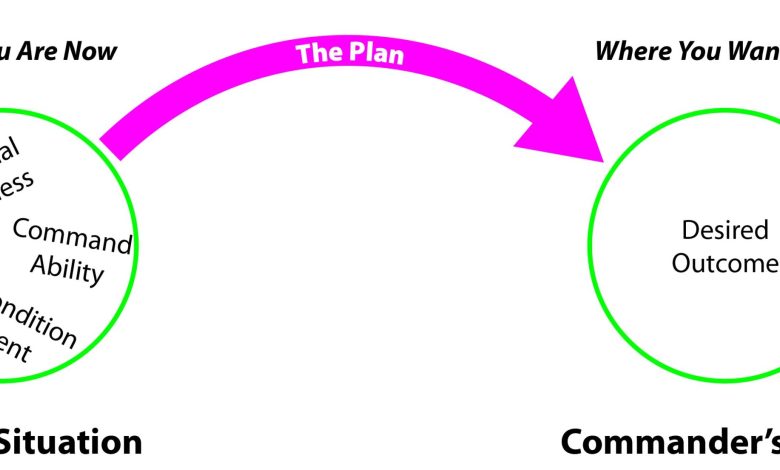
An approach to safety of dont have an accident and always effectively weight risks doesnt work because we dont take actions we think will cause accidents. Tom Turner recently presented a Wings seminar, Stop Teaching About Safety, covering this. Safetys an integral outcome, not a separate goal. Instead, he suggested approaching flying as its master and commander: The result will be safety. While being master and commander will work for all pilots, the instrument environment presents unique challenges to achieving that goal.

Read More »

On The Air: August 2018

At my home field in Farmindale, NY, (KFRG), one Sunday I was entering the pattern after a long trip. A student soloing in a Cessna 172 was in the pattern doing touch-and-goes. I heard the following exchange.Republic Tower: Cessna Two Six Seven Three Bravo, cleared for touch and go. Make right traffic and report the downwind.

Read More »
Pilot in aircraft
Sign-up for newsletters & special offers!

Get the latest stories & special offers delivered directly to your inbox.

SUBSCRIBE