













Register

Icing Encounters

Flying this time of year means dodging a whole new set of hazards. Depending on where you fly, those hazards frequently include the dreaded ice.

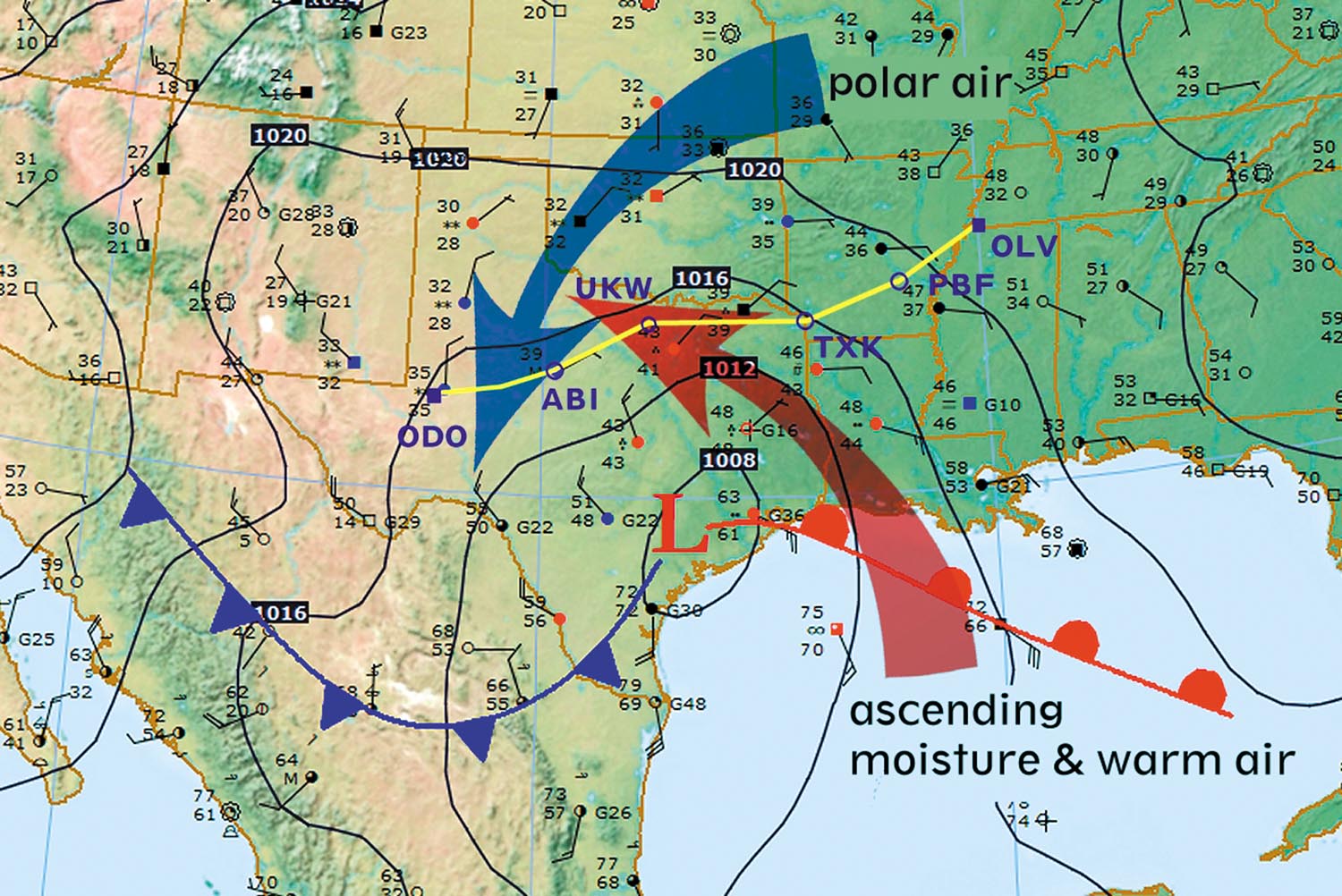
This surface map shows a developing winter system on the Gulf Coast. (Tim Vasquez)
Gemini Sparkle

Key Takeaways:

  • A fictional pilot, Fred, encountered severe icing after inadequate pre-flight planning and misinterpreting winter weather forecasts.
  • His experience highlighted that simple freezing level reports are insufficient, as complex atmospheric structures like Warm and Cold Conveyor Belts (WCB/CCB) create hazardous icing conditions across multiple altitudes.
  • Soundings are critical tools for understanding the vertical temperature distribution and identifying layers with severe icing potential, often revealing multiple freezing levels or inversions.
  • The article emphasizes the importance of thorough weather briefings and understanding complex weather phenomena for safe winter flying.
See a mistake? Contact us.

Let’s introduce you to Fred. He is a fictional pilot. Some say he is just “Fred”; others say he is a “Flight-Related Experimental Demonstrator” for Wx Smarts. Either way, he’ll help us experience flying through a real winter weather system across the southern U.S., guided by a veteran aviation weather forecaster. (That’d be me.)

Fred will fly his Baron 58 from Memphis Olive Branch (KOLV) Airport to Odessa (KODO) in West Texas to monitor some new oil leases on his family’s ranchland. A neighbor thinks the oilfield company was setting up on a field with no lease. Fred hopes to be done early so he can make it to the local BBQ place in Midland for brisket, then he’ll fly back to Memphis.


Ready to Sell Your Aircraft?

List your airplane on AircraftForSale.com and reach qualified buyers.

List Your Aircraft
AircraftForSale Logo | FLYING Logo
Pilot in aircraft
Sign-up for newsletters & special offers!

Get the latest stories & special offers delivered directly to your inbox.

SUBSCRIBE