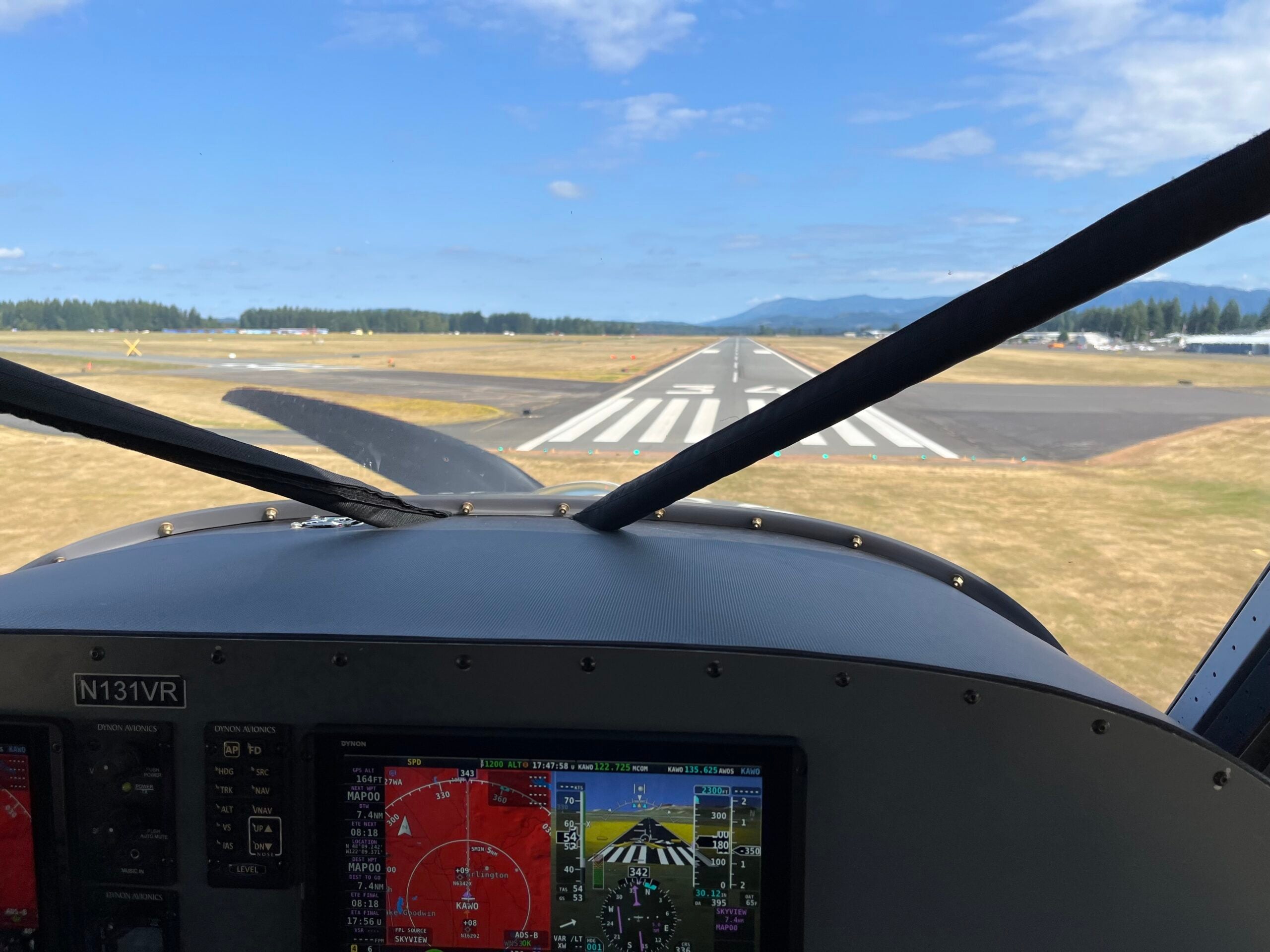
There's a lot that goes into a stable approach to landing. [Credit: Meg Godlewski]
Key Takeaways:
Maintaining a stable approach by staying ahead of the aircraft, adhering to checklists, and making smooth configuration changes is paramount; an unstabilized approach mandates a go-around.
Effective flight training for pattern work includes both ground-based instruction with visual aids and simulated "faux pattern" flying at altitude to practice stable approach procedures and decision-making for go-arounds.
Pilots must be proficient in executing go-arounds, understanding critical control inputs like right rudder, and integrating this maneuver into regular practice to enhance safety.
When a pilot gets behind the airplane in the pattern, it is never a good thing.
Rushing the checklist—or worse, forgetting the checklist items—leads to a late configured or nonconfigured airplane or being too fast or too high on final. All these things result in an unstabilized approach.
CREATE A FREE ACCOUNT
Sign up to keep reading
Create a free account to continue. Already a member? Sign in below.
Meg Godlewski has been an aviation journalist for more than 24 years and a CFI for more than 20 years. If she is not flying or teaching aviation, she is writing about it. Meg is a founding member of the Pilot Proficiency Center at EAA AirVenture and excels at the application of simulation technology to flatten the learning curve. Follow Meg on Twitter @2Lewski.