














FAA Proposes Extending Limit on Newark Operations

Staffing at facility that oversees the airspace has ‘not materially changed’ since June.

Newark airport United Airlines
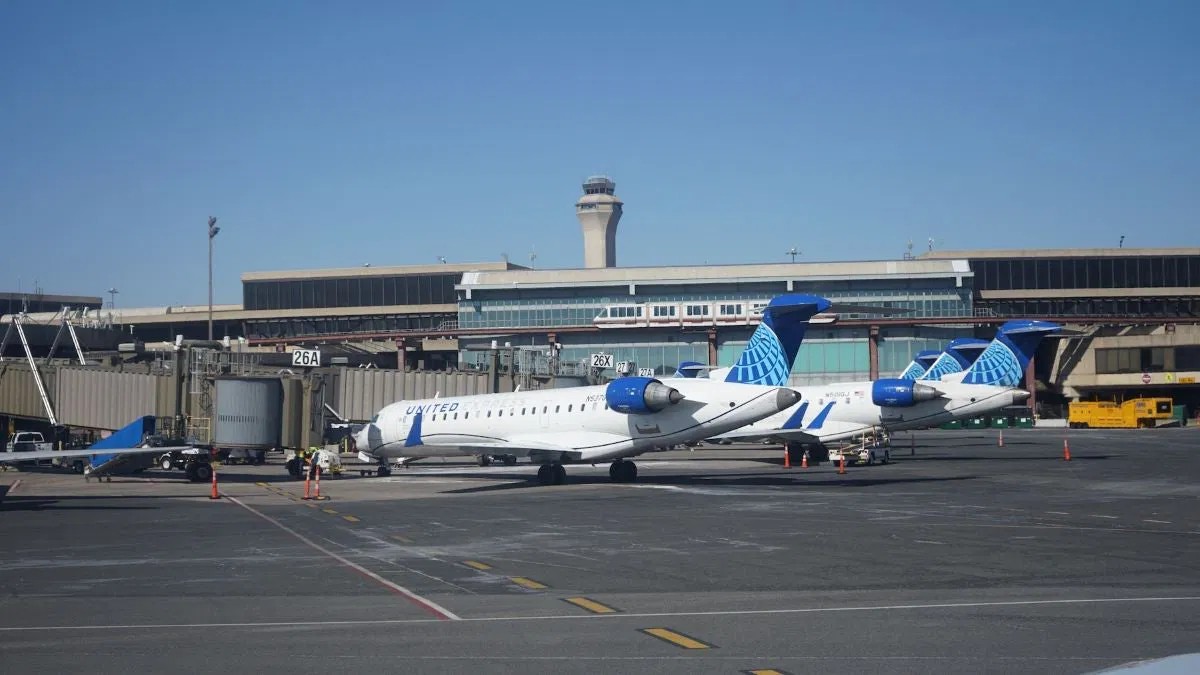
United Airlines, for which Newark Airport is a key hub, stands to gain the most from the proposed operational limits. [Courtesy: Shutterstock]
Gemini Sparkle

Key Takeaways:

  • The FAA proposes extending hourly flight operation limits at Newark Liberty International Airport (KEWR) until October 2026 to address ongoing flight disruptions.
  • These limits, generally capping operations at 72 per hour, are primarily a response to persistent and severe air traffic controller staffing shortages, particularly at the Philadelphia TRACON managing Newark's airspace.
  • The proposal aims to provide stability and certainty for airlines and passengers while the FAA implements long-term solutions, including controller training and infrastructure modernization, to resolve these critical deficiencies.
See a mistake? Contact us.

Under a new FAA proposal, Newark Liberty International Airport (KEWR) could continue to operate with limits on hourly arrivals and departures through October 2026.

To combat flight disruptions due to a combination of staffing shortages, equipment issues, and runway construction, the regulator on Friday proposed limiting Newark Airport to 72 operations per hour through October 24, 2026. Due to ongoing construction on the airport’s runway 4L-22R, operations on weekends from September through the end of 2025 are capped at 56 per hour.


The weekend operational limit was established by a June order following the ahead-of-schedule reopening of 4L-22R—one of Newark’s three main runways. The order also capped weekday operations at 68 per hour. Previously, an interim order in May limited hourly arrivals and departures to 56, pending the reopening of the runway.

The proposed 72-per-hour limit remains shy of the 80-plus hourly operations Newark Airport handled earlier this year, per United Airlines CEO Scott Kirby. But it could give airlines and their customers more certainty.

“Our operations at Newark are the best they’ve ever been, and EWR is now regularly the most on time airport in the New York City area—that’s a direct result of the actions taken by [Transportation] Secretary [Sean] Duffy and the FAA to ensure that the schedules out of Newark match the actual capacity of the airport,” Kirby said in a LinkedIn post on Saturday.

The United CEO added that the proposal is “good news for our customers…as well as for our nearly 15,000 employees who work at our EWR hub.”

Newark is a “crown jewel” of United’s network, handling 440 daily flights to 84 U.S. airports and 60 international destinations for the carrier, per its website. Each year, more than 14 million United passengers pass through the airport.

Snarls at Newark

For months, Newark has contended with thousands of delays and cancellations.

The disruptions began in late April, when it emerged that air traffic controllers at the Philadelphia terminal radar and approach control (TRACON) facility—which manages Newark’s airspace—suffered a 90-second telecommunications and radar blackout.

Another 90-second outage the following month prompted the FAA to take action to address equipment and staffing issues. Until July, for example, the Philadelphia facility received its data via antiquated copper wiring from an FAA hub more than 100 miles away in New York. That wiring, which was implicated in the April outage, has since been upgraded to a fiber optic line, among other measures.

Further improvements—including the construction of new TRACONs—are outlined in Duffy’s $12.5 billion air traffic control (ATC) modernization plan.

According to anonymous reports filed with NASA’s Aviation Safety Reporting System (ASRS), Newark’s issues began almost immediately after the FAA transferred control of the airspace from the New York TRACON (N90) to Philadelphia in July 2024.

The move was intended to alleviate staffing shortages at N90, which also oversees John F. Kennedy International (KJFK) and LaGuardia (KLGA) airports. But controllers said it added complexity. One ASRS report characterized the situation at Newark as “extremely dangerous.” Another lamented that not being in the same room as the Newark controllers is a “significant detriment.”

“The fact that there was no catastrophic mid air collision is nothing short of luck,” wrote one controller, who said a communications breakdown may have caused a near miss last August.

The relocation of controllers to Philadelphia does not appear to have solved the problem at N90, which per the FAA was only about 50 percent staffed as of September 2024. The regulator on Friday began recruiting entry-level personnel to the facility.

Staffing Issues Persist

Per the FAA, continued staffing worries at the Philadelphia TRACON are the main reason for the proposed extension of operational limits at Newark.

The regulator said the facility’s staffing pipeline—which stands at 20 controllers and six supervisors in training—has “not materially changed” since the June order took effect. The specific unit overseeing Newark, Area C, is just 48 percent staffed, with 22 certified professional controllers (CPCs) out of a target of 46.

Compounding matters is an agreement by the previous presidential administration that will return 14 CPCs in Area C to N90 by the end of July 2026. The FAA is working to replace them. But the controller training process typically takes years, even for trainees who have previously managed traffic at a different facility.

The agency said voluntary relief—which it offers to airlines to combat ATC shortages—will not be enough to keep operations in check amid continued shortfalls. “Numerous carriers,” it said, have told it they plan to ramp up flights next summer in anticipation of the 2026 FIFA World Cup and America250 celebration.

Given those conditions, the “FAA believes that a temporary extension and amendment of the

June 2025 order is necessary to efficiently address the remaining staffing deficiencies,” it wrote.

The government is also working to improve the working conditions for controllers by moving telecommunication and radar data collection for Newark closer to the Philadelphia TRACON. Duffy’s ATC modernization plan further calls for the construction of new air route traffic control centers (ARTCCs) and broad upgrades to ATC technology.

Airlines and other relevant parties will have until Friday to comment on the FAA’s proposal. The agency is considering a few methods for allocating the extra hourly operations, including proportional allocation based on prior reductions, a lottery system, or new delay reduction meetings.

Like this story? We think you’ll also like the Future of FLYING newsletter sent every Thursday afternoon. Sign up now.

Jack Daleo

Jack is a staff writer covering advanced air mobility, including everything from drones to unmanned aircraft systems to space travel—and a whole lot more. He spent close to two years reporting on drone delivery for FreightWaves, covering the biggest news and developments in the space and connecting with industry executives and experts. Jack is also a basketball aficionado, a frequent traveler and a lover of all things logistics.
Pilot in aircraft
Sign-up for newsletters & special offers!

Get the latest stories & special offers delivered directly to your inbox.

SUBSCRIBE
