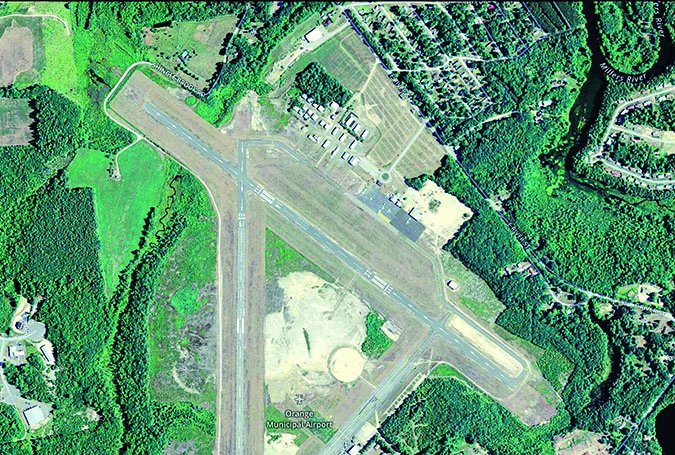
Displaced thresholds are just for landing in the direction of the displacement. So back in 2008 when the 4800-foot runway was displaced 1500 feet from both ends, the landing distance either way was 3300 feet. You may roll out, or even touch down and stop, on the displacement for the opposite direction.
Displaced thresholds significantly reduce the effective landing distance available for instrument approaches, typically implemented due to obstacle clearance requirements.
Instrument approaches are designed to the *displaced* threshold, not the start of the pavement, requiring pilots to carefully factor in the shorter usable runway length for landing.
The pavement preceding a displaced threshold is unusable for landing in that direction but can be used for takeoff in the same direction or for landing/taxiing when using the runway from the opposite direction.
Displaced thresholds often affect approach lighting systems, leading to recessed lights, omissions, or unusual configurations, which can result in higher visibility minimums.
I don’t often look around the cockpit wondering if I’m the target of a practical joke. But that’s the way it felt flying over Orange County Muni (KORE) in 2008. The 4800-foot Runway 32/14 had displaced threshold markings knocking out 1500 feet of runway from both ends. There was more displacement than runway.
CREATE A FREE ACCOUNT
Sign up to keep reading
Create a free account to continue. Already a member? Sign in below.