











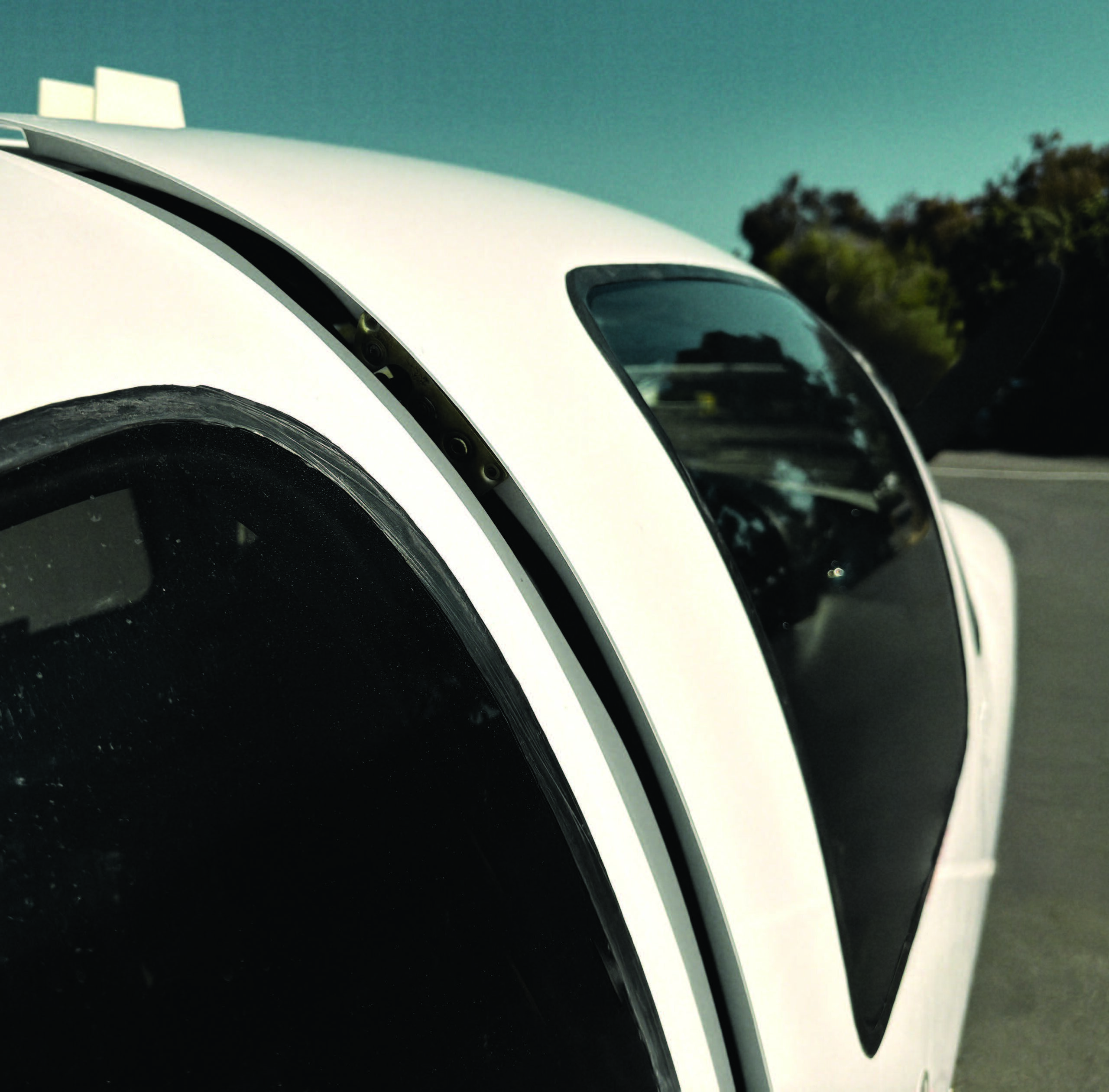


Deadly Doors: Distractions Still Posing Threats to Pilots

Already in 2025, there have been four serious crashes in the U.S. where a door opened after takeoff.

So if you find yourself needing to return to the airport with an open door, if possible, fly a standard traffic pattern. [Courtesy: Max Trescott]
Gemini Sparkle

Key Takeaways:

  • Unlatched doors after takeoff are a persistent and fatal issue in general aviation, frequently causing pilots to crash due to incorrect reactions rather than the minor issue itself.
  • Pilots often panic and attempt a rapid return to the airport by flying dangerously low and non-standard traffic patterns, exacerbating the risk.
  • Flying lower-than-normal traffic patterns leads to misjudged downwind distances and high-risk base-to-final turns, which can result in unrecoverable stall/spins at low altitudes.
  • To prevent these accidents, pilots should adhere to standard operating procedures, maintain standard traffic patterns even when stressed, and critically, ensure all doors are securely latched before takeoff.
See a mistake? Contact us.

A door pops open just after takeoff. It’s annoying, sure—but deadly? It shouldn’t be. Yet general aviation pilots continue to crash and die because of how they react to something as simple as an unlatched door. 

In just the first few months of 2025, we’ve had four serious crashes in the U.S. where a pilot experienced a door or baggage door opening after takeoff and didn’t make it back. Three of the four crashes were fatal, and the fourth one resulted in burn injuries. So, while it’s easy to dismiss these kinds of accidents, they’re important because they continue to kill.


This Article First Appeared in FLYING Magazine

If you're not already a subscriber, what are you waiting for? Subscribe today to get the issue as soon as it is released in either Print or Digital formats.

Subscribe Now

The most recent of the four occurred on Saturday, May 17. At about 10 a.m., a B55 Baron (N4321Z) took off from Runway 30R at Rocky Mountain Metropolitan Airport (KBJC) in Broomfield, Colorado, with two people on board. Shortly after takeoff, the pilot radioed the tower and said, “We’re going to have to go back and re-land. We’ve got the door popped open…” The tower instructed the pilot to make right traffic and cleared him to land, but there were no further transmissions from the pilot. 

The aircraft climbed to just 400 feet agl and then started a right crosswind. During that right crosswind, the aircraft lost about 200 feet, while slowing from about 100 knots to 96. The only way the aircraft could have slowed, while losing that much altitude, was if the engines were pulled way back. Most likely, the pilot felt that with a door open he should reduce his airspeed.

Tragically, as the Baron turned to the downwind, it continued to slow and lose altitude. As it rolled out on the downwind, its ground speed was 81 knots. A few seconds later, it started turning to the left, and the last recorded speed was 71 knots at about ground elevation. The airplane crashed and caught fire, and there were no survivors. 

One notable aspect to this accident was that the aircraft climbed to only about 400 feet agl while trying to fly a traffic pattern. Most traffic patterns are either 800 or 1,000 feet agl, and it would be easy to dismiss this low altitude as just a random pilot mistake. Yet I’ve noticed over the years that flying a low traffic pattern isn’t uncommon when pilots panic and try to return quickly to an airport. 

I don’t know the psychology behind why pilots do this, but here’s my guess. Incidents like this are likely anxiety producing. To reduce the anxiety, pilots try to get back on the runway as quickly as possible. When you want to get somewhere fast, it’s common for people to look for shortcuts in their routing to save time. If you have to climb all the way up to 1,000 feet, that obviously takes more time than if you stay down at 300 feet. So, in the moment, when a pilot is panicking and not thinking straight, it may seem logical to stay close to the ground, since it will shave a few seconds. 

Any time you fly, it helps to have normal procedures and make each flight as standard as possible. That’s why we use standard operating procedures, including following checklists and flying standard traffic patterns. Doing that to the extent possible is especially important when the chips are down and you’re challenged in some way, either by weather, fatigue, mechanical problems, distraction, or other issues. In those kinds of situations, keeping everything else, including the traffic pattern, as standard as possible reduces your workload and decreases the chances of introducing more problems.

Here are some problems associated with flying a traffic pattern at a lower-than-normal altitude. These same issues often occur when pilots circle to land following an instrument approach, since the circling altitude is often below the traffic pattern altitude. 

The biggest problem is that pilots fly a downwind that’s too close to the runway. This sets them up for failure when they make the base-to-final turn. Since the downwind leg was too close to the runway, the base leg is shortened, and pilots typically overshoot the base-to-final turn. Once they recognize the overshoot, they often add excess rudder and sometimes even pitch up. Either or both actions can lead to an immediate stall/spin that’s unrecoverable at a low altitude. 

Here’s why pilots accidentally end up flying the downwind closer to the runway than they realize. Most pilots judge their distance on downwind by judging the angle at which they’re looking down at the runway. Looking at where the runway meets a strut, or the wing, makes it easy to get approximately the same angle and therefore the same distance from the runway each time.

But imagine you’re flying at half the normal traffic pattern altitude. To make that angle appear “normal,” you would need to fly a downwind that’s half as close to the runway. So, if your normal downwind is flown at eight-tenths of a mile from the runway when flying a downwind at 1,000 feet, at 500 feet, you would end up just four-tenths of a mile from the runway to get the angle to the runway to look correct. 

So anytime you’re flying lower than normal, such as during a circle to land, you need to force yourself to fly a downwind that looks like it’s too far from the runway. When circling, I usually look at the range ring or arc on the moving map to get an approximate measure of my distance to the runway. Whenever I fly a traffic pattern, I try to make it as standard as possible. For example, at night the tower at my airport will often offer me a base leg entry. But since it’s dark below the traffic pattern and hard to judge height above the terrain, I always request right traffic instead. By entering on the 45 and making a standard traffic pattern, it’s easier for me to hit my altitude targets at every point along it. 

So if you find yourself needing to return to the airport with an open door, if possible, fly a standard traffic pattern. Better yet, just make sure the door is secured before you take off.


This column first appeared in the August Issue 961 of the FLYING print edition.
 

Max Trescott

Max Trescott is the host of the popular Aviation News Talk podcast, which focuses on GA and safety. He’s a Cirrus Platinum CSIP and SF50 type-rated pilot who often helps buyers fly their aircraft home. He’s also the 2008 National CFI of the Year.

Ready to Sell Your Aircraft?

List your airplane on AircraftForSale.com and reach qualified buyers.

List Your Aircraft
AircraftForSale Logo | FLYING Logo
Pilot in aircraft
Sign-up for newsletters & special offers!

Get the latest stories & special offers delivered directly to your inbox.

SUBSCRIBE
