













Coping With Turbulence

Turbulence can be a minor discomfort or endanger the aircraft. Recognition, avoidance and recovery are your tools.

Gemini Sparkle

Key Takeaways:

  • Despite modern aircraft's resilience, turbulence presents hazards such as unsecured objects, spatial disorientation, and the potential for aircraft upset or loss of control.
  • Turbulence originates from various sources, including weather phenomena like thunderstorms, frontal systems, and jetstream activity, as well as mechanical factors like air flowing over terrain or wake from other aircraft.
  • Pilots mitigate turbulence risks through diligent preflight planning, utilizing in-flight resources (e.g., radar, Pireps, EDR systems), and employing specific recovery techniques focused on energy management, maintaining appropriate speeds (VO/VA), and level attitude.
See a mistake? Contact us.

Writing an article about the hazards of turbulence is a little bit ironic for me, because it feels like since I have started flying as a professional pilot most of the communication I have with passengers is dissuading their fear of turbulence. The reality is that most day-to-day turbulence is not a threat to flight safety. As far as high-profile accidents caused solely by turbulence, you would have to look all the way back to 1966, BOAC Flight 911. After an encounter with severe turbulence, the vertical stabilizer separated from the fuselage and the resulting loss of control and flat spin resulted in a total hull loss.

A proverbial spoonful of sugar to help the above medicine go down is watching wing stress tests conducted during aircraft certification. Not only do the wings go substantially past their required structural limit but watching the videos really hammers home how over-engineered modern aircraft are. See how I cannot even mention a turbulence threat without a comforting qualifier? It is just ingrained in me.


Hazards

Despite my constant reassurances, turbulence does present hazards. The most common being unsecured objects, including people, hitting things they are not supposed to. More on that in the sidebar on the following page. Anyone who has bumped their head off the ceiling—and their headset into their lap—in rough air can relate, but that rarely happens rapidly or severely enough to create real problems. Compounding this is how disorienting turbulence can be, especially in IMC. Spatial disorientation can occur rapidly while getting jostled around, and the antidote of trusting your instruments is also a challenge when the rapid movement makes them tough to read.

Let’s walk further down that path: The aircraft is rocking, the body is sending erroneous signals to the brain about its orientation and the instruments are bouncing, maybe hard to read. Aircraft upset and loss of control present the most likely and most severe risk. The turbulence itself imposes forces on the aircraft; so does overcontrolling. Imposing these unnaturally high forces can stress the aircraft to the point of failure, which is the worst-case scenario.

Windshear presents additional challenges due to ground proximity and how rapidly it can force the aircraft into an undesirable speed state. See August 2022’s issue for a whole can of worms on Surviving Windshear.

Weather-Related

When I am trying to reassure the flying public, I explain that air is a fluid, similar to water. Turbulence is disrupted air, similar to boating on choppy water. Uncomfortable? Sure. Unsafe? Very rarely.

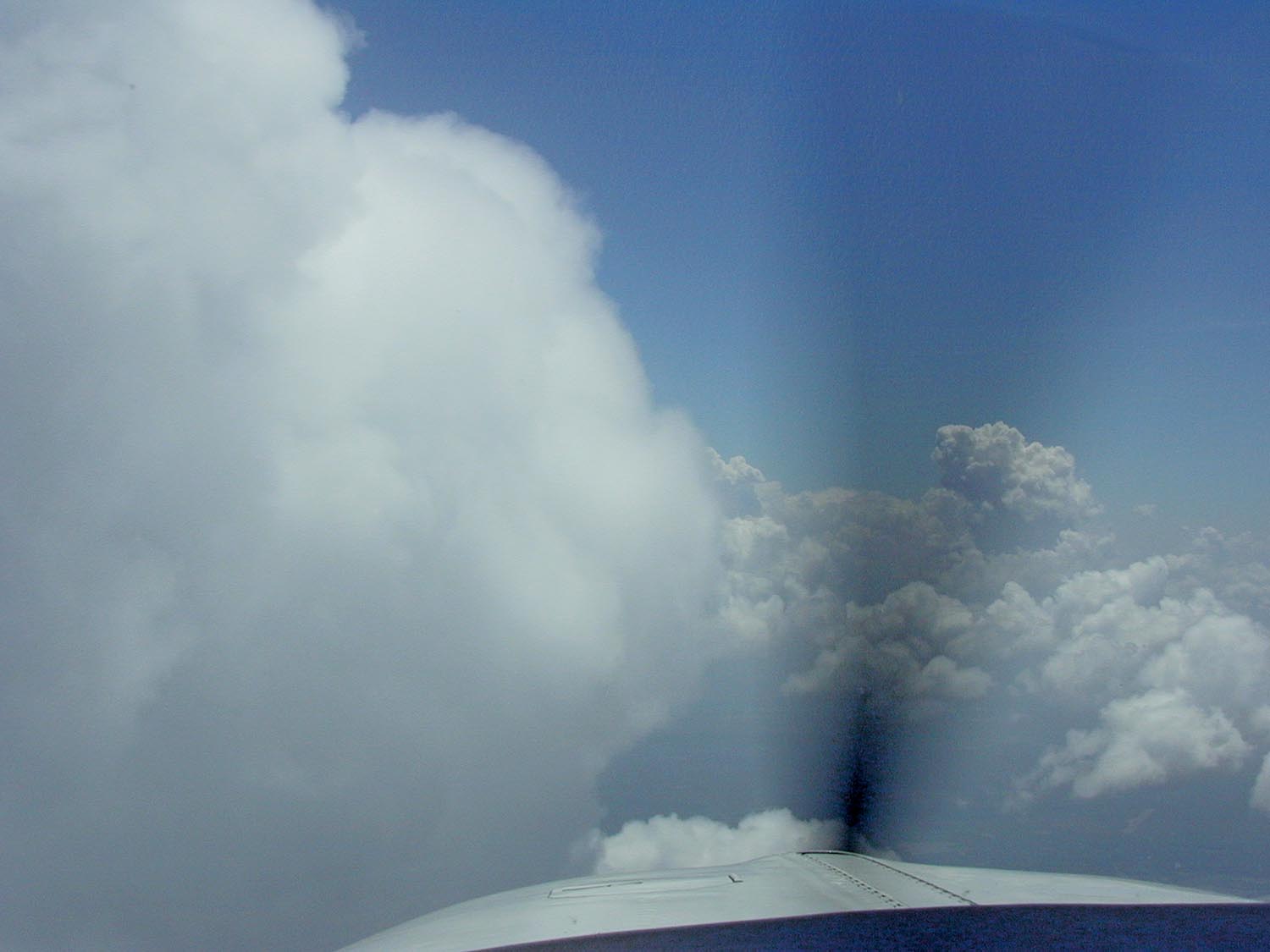
When flying, we need to avoid areas of majorly disrupted air. What can disrupt our nice glassy skies? Let us talk about weather first. Heating the earth’s surface can create thermals. If you add moisture and unstable air, you have the required components for a thunderstorm, one of the most common culprits in severe and extreme turbulence events. Thunderstorms also generate windshear and microbursts, and can toss hail 20 miles away if the storm has enough energy. Use Air/Sigmets, Pireps, airborne radar, Nexrad and ATC to give thunderstorms a wide berth.

Frontal weather and jetstream activity can create eddies where any combination of horizontal and vertical air movement collides. This may be associated with cloud buildups or lines of weather, or in completely clear air. Much of high-altitude flying is searching for a decent ride, and technology is assisting and improving every day.

Many modern airliners are equipped with meteorological sensors that detect and report EDR, or Eddy Dissipation Rate. This is often an early indicator for clear air turbulence and allows quick communication to fellow pilots and to the NOAA, who maintain the GTG (Graphical Turbulence Guidance System).

Geography-Related

Mechanical turbulence can create similar issues. Air flowing over something (mountains, trees, buildings) on the surface can send the air moving in all sorts of fun directions. To circle back to our water metaphor, anyone who has been white water rafting can easily visualize the water on the downstream side of a rock jutting out of a river. This is why mountain flying often involves checking the winds aloft to get an idea of which way the winds are blowing (pun intended) and see how bad the turbulence will be in the vicinity of the terrain.

Anyone who is a big fan of the FAA’s series of written tests is probably vaguely familiar with the standing lenticular cloud and its proclivity for providing aircraft with a free ride. Standing lenticular clouds form over eddies or obstacles in the atmosphere that disrupt the flow of air. These disruptions can create a series of atmospheric waves downstream of the obstacle, where the air rises and cools at the crests of the waves, forming clouds. While they look really neat, they are best observed from afar.

To cap off the trifecta of explaining different turbulences through water visuals, wake from a boat is fitting for wake turbulence. Unfortunately for us, wake turbulence generated by aircraft is unpredictable and much harder to spot than a wake from a boat.

The key to avoidance is recognition. Knowing the formula for turbulence, practicing vigilant preflight planning and recognizing in-flight weather patterns will reduce the risk of a turbulence- related event. Never decline a little help from your friends, as Pireps are still some of the most accurate and up-to-date sources for bumpy rides.

At left is NOAA’s Graphical Turbulence Guidance System in action, showing forecasted turbulence, while the same-time Pireps for icing and turbulence are plotted above. They seem to match nicely.

Recovery

If you find yourself in times of trouble, the first priority is energy management. Low energy states generate stall/spin threats and high energy states could cause structural damage, both potentially ending in loss of aircraft control. In turbulent air, make sure to give a healthy margin above stall speed and remember that severe enough weather can force the aircraft to exceed the critical angle of attack at high airspeeds. Be ready to recover.

On the other side of the energy spectrum, there are three potential speeds to consider when the boat starts rocking. If your aircraft publishes a turbulence penetration speed, that is the first place to be. Otherwise, VO (maximum operating maneuvering speed) or VA (design maneuvering speed) are the target speeds to be under.

Maneuvering speed is a little more nuanced than we are often taught. The water-cooler definition is a version of VA is the speed at which you can make a full control deflection on one surface and the aircraft will stall before structural damage occurs. Referencing AC 23-19A, “Airframe Guidance for Certification of Part 23 Airplanes,” there are a couple of additional important points.

First, it is not a gust penetration speed, so while it provides protections in the conditions above, it does not guarantee safe transition through extreme or severe turbulence. There is additional emphasis that flying below VA does not allow unrestricted flight control movement, only that if the aircraft is operating below VA and in a nose-up attitude, a stall will occur before structural damage.

The maximum operating speed is calculated by taking the stall speed multiplied by the square of max allowable load factor, meaning a stall should occur before structural damage occurs. The long story short here is that while VO and VA do not provide surefire protection against the worst turbulence, they will unload the wings and give the aircraft a greater margin from its structural limits.

A common error for recovery in these conditions is entering extreme weather and pulling the power to idle to start the aircraft slowing. This is a good instinct, but just make sure to bring the power back to a (lower) cruise setting before the aircraft gets too slow.

Once in the thick of it, accept variations in altitude and airspeed and work to maintain a level attitude for even load distribution. Be prepared to execute an upset recovery/unusual attitudes maneuver, ensuring that the startle factor and the general confusion these events create does not cause an incorrect initial reaction.

Smooth Sailing

Unfortunately, we cannot always operate on clear, glassy mornings with an idyllic sunrise as a backdrop to our adventures. As they say, a smooth sea never made a good sailor. Keeping turbulence in mind during preflight planning and while in flight operations will help keep us blue side up and prevent any heads from bumping off the ceiling. And while we’re here, it’s always worth the friendly reminder to help your fellow pilots out and submit a Pirep.

[su_box title=”Securing the Cabin” box_color=”#e5eaef” title_color=”#273957″ radius=”6″]

Ensuring any loose items are secure in your aircraft is always good practice, even if turbulence isn’t in the forecast. In aircraft with a baggage area still located in the cabin, like many trainers, never assume that objects behind the seat will stay there. Many have learned this lesson the hard way with a tiedown to the head during aggressive unusual attitude recoveries. Make sure to periodically check items that live in the aircraft but may have shaken loose or fallen out of their mounts/brackets/homes. Additionally, any items like EFBs, kneeboards or charts are no good to anyone on the floor or in the back seat, so consider the best way to keep them close by.

[/su_box]

Ready to Sell Your Aircraft?

List your airplane on AircraftForSale.com and reach qualified buyers.

List Your Aircraft
AircraftForSale Logo | FLYING Logo
Pilot in aircraft
Sign-up for newsletters & special offers!

Get the latest stories & special offers delivered directly to your inbox.

SUBSCRIBE