














Boeing Reports First Quarter Net Loss on Higher Revenue

The company said its results reflect a combination of strong demand and unusual costs.

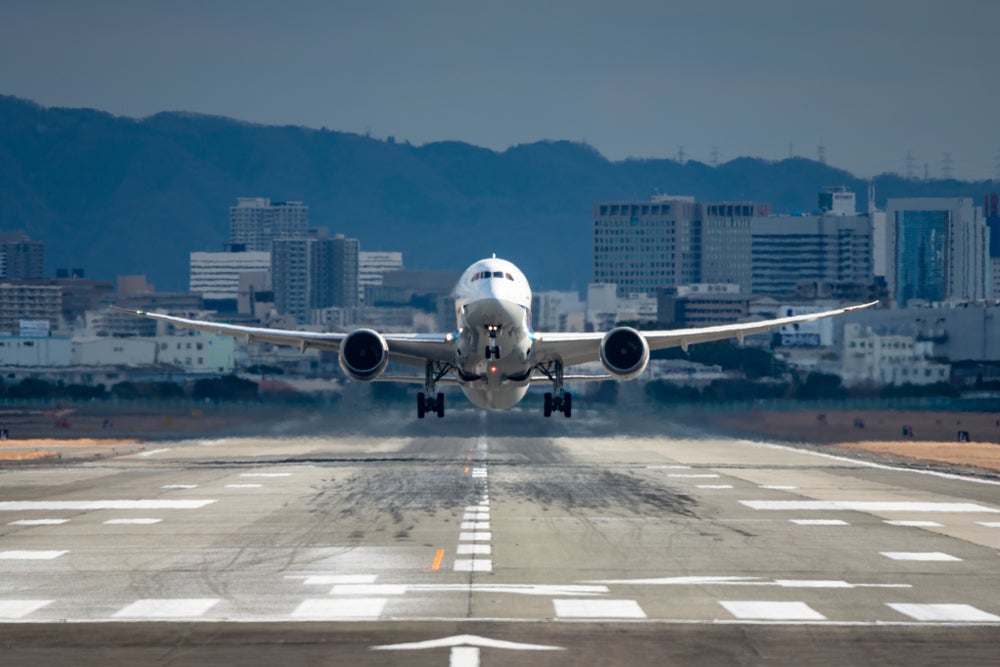
In announcing first-quarter results, Boeing said it plans to boost production of 737 and 787 jets. [Credit: Shutterstock]
Gemini Sparkle

Key Takeaways:

  • Boeing reported a Q1 net loss of $425 million despite a 28% revenue increase to $17.92 billion, attributing the loss partly to unusual expenses and supply chain issues.
  • Commercial Airplanes revenue increased 60% to $6.7 billion, driven by higher 737 and 787 deliveries, but with abnormal costs impacting margins.
  • Production of 737 MAX aircraft will slow due to a fuselage fitting issue, though Boeing maintains its delivery target of 400-450 aircraft for the year and plans to increase production to 50 per month by 2025-2026.
  • Boeing secured significant new orders, including from Air India and Saudi Arabian Airlines, and has a substantial backlog of 4,500 airplanes valued at $334 billion.
See a mistake? Contact us.

The Boeing Company [NYSE: BA] reported a first-quarter loss, which it attributed in part to unusual expenses in its commercial aircraft operations, and the general effects of supply-chain difficulties. However, the company said its businesses are performing well, with increased revenue and plans to boost production of certain aircraft models.

The net loss totaled $425 million, or 69 cents per share, compared with a loss of $1.16 billion, or $2.06 per share, a year earlier. Revenue for the quarter rose 28 percent to $17.92 billion from $13.99 billion a year earlier.


“We delivered a solid first quarter and are focused on driving stability for our customers,” said Dave Calhoun, president and CEO of Boeing. “We are progressing through recent supply chain disruptions but remain confident in the goals we set for this year, as well as for the longer term.”

Boeing’s Commercial Airplanes operations reported a 60 percent revenue increase to $6.7 billion from $4.2 billion, benefiting from higher deliveries of 737 and 787 deliveries, partially offset by 787 customer considerations. The operating margin (of 9.2 percent) also reflects abnormal costs and period expenses, including research and development.

Boeing noted that the fuselage supplier for its 737 program recently told the company that methods affected certain fuselage fittings. While the resulting problems do not immediately threaten safety, the company said, correcting them will slow near-term production and deliveries. The company said it still expects to deliver 400 to 450 aircraft this year. Its plans  include increasing production to 38 aircraft this year and to 50 per month during the 2025 to 2026 timeframe.

For the 787 program, Boeing said it is building three airplanes per month and plans to increase production to five per month in late 2023 and 10 per month during the 2025 and 2026 timeframe.

Commercial airplane orders totaled 107 during the quarter, and the company received commitments from Air India for 190 737 MAX, 20 787, and 10 777X aircraft, and from Riyadh Air and Saudi Arabian Airlines for up to 121 787 airplanes.

Boeing said it delivered 130 airplanes during the quarter and its backlog reached 4,500 airplanes with a value of $334 billion.

Jonathan Welsh

Jonathan Welsh is Lead Editor of Aviation Consumer and a private pilot who worked as a reporter, editor and columnist with the Wall Street Journal for 21 years, mostly covering the auto industry. His passion for aviation began in childhood with balsa-wood gliders his aunt would buy for him at the corner store. Follow Jonathan on Twitter @JonathanWelsh4

Ready to Sell Your Aircraft?

List your airplane on AircraftForSale.com and reach qualified buyers.

List Your Aircraft
AircraftForSale Logo | FLYING Logo
Pilot in aircraft
Sign-up for newsletters & special offers!

Get the latest stories & special offers delivered directly to your inbox.

SUBSCRIBE
