Unicom

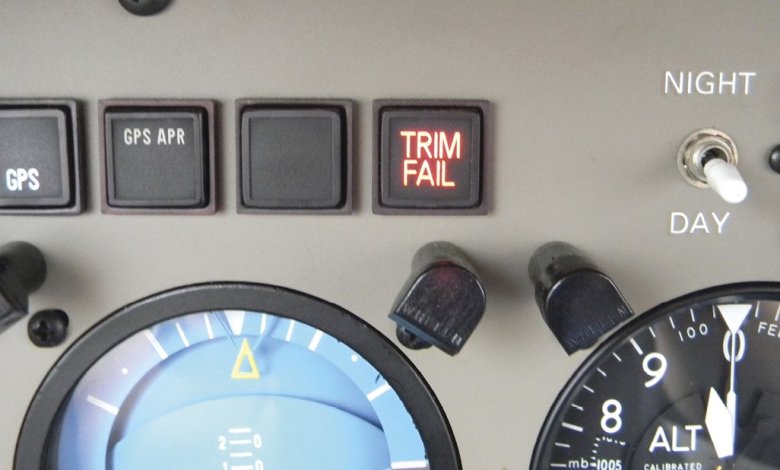
Trim Failures

Years ago, when I first heard the term runaway trim, my initial thought was something along the lines of, How can that happen? All of the trim systems Id seen up to that time had been manual, unassisted crank, lever or thumbwheel affairs, which rely on the pilot grabbing something and moving it to achieve the desired change. I was aware that trim systems could mechanically fail, but generally would stay in a fixed position when they did. I had discussed and trained for abnormal trim conditions, but how could a trim system run away? Then I learned about electric trim, autopilots and runaway trim, and it all became clearer.

Read More »

Dont Be Upset

David Jack Kennys article on upset training (Undoing An Upset, November) was excellent. A year or so ago, my son and I spent a day with Patty Wagstaff in St. Augustine, Fla. We took ground school and two flights each. Not inexpensive, but not outrageous either. We got unbelievable training and spent much of the day in spins and inverted. Back at the hotel that night, we just looked at each other and said, Wow! Were both much better pilots following the experience.

Read More »

Air In The Tanks

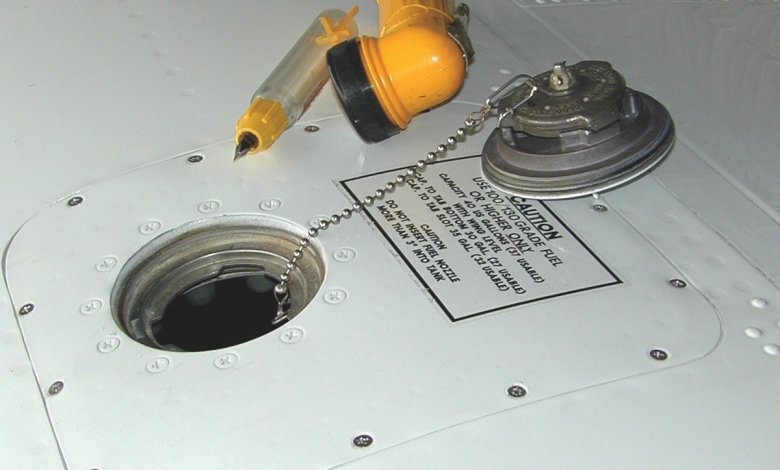
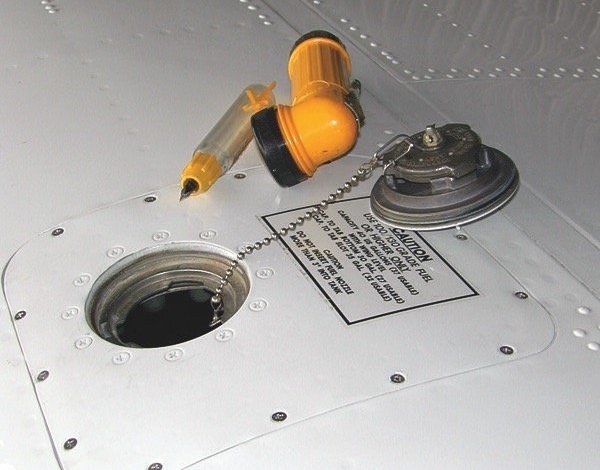
Ive owned Cessna T210s since 1977; first a 1969 J model and then a 1979 N model with a TSIO-520-R engine. In the 1980s, there were a number of fuel exhaustion accidents in 210s, all of them attributable to not getting a full fill and resulting in being shorted an hours supply when fueling stops after fuel backs up out of the filler port. The outboard sections of the fuel tanks are slightly higher than the bottom of the filler port. To get the last one-plus gallons in the tanks requires the slowest of fueling until reaching the real full point.

Read More »

Canceling IFR Too Soon

Tom Turners article in the October issue, When To Go Visual, touched on one of my pet peeves about canceling IFR after breaking out on an approach to a nontowered airport: the need to maintain VFR to the runway in an IMC environment. While we all need to be courteous and try to expedite other traffic, canceling IFR at, say, 500 agl after breaking out of a 700-foot ceiling puts us 200 feet below the clouds, too close for legal VFR in Class E airspace. And canceling two miles out on the final can provide all the evidence one needs that youre operating in less than VMC without a clearance. Enterprising feds have brought enforcement actions in similar circumstances. And theres always the guy who pulls his pickup truck onto the runway forcing you to go around and fly the miss.

Read More »

Potpourri

By the time you read this, itll be late September or early October. In some regions of the U.S., that means leaves changing color, frost on the pumpkin and winterizing the house, the vehicles and the airplane. In other regions, like where I am, it means shutting off the air conditioning, opening the windows and putting a final close cut on the yard. Cooler, better flying weather, along with some seasonal challenges, likely will confront us all soon.

Read More »

Backcountry Culture

I appreciate David Jack Kennys take on the value of keeping up with performance and ground-reference maneuvers after the checkride (Maneuvers, September 2018). Ive found that they definitely help me to build confidence when Ive been out of the left seat for a while, and can quickly restore the feel of the airplane. The same is true when confronting an unfamiliar type or when assessing skills of a new pilot-acquaintance.

Read More »

Pattern Entry Guidance

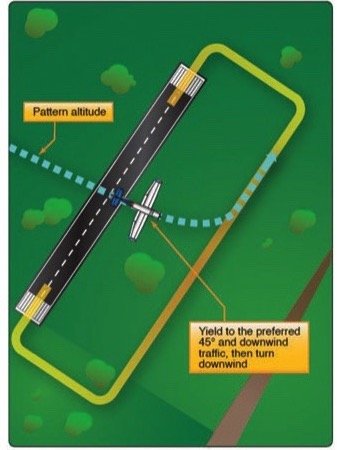
The right-hand diagram on page 32 (July 2018) depicting an alternate midfield entry when approaching from the side opposite the traffic pattern was (and I believe still is) the standard approach taught across Canada when I began flying over 50 years ago. When approaching from the same side of the traffic pattern, we were taught to enter downwind parallel to, slightly wider and slightly further upwind than usual, rather than the 45-degree entry in the U.S. The preferred entry (left-hand diagram) involves a short period where you are blind to everything that may be happening in the pattern and thus may pose unnecessary risk.

Read More »

Are You Experienced?

This sounds like malpractice on the part of his FBO and possibly flight instructor. How can a student pilot in primary training with about 20 hours get checked out in a different aircraft with that little training? I remember that being approved for solo flight in my FBOs 172 was a big deal, like it is for most students: you do some landings with the instructor, then he or she gets out and tells you to do it yourself while observing from the ground, something that apparently didnt occur in this case since the instructor was with him for that sole hour of dual. Im even wondering how the students insurance company would have covered him (or if he was covered at all…).

Read More »

Risk And Benefit

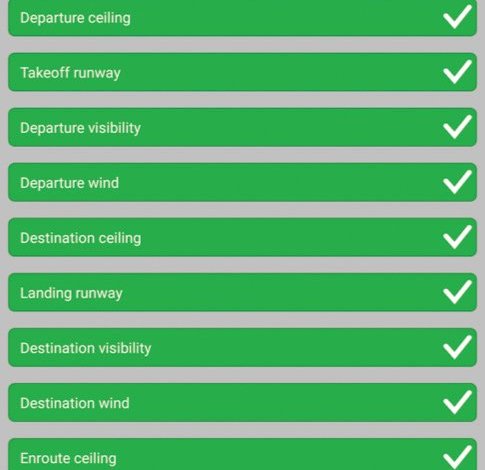
I much appreciated Robert Wright’s May 2018 article, Risk Assessment Tools. We use a version of a flight risk assessment tool in our flying club, and while I agree that numerical values should not be the sole criteria for the go, no-go decision, the process does provide a checklist of sorts for decision-making. The most valuable risk assessment tool I use is not found on any web site or aviation app, but is the application of a simple philosophy: If I have to analyze a go, no-go decision for more than a few seconds, it is a sure sign that the risk requires serious mitigation or a willingness to stay safely on the ground.

Read More »

The Air Is A Fluid

Iwish I had read, or at least learned the material, in Mike Harts April 2018 article (Seeing The Invisible) before my husband and I departed on a flight from Santa Monica to Lone Pine, Calif., back in 1998. My excuse is that I had not yet earned my certificate. At the time, I blithely believed the plane simply went where you pointed it.

Read More »
Pilot in aircraft
Sign-up for newsletters & special offers!

Get the latest stories & special offers delivered directly to your inbox.

SUBSCRIBE