










Circle To IPC
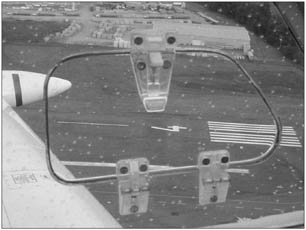
The FAAs new Practical Test Standards will require a circling approach during an Instrument Proficiency Check. Heres what you need to know.

The FAAs new Practical Test Standards will require a circling approach during an Instrument Proficiency Check. Heres what you need to know.
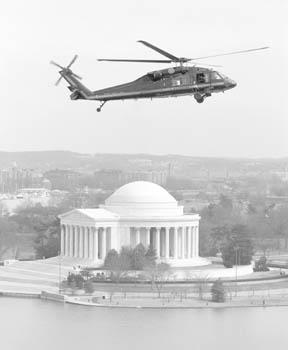
With temporary flight restrictions popping up like summer thunderstorms, the chances of inadvertently straying into one and being intercepted are greater than ever. Heres what you need to know, just in case.
A Touchy Subject
About a year ago I was practicing solo landings in preparation for my FAA checkride to become a new private pilot. I was at a familiar untowered airport that gets busy and on this particular day it was exactly that. I announced my intent to complete a touch and go, closed pattern and received a reply from the plane behind me that he had me in sight and would land on the same runway.
I approached the runway with 30 degrees flaps and made a nice touch down. Carb heat off, full throttle, I hastened to take off and not delay anyone behind me.
To my surprise, the aircraft (a Cessna 172) sprang into flight at about 40 knots, not a safe speed. I forced the n…
On September 1, the FAAs new rules implementing the Sport pilot certificate and Light Sport aircraft category (LSA) went into effect. This long-awaited set of regulatory changes is designed to make general aviations lower end more affordable and accessible by relaxing rules on pilot training and aircraft certification in exchange for certain specified operational limits. It represents the culmination of many years of work by industry and the FAA, especially the Experimental Aircraft Association and the Aircraft Owners and Pilots Asssociation.
Given the current regulatory and political environment, its a miracle the new rules ever saw the light of day, much less made it all the way thr…
The following information is derived from the FAAs Service Difficulty Reports and Aviation Maintenance Alerts.
———-
Various Cessna single-engine pistons
KAP-140 Autopilots
A new Airworthiness Directive, AD 2004-15-19, supercedes AD 2003-24-13, which applies to certain Cessna Models 172R, 172S, 182S, 182T, T182T, 206H, and T206H airplanes equipped with a certain Honeywell KAP 140 autopilot computer system installed on the center instrument control panel near the throttle. The superceded AD (2003-24-13) requires, among other actions, installing an update to the operating software of certain KAP 140 autopilot computer systems. The new AD (2004-15-19) results from the…
Right-Of-Way?
Your July 2004 article, Five Pattern Sins, includes the statement, The classic conflict is the straight-in approach that T-Bones an airplane on base leg which, technically, has the right of way. I dont think the FARs agree.
While the lower aircraft is usually the one with the right-of-way, an aircraft on final approach has the right-of-way over all other aircraft in flight. This means downwind, base and anywhere other than on final.
Final approach is not defined in the regulations; the AIM attempts to define as the leg of the pattern between base and the runway along the runway centerline, but its not a comonly accepted definition. The Pilot/Controll…
The airplane was destroyed when it impacted a gravel quarry shortly after a departure at about 1017 Eastern time. The Commercial pilot was fatally injured. Visual conditions prevailed for the local glider towing flight. According to a student glider pilot who was being towed by the accident airplane, it was his third tow of the day. He stated they departed from Runway 17 and performed a 45-degree left turn simultaneously. About 30 feet above the ground, the student pilot noticed that the tow rope had some slack in it. After applying a correction, the student pilot noticed that the tow plane did not appear to be climbing well, and the tow rope went slack again at 150-200 feet above the gr…
At 1236 Central time, the aircraft impacted terrain during a forced landing following a loss of engine power at the end of the flight from Gastons Airport, Lakeview, Ark. The Private pilot reported minimum fuel while on final approach to Runway 19L at the Wichita Mid-Continent Airport. Visual conditions prevailed; the pilot received minor injuries and three passengers were uninjured. The pilot later stated the fuel gauges indicated five gallons each while on a four-mile final. About three miles out from the airport, he determined that the landing runway would not be obtained due to a lack of engine power. He selected a landing site adjacent to the approach path in a large drainage area. The…
At 1038 Central time, the airplane was substantially damaged when it impacted trees following a loss of control during a go-around at the Saline County Airport (M99), near Benton, Ark. The solo student pilot was seriously injured. The supervised solo flight originated approximately eight minutes prior to the accident. After takeoff, the student pilot decided to perform a short field landing. While on final approach for Runway 17, he realized the airplane was a little high and selected 40 degrees of flaps, while noting the wind to be variable. The airplane started to drift left of the runway centerline while on short final. The student pilot crabbed the airplane into the wind attempting to…

Get the latest stories & special offers delivered directly to your inbox.
SUBSCRIBE