










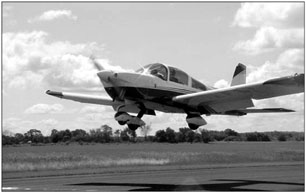
Finessing The Flare
This final maneuver of every flight can reveal the smallest flaws. But a little planning and lots of practice can make every landing a greaser.

This final maneuver of every flight can reveal the smallest flaws. But a little planning and lots of practice can make every landing a greaser.
The FAA is turning over its Flight Service Station network to a private company. Whats the plan, and how will this impact safety?

Precise flying is a numbers game. But can you really trust the numbers and other information in your Pilots Operating Handbook?
At 1857 Eastern time, the airplane collided with trees and power lines in the vicinity of Shallotte, N.C., while maneuvering during a forced landing. Visual conditions prevailed. The airplane was destroyed, and there was a posr-crash fire. The Private pilot reported minor injuries; the Private pilot-rated passenger was fatally injured. The flight originated from Atlantic City, New Jersey, on February 1, 2005, at 1615. The airplane had been in cruise flight at 3000 feet, receiving flight following from ATC, when engine power decreased to idle. As the pilot was making a Mayday call, he lost sight of a highway on which he planned to land. He made a steep turn to the left, reacquired the high…
Neither the Private pilot receiving instruction nor his CFI were injured during a hard landing at about 0850 Eastern time. The airplane sustained substantial damage, following a simulated loss of engine power during takeoff and subsequent emergency landing after takeoff. The pilots accident report stated, in part: I taxied onto the runway, aligned the aircraft with the center line … as airspeed increased with our ground roll, I rotated the aircraft at 60 KIAS. To simulate an engine failure, the CFI reduced the throttle. I lowered the nose [and attempted] to flare the aircraft before contact with the runway. Subsequently, a hard landing was made, and the aircraft stopped….
At 1610 Central time, the airplane was destroyed upon impacting terrain following a loss of control in the airport traffic pattern. The Commercial pilot, sole occupant of the airplane, was fatally injured. Visual conditions prevailed. The flight originated near Pascagoula, Miss. A witness who was located on the airport reported that he observed the airplane fly steadily over a tree line, with no erratic movements. As the airplane descended to an altitude of approximately 200 feet, the airplane went into an approximate 20 degree nose-down attitude and impacted the terrain….
The airplane was destroyed when it departed from cruise flight at 0920 Eastern time and impacted terrain. The Commercial pilot and three passengers received fatal injuries. The flight departed Sheboygan, Wis., at 0738 and was en route to Lebanon, Ohio. Ground fog was present in the area of the accident site; however, the airplane was in visual conditions on an IFR flight plan at its cruise altitude. Radar track data indicate that, at 0919:42, the airplane was on a heading of 135 degrees at 7000 feet msl. At 1419:47, radar data indicate the airplane at 6900 feet msl, and descending. At 1420:02, the airplane was at 3400 feet msl. No further radar contact with the airplane was recorded. At 0920…
At 1700 Central time, the helicopter collided with terrain following a loss of control while maneuvering and was substantially damaged. The Commercial pilot and two passengers were not injured. The pilot reported he was landing on a cart when the accident occurred. He reported the helicopter touched down, and he was attempting to raise the helicopter to center it on the cart, when a gust of wind caused the helicopter to roll to the right. The right skid contacted the ground and the helicopter came to rest on its right side. The pilot stated the cart is approximately six to eight inches high. He also stated that when the helicopter is centered on the cart there is approximately one foot of cl…
The Bonanza was destroyed at about 1242 Eastern time when it impacted terrain while its pilot was attempting to execute a forced landing. The Private pilot was fatally injured; visual conditions prevailed. A witness reported no engine anomalies and plenty of fuel aboard the airplane. Local weather was beautiful: wind calm, sky clear, and no visible moisture. Other witnesses reported that while the airplane was on the downwind leg, the engine started running rough, and it appeared the pilot may have been maneuvering to land on a road. One witness stated that when the airplane was approximately 90 feet agl, it did a half a barrel roll before impacting the ground. According to maintenance…
At about 1820 Pacific time, the airplane impacted mountainous terrain after encountering icing conditions. The Private pilot, the sole occupant, sustained fatal injuries; the airplane was destroyed. Instrument conditions prevailed at the airplanes cruise altitude and an IFR flight plan had been filed. After taking off from Reno, Nev., the airplane climbed to a Mode-C altitude of 16,100 feet msl. The target leveled off and maintained 16,100 feet msl for about three minutes, 40 seconds. Radar data showed that the target initiated a climb and attained 16,700 feet msl. The last 12 seconds of recorded radar data indicated that the target was in a descent. Radar contact was lost at 18:17:29, at a…

Get the latest stories & special offers delivered directly to your inbox.
SUBSCRIBE