










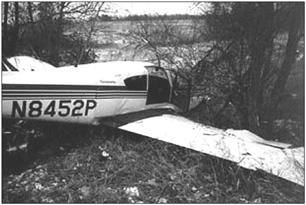
An End To CFITs
TAWs is supposed reduce flight into terrain. Heres an update on the technology and how an FAA rule has made it affordable for the little guy.

TAWs is supposed reduce flight into terrain. Heres an update on the technology and how an FAA rule has made it affordable for the little guy.
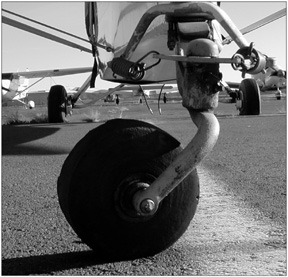
Thats what a taildragger is like. Yet anyone can learn the deft use of rudder and brakes to keep it on the runway. Heres how.
A step-by-step guide for using GPS to monitor your climb gradient when terrain and obstacles threaten. (And even when they dont.)
Your only engine, that is. Here are three pilots with happy-ending engine-failure tales. Their advice: plan for it, train for it and fly the airplane.
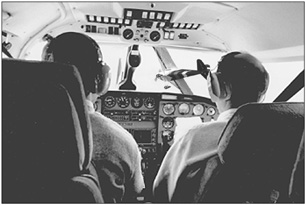
Recent research confirms what weve always known: mid-airs are predictable and avoidable. You just need to know where and how to look.
A daylight scud run in a slow airplane is risky enough. This accident reveals how deadly it can be at night in a fast airplane.
Driven To Distraction
We have all heard stories of little things leading to big tragedies. Consider Challenger, a terrible tragedy caused by a defective O-ring. Then there was Eastern Airlines Flight 401, a Lockheed L-1011 that crashed in the Florida Everglades on December 29, 1972, because someone nudged the autopilot disconnect but didnt notice it while working on a failed nosegear indicator light. There are many-too many-other examples The point is, accidents and incidents can start from very simple events that simply snowball out of control. Heres the reason I began thinking about the chain of events.
A few months ago, I flew a 160-nm VFR trip in my Cherokee 140; not…
Just Do It
Often, once we obtain that magic piece of paper saying Private Pilot, for which we struggled so hard, we presume were good to go. We fill our Skyhawks with people, packages and petrol, and then blast off to the beach, to Grandmas house or to a business meeting. Weather sometimes keeps us on the ground, but as we gain experience and confidence, we learn more about what kinds of weather we and our airplane can handle. Soon, depending in part on how many hours we accumulate and how regularly we fly, we settle into a comfort zone where we can pretty much come and go as we please without too much drama.
Of course, geography plays a major role in the way we deal wit…
The following information is derived from the FAAs Service Difficulty Reports and Aviation Maintenance Alerts.
———-
American General Model AG-5B
Seatbelt Plate Installation
While replacing the rear passenger seatbelts, a technician discovered the reinforcement plate (P/N 5102330-6) had been installed on the forward side of the aft seat bulkhead under the seatbelt attach bracket. The -6 plate should have been installed on the aft side of the bulkhead in accordance with AGAG drawing 5102299. Furthermore, MS20364-1032 (thin sheer nut) was used to secure the AN3-5A retaining bolts. MS20365-1032 or MS21042-3 nuts should have been installed as indicated on the drawing….
Hum Along With Us
With reference to Dr. Brent Blues article Mid-teens Physiology (November 2004), I may have discovered a way to stretch the bodys ability to process and retain oxygen just a bit more effectively while flying at altitude.
I routinely fly our Cessna T210 at FL190-230 on long trips from St. Paul, Minn., to Providence, R.I. The typical 50+ knot tailwinds let us accomplish this nonstop. Its not uncommon for me to have five of the six seats filled, and of course, we have oxygen strapped on from 14,000 all the way up. With five pairs of lungs sucking my precious O2, however, somewhere over western New York, the gauge is starting to get a bit low. So, not exa…

Get the latest stories & special offers delivered directly to your inbox.
SUBSCRIBE