











Aviation Safety

July 11, 2004, Atlantic City, N.J. / Beech E95 Travel Air

The airplane was substantially damaged on impacting water while attempting to land at the Atlantic City Municipal Airport/Bader Field (AIY) in Atlantic City, N.J., at about 1215 Eastern time. The Private pilot and passenger were fatally injured. Visual conditions prevailed. A witness at the departure end of Runway 11 waiting to take off stated that he heard the pilot of the accident airplane report short final, followed by an announcement that he was going around because he had a problem. The witness observed the accident airplane flip, tail under and when it was upside down, it performed a roll back to normal attitude, before entering into a left spin. The spin did not look like a norm…
Read More »

July 04, 2004, Paxton, Mass. / Cessna 150

The aircraft was substantially damaged during a forced landing in Paxton, Mass., at about 2100 local time; the Private pilot was not injured. Night visual conditions prevailed. According to an FAA inspector, the engine lost power, and the pilot force-landed about of a mile from Spencer Airports Runway 19. There was no sign of fuel leakage on either the airplane or the ground. The right fuel tank appeared to be empty, and the left fuel tank had a small, unknown quantity of fuel. When the airplane was moved into an upright position, 2.4 gallons of fuel were drained from the left wing, and 43 ounces of fuel were drained from the right wing. There was no fuel in the gascolater, and about a te…

Read More »

July 05, 2004, Wilmot, N.H. / Lake LA-4-200

The amphibian was substantially damaged when it impacted terrain in Wilmot, N.H., at about 1500 local time. The Instrument-rated Private pilot was seriously injured; his passenger was fatally injured. Instrument conditions prevailed, but no flight plan was filed. The flight departed the Clinton County Airport (PLB) in Plattsburgh, N.Y., and was en route to the Concord Municipal Airport (CON) in Concord, New Hampshire. The airplane and pilot were located at about 1851 local time, at an elevation of 2490 feet on the western side of Mount Kearsarge, which has a summit of 2937 feet. An area witness reported at the time of the accident that Mount Kearsarge was obscured by a cloud layer from its s…

Read More »

July 10, 2004, Arlington, Wash. / Starduster SA100DL and Starduster SA300

At about 1735 Pacific time, the two Experimental airplanes collided while taxiing at Arlington Municipal Airport in Arlington, Washington. Visual conditions prevailedSubsequently, the pilots reported that they were to be a flight of two. Starduster SA100DL was in the lead taxiing to the runway with Starduster SA300 in trail. Because of the air show that was going on at the time, Starduster SA100DL was receiving hand signals from the temporary tower controller. The controller signaled the pilot of Starduster SA100DL to stop for other traffic, which he did. However the pilot of Starduster SA300 failed to stop, impacting the left wing of Starduster SA100DL. The latter aircraft suffered substant…

Read More »

July 11, 2004, Paris, Ark. / Cessna 172I

The Cessna struck several trees and subsequently impacted terrain approximately 0.42 miles east of the Paris-Subiaco Municipal Airport in Paris, Ark., at about 0530. Both the pilot and the pilot-rated passenger aboard were killed. Instrument conditions prevailed as the pair departed for a short cross-country flight. A witness near the airport said he heard the airplane but did not see it. The witness said that fog limited visibility to about 50 feet. No flight plan was on file….

Read More »

NTSB Preliminary Reports

July 02, 2004, Hot Springs, Ark.
Piper PA-32-300

At 1043 Central daylight time, the aircraft was substantially damaged while maneuvering near Hot Springs, Ark. The Instrument-rated Private pilot/owner, the sole occupant, was fatally injured. The pilot was cleared for the ILS Runway 5 approach at Hot Springs. According to data retrived from a handheld GPS navigator, the flight approached the airport from the southwest and was abeam the final approach fix at an altitude of 3055 feet. The airplane made a series of left and right turns along the localizer until it was abeam the missed approach point at an altitude of 2536 feet. For the next two minutes and 30 seconds, the airpl…

Read More »

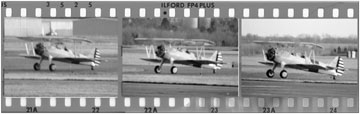
Touch And Goes?

Most of us do them to sharpen our landings. But are they worth the risk? Heres what you need to know about touch-and-go landings.

Read More »

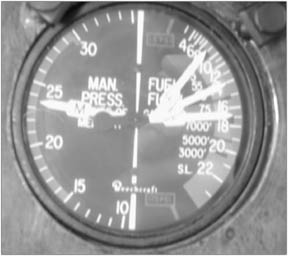
Dry Tanking

Running your tanks bone dry and topping them off is the only way to know how much gas is really aboard. The results may surprise you.

Read More »
Pilot in aircraft
Sign-up for newsletters & special offers!

Get the latest stories & special offers delivered directly to your inbox.

SUBSCRIBE
