Aviation Safety

February 13, 2006, Rancho Murieta, Calif. / Piper PA-24-260 Comanche

The airplane landed short of the runway at 1901 Pacific time, sustaining substantial damage. The Private pilot, the sole occupant, was not injured. Visual conditions prevailed for the cross-country flight, which originated from Colorado Springs, Colo. After takeoff, the pilot was unable to retract the landing gear. He diverted to Delta, Colo., to have the landing gear inspected. No mechanical anomalies were noted. The pilot refueled and continued to Rancho Murieta. When he arrived at Rancho Murieta, he lowered the landing gear handle but did not receive a down and locked indication inside the cockpit. He tried to manually lower the landing gear, but it did not fully extend. After flying arou…
Read More »

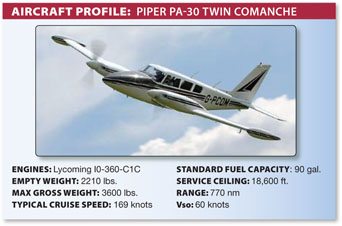
February 17, 2006, Greeley, Colo. / Piper PA-30 Twin Comanche

The aircraft sustained substantial damage during a wheels-up landing at approximately 1410 Mountain time. The solo Airline Transport pilot sustained minor injuries; instrument conditions prevailed. The pilot was cleared for an ILS approach to Runway 34 but went missed approach for no gear indication. The pilot subsequently performed a wheels-up landing. During the landing, the airplanes right wing struck a runway sign. A witness that recovered the airplane following the accident reported that the airframe was covered with ice that measured approximately -inch thick. Weather was reported as ceilings 400 broken, 5500 broken, 7500 overcast, 1 mile visibility, temperature 1 degree Fahrenhei…

Read More »

February 11, 2006, Sacramento, Calif. / Cessna 172N and Cessna 172P

At about 1510 Pacific time, a taxiing Cessna 172N collided on the ground with a standing Cessna 172P. The Private pilot and one passenger in the taxiing Cessna 172N were not injured; the airplane sustained minor damage. The CFI, the Student pilot, and one passenger in the standing Cessna 172P were not injured; the airplane sustained substantial damage. Both aircraft were preparing to depart. Visual conditions prevailed. The Cessna 172Ns pilot subsequently stated that, while attempting to taxi around a stationary airplane in a crowded run-up area, he took his eyes off the wing area, and the wing tip of his airplane collided with the other airplanes rudder and vertical stabilizer….

Read More »

February 16, 2006, Lehigh Acres, Fla. / Piper PA-28-140 Cherokee

At about 2012 Eastern time, the aircraft collided with brush then nosed over during a forced landing to a road, following loss of engine power. Visual conditions prevailed. The airplane was substantially damaged; the Private pilot and one passenger sustained minor injuries. The pilot stated the fuel tanks were filled prior to takeoff. After takeoff and with the fuel selector positioned to the left tank, the engine experienced a loss of engine power. He reduced throttle, turned the fuel pump on and noted there was fuel pressure, then increased throttle, placed the mixture control to the full-rich position, moved the fuel selector to the right tank, and pumped the primer but was unable to rest…

Read More »

Learning Experiences: 04/06

Lather. Rinse. Repeat.
It was an average Minnesota day in April, if there is such a thing. The temperature was in the fifties on the ground, with broken to overcast skies at 8000 to 10,000 feet. I was taking my King Air E90 down to Wichita at FL 210. In IMC at around 10,000 feet I first noticed the pilots airspeed drop off to about 40 knots lower than what I would normally expect to see in a 1000 lb.-under gross climb. Both pilot and copilot pitot heat systems were activated. The copilot airspeed was about 160 KIAS-about right-but the pilots was down around 120 KIAS. I had a trace of rime ice and assumed the pilot pitot tube had burned out.

Then the pilot-side VSI and altimet…

Read More »

Squawk Box: 04/06

The following information is derived from the FAAs Service Difficulty Reports and Aviation Maintenance Alerts.

———-

Cessna 170B, 172-172E, 180, 182-182D, 185s
Worn Flap Handle Latch

The FAA has received reports of problems associated with a tubular spacer found within Cessna flap handle latch mechanisms (p/n 0510166-0 through -5). The spacer is transfixed by a rivet with washers at each end.Continued use of this latch mechanism causes wear on the handle. Should this occur, the spacer can work itself out of the handle sufficiently to jam the latching mechanism. Wear may be evidenced by scraping marks found just below the washers on either side of the flap handle….

Read More »

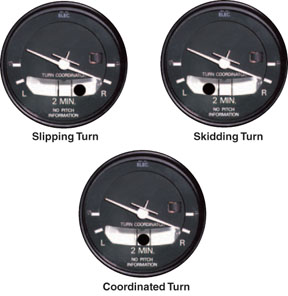
Cross-Coordinated

Cross-controlling is often necessary to maintain coordinated flight, but it can be dangerous. Its not whether you cross the controls, but how and when.

Read More »
Pilot in aircraft
Sign-up for newsletters & special offers!

Get the latest stories & special offers delivered directly to your inbox.

SUBSCRIBE