











Aviation Safety
Unusual Recoveries, II
We compared the Neutral Recovery Controls and the Hands-Off methods of spin recovery to the tried-and-true NASA Standard recommendations in Part I of this series (June 2007). Well now look at recovery strategies for airplane upsets specifically involving excessive angles of bank. Since leading supporters of Neutral Recovery Controls steadfastly maintain the method works in any attitude and in any airplane, well compare this strategy as well as the instinctive Split-S reaction (i.e., “Just pull, baby!”) to a more traditional roll recovery as embodied in the Power-Push-Roll procedure.
Flight Planning’s New Age
Anyone who’s picked up the phone to obtain a weather briefing from an FAA Flight Service Station (FSS) in recent weeks has discovered the ongoing consolidation by federal contractor Lockheed Martin (LockMart) isn’t going so well.
Patterns Of Risk
I was in the right seat of a late-model A36 Bonanza with a student, fine-tuning his landing technique with some full-stop trips around the pattern in gusty winds. During one trip up the parallel taxiway we heard a Learjet on Unicom call that he was taxiing out behind us.On our next downwind I noted the Lear taxiing toward the active runway, so my student made a point of radioing our turn onto base. The jet crew turned perpendicular to the end of the runway without another call, oblivious to my students report of turning onto a short final.
High And Hot
Sugarloaf Mountain is a popular visual checkpoint for pilots here in central Maryland where Im based, but with its peak rising just 800 feet above mostly flat farmland it barely qualifies as a mountain. After a recent tour of the Southwest in my flying clubs Cessna 182RG, I have a new appreciation for really big mountains, density altitude and the tricks they can play with our little airplanes.Also from that trip comes a tale of how a group of flatland pilots from the East coast did the planning, the navigation, the weather-checking and the aviating over unfamiliar territory and lived to do it again. Its also a primer on how even low-time pilots flying basic, non-turbocharged airplanes can, with a little planning and lots of flexibility, tackle these and other challenges without becoming a statistic.
Multi-Tasking
In a certain perverse way, its interesting to contemplate the fate of the worlds first multi-engine airplane pilot. The guy (or gal) who first took one of those early contraptions aloft likely had no real clue of what would happen if one of them failed. My dark side tends to smile, trying to conjure up the look on the pilots face when the inevitable happened. Nowadays, of course, flying a twin on a single engine is a well-understood challenge on which multi-engine pilots regularly spend hours training and practicing.

Departures/Arrivals
Back in 1996, Congress decided subsequent FAA Administrators should have a five-year minimum term. Supposedly, this decision was made to prevent political meddling in the agencys affairs and ensure the FAA would make the “right” decisions. Right. This was, for what its worth, the same law removing from the agencys mandate the concept of promoting aviation.
Calibrating Myths
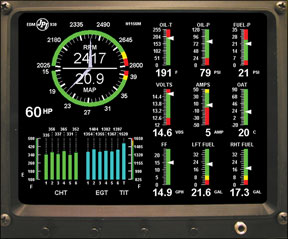
I notice the article “Top Five Engine Myths” (March 2007) has not generated any controversy. Please let me provide a remedy. I am a retired performance engineer for Pratt & Whitney, having worked on experimental jet engines. After a second career as an A&P/IA with a flight school and Part 135 charter operation, Im now retired again. Im also an Instrument-rated Commercial pilot.
April 2, 2007, New Tazewell, Tenn., Piper PA28-181
At 0830 Eastern time, the airplane collided with trees while in cruise flight. Instrument conditions prevailed; no flight plan was filed. The airplane received substantial damage. The Private pilot received fatal injuries. According to witnesses, the airplane came down out of the “clouds” and then climbed back up. The second time it came down out of the clouds, “it was on its side” and then went out of sight.
April 9, 2007, Page, Ariz., Cessna 172N
The airplane impacted rising mountainous terrain during a course reversal turn at about 1620 Mountain time. The airplane was destroyed, and the two Private pilots aboard were fatally injured. Visual conditions prevailed. On-scene examination of the accident site revealed the airplane impacted a rocky outcrop adjacent to the upsloping north side of a box-like canyon. The airplane was located on the north side of a drainage area that leads up the center of the canyon, and it was approximately 250 feet below the canyons ridgeline.
