Aviation Safety

Top Five Engine Myths

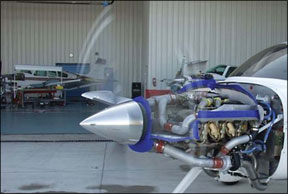
It seems that since Leonardo de Vinci first placed his mental concept of a flying machine on paper we aviators have had a hard time separating fact from fiction. Aviation, not unlike most other human endeavors, has its share of commonly stated “truths” the scientific data doesnt support. Lets call them aviation myths. Why then, do they continue? One reality is that we are all busy in our daily lives and digging through reams of material to verify what someone else says is just too time consuming not to mention boring.


Read More »

Lurking In The Murk

One of the fallacies of flying IFR in marginal-to-good weather is that its safe to presume everyone else out there is on the same page, under the watchful eye of ATC. Instead, its completely legal for someone else to be scud-running in barely VFR weather while youve gone to the trouble to get the rating, file the flight plan and follow the clearance.

Read More »

Pitch + Power = Performance

Routine flight operations typically occur in steady or quasi-steady flight: the traffic pattern, normal climbs and descents, cruise flight, even turns. Yet for all its complexities, skillfully piloting an airplane requires that we strike a balance between just three pairs of performance-defining parameters. Two of these are the force pairs lift and weight, and thrust and drag. Its a never-ending struggle to balance the weight of the airplane with lift, to balance the drag penalty resulting from that lift with thrust.

Read More »

Cirrus Training

In November 2006, Alan Klapmeier, CEO of Cirrus Design, sent an almost-unprecedented letter to all owners of Cirrus SR20 and SR22 aircraft. The letter came on the heels of a string of fatal accidents in Cirrus aircraft in adverse weather conditions.

Read More »

Game On

In early February, the FAA released its proposed budget for fiscal year 2008, which begins October 1, 2007. To no ones great surprise, it calls for creating a new system of user fees in place of the existing excise tax levies to fund the agency and its programs for enhancing ATC and expanding airports.

Read More »

The Brazilian Midair

Is a new subscriber, I am very satisfied with the magazine. However, the article, “The Brazilian Midair” (January 2007), contains one statement I consider arguable. Brazilian ATCs pre-takeoff clearance to the Legacy is quoted as, “N600XL, Clear, 370, Manaus,” followed by the statement that “Any pilot receiving this clearance while still on the ground would have been justified in believing their flight had been cleared to climb and maintain FL370 all the way to its destination.” Thats where I disagree.

Read More »

December 1, 2006, Crookston, Minn. / Cessna 172L

At about 1830 Central time, the airplane was destroyed when it impacted terrain. The aircraft was being operated in instrument conditions without a flight plan. The Private pilot and passenger received fatal injuries. The local flight originated from a nearby airport about 15 minutes earlier.

Read More »

December 1, 2006, San Diego, Calif. / Learjet 36

The airplane sustained an in-flight loss of the right elevator at about 1030 Pacific time while maneuvering off the coast of San Diego. The Airline Transport certificated pilot, the Commercial co-pilot and one passenger were not injured, but the airplane sustained substantial damage. Visual conditions prevailed for the local public-use flight.

Read More »

December 2, 2006 in West Dover, VT / Ted Smith Aerostar 601P

At about 1245 Eastern time, the aircraft was destroyed when it impacted terrain while maneuvering. The solo Commercial pilot was fatally injured. Visual conditions prevailed. A witness who lived about seven miles from a nearby airport observed the accident airplane on final approach. The witness stated the landing gear was extended and he did not notice anything unusual.

Read More »
Pilot in aircraft
Sign-up for newsletters & special offers!

Get the latest stories & special offers delivered directly to your inbox.

SUBSCRIBE