Aviation Safety

June 22, 2008, Millville, N.J., Aero Vodochody Aero. Works L-29

The airplane was substantially damaged at about 0800 Eastern time when it impacted terrain after experiencing loss of engine power during the initial climb. The private pilot and a passenger were fatally injured. Visual conditions prevailed. The airplane was built as a Czech military jet trainer and was certificated as an experimental aircraft in the exhibition category. Witnesses reported “…when the aircraft was abeam the numbers at the approach end of runway 10, the loud engine went silent. A few seconds later, the left wing dipped and the aircraft went into a left spiraling spin, plunging below the tree line….” Witnesses reported the pilot fueled the airplane from a tank on the back of a pickup truck. According to fuel receipts, the pilot purchased about 138 gallons of “kerosene,” 6 gallons of “off road diesel,” and 27 gallons of “diesel” fuel, the day before the accident.


Read More »

June 29, 2008, Santa Rosa, N.M., Cessna U206F

At approximately 1259 Mountain time, the airplane was destroyed upon impact with terrain. The private pilot and four passengers were fatally injured. One witness, located just outside the airport perimeter, watched the airplane climb to 200-300 feet agl before the pilot began a left turn with the airplane still in a nose-high attitude. The airplane continued to turn until it reached almost 180 degrees of heading change before the airplanes nose dropped sharply. The airplane continued a dive towards the ground before the witness lost sight of the airplane behind rolling terrain.

Read More »

Aircraft Engine Carburetor Ice

For student pilots who arent mechanically inclined-and even for many who are-some of the basic concepts in aviation are difficult to grasp. Recent advances in technology and aircraft design have resulted in new aircraft which more closely resemble the high-end luxury car the pilot may have driven to the airport. But thats pretty much where any similarities-accidental or purposeful-between automobiles and aircraft end. As a primary student somewhat familiar with engines and other mechanical contrivances, one of the aviation-centric concepts I found challenging involved carburetor ice. Since most of my training took place during what I recall as a long, hot, humid summer in southern Georgia, the idea of any ice forming anywhere outside of a beer cooler was totally foreign. Being the dutiful student pilot, however, I readily accepted the instructors explanation of why and how to apply carburetor heat. Anything to get my hands on a mighty Cessna 150s controls and aim it skyward.

Read More »

Our First IFR Trip

My husband and I were excited about our first cross-county trip from Florida to Maryland to visit family, with a few stops along the way. We were both fairly new pilots, my husband with less than two years experience and me with three, plus a recent IFR rating. I told my husband that although I am IFR rated, Im not comfortable in actual IMC for very long and I needed to build my confidence by going IFR in VFR conditions with intermittent IMC. Since he was not instrument-rated at the time, he agreed to my plan.

Read More »

Mitigating Terrain Risks

There we were in a friends F33A Bonanza at 9000 feet in radio darkness from Houston, Jacksonville, and Miami Centers. That put us plus or minus six feet from the geographical center of the Gulf of Mexico. We were droning along under a full moon at about 10 pm, listening to Jimmy Buffett on the CD player. The in-cockpit conversation mainly focused on debating which Key West bar we were going to grace as soon as we landed. Then the radio came to life and ruined the mood. “Baron 12345, this is American 3743, are you on the frequency?” My friend paused, then answered, “Uh, yep; were IFR to KEWY, niner thousand with Buffett on the CD player, 345.” “Okay; Miami asked us to see if you were on the radio. Theyre expecting you to check in.” “Yeah, we cant get em yet-too low,” he explained and gave a position report and ETA for the fix where we would report in before adding, “By the way, were a Bonanza.”

Read More »

Coming Up Short of The Runway

Its morbidly fascinating to look at landing accidents involving pilots who came to grief while shooting an ILS in instrument weather. By contrast, VFR landing accidents tend to involve loss of control after landing, usually a result of too much speed at touchdown. Few VFR landing accidents involve crashing short of the runway itself. Yet, when actual IFR weather moves in and the airplane is on the ILS, the converse occurs, and suddenly pilots develop a proclivity for crashing before ever getting to the runway. As would be expected because an airplane is going far faster prior to the time it touches down than when it is when rolling out, landing accidents when flying the ILS in IFR conditions are more often fatal than landing accidents when flying VFR. The instrument landing system has been around for over a half century. In its own way, it is instrument flyings simple and reliable old boot; the two-needle, three-dimensional approach system that funnels one to a touchdown spot about 1500 feet down a comfortingly long runway. With a time-proven design that guides arriving aircraft over the runway threshold at a safe 50 feet or so, how come so many GA pilots find a way to depart from the friendly confines of the ILS arrival cone and smack into the planet before getting to the runway? Why are so very few GA ILS accidents in IFR of the sort where the airplane overshot the touchdown point and went off the end of the runway as is expected in VFR conditions?

Read More »

How To Fly Twin Engine Aircraft At Single Engine Performance Levels

Twin-engine airplanes certified under FAR 23 do not have the same performance guaranteed for transport category airplanes certified under FAR 25. Especially, light twins weighing less than 6000 lbs and have VS0 equal to or less than 61 KCAS are not required to have any positive single-engine performance. Twins weighing more than 6000 lbs and/or having VS0 above 61 KCAS must demonstrate, in still air at 5000 ft, with the inoperative engine feathered, a climb gradient of 1.5 percent (if certified after February 1991), or a rate of climb of 0.027 V2S0-not exactly earth-shaking performance. We often hear that losing an engine in a light twin-engine airplane is far more dangerous than losing the only engine in a single-engine airplane. Melville Byington Jr. (1989 and 1993) of Embry-Riddle Aeronautical University conducted an experimental study of the bank angles required to obtain the zero sideslip flight, and consequently, the maximum performance in light twins. Based on the NTSB accident data, Byington concluded that 30 percent of twin-engine airplane accidents occur due to the loss of directional control (VMCA rollover), while 43 percent can be traced to insufficient performance with one engine inoperative (OEI). The remaining 26 percent or so are stall/spin accidents, which also carry the highest fatality rate. Evidently, more accidents happen due to the inadequate SE performance planning or understanding, than due to the control problems.

Read More »

Maintaining Light Sport Aircraft

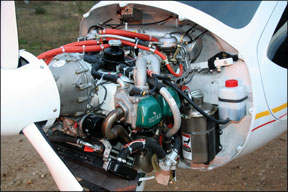
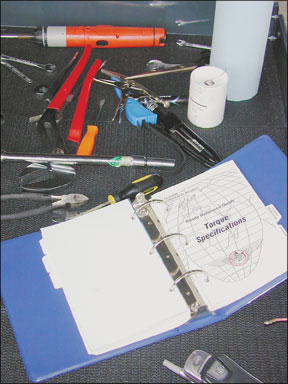
The light sport aircraft (LSA) community holds strong promise to attract a new population of pilots for a variety of reasons, many of them overlapping. For some, the lower prices for a new airplane-some starting at around $40,000, compared to a base price of $175,000 for an FAA-certified Diamond DA20 Katana, as one example-holds appeal. For others, the draw is the reduced cost of learning to fly: A sport pilot certificate will set back a student between one-third to one-half the cost to obtain a private ticket. And, for some newcomers and a growing number of long-time pilots, the absence of a formal medical examination holds sway. Combined, these forces propelled the delivery of about 2500 factory-new LSAs in the three-plus years since the rules went into effect. Meanwhile, about 2200 have earned their sport pilot certificates and an as-yet unknown-and perhaps unknowable-number of existing pilots received formal transition training required to legally fly LSA-category aircraft.

Read More »

You Are The Backup To Safety Enhancing Aircraft Avionics

Theres no going back-we are in an era of high-tech avionics and cockpit automation. Even some LSAs are sporting “glass” cockpits and simple autopilots; cross-country airplanes sport panels and equipment unheard of even in high-end turbines scant years ago, and the turbines themselves are becoming more accessible to owner-pilots. Even the most capable of these airplanes, however, has its automation limitations. Proper operation and constant monitoring of automated systems remains the responsibility of well-trained and emergency-current pilots. On April 19, 2008, a Cessna Citation Mustang suffered substantial damage when its pilot ground-looped the light jet to prevent a runway overshoot at Carlsbad, Calif. According to the NTSBs preliminary report, this was an intentional act to prevent going off a cliff past the end of the runway after the pilot landed “fast” and beyond the mid-point of Carlsbads 4600-foot available landing surface. The pilots quick action may be credited with sparing injury (or worse) to the four people on board.

Read More »

Unobtainium

Got a pencil?” So began a recent phone call from my airplane mechanic. We were (well, he was) in the middle of a multi-day effort to completely overhaul my airplanes landing gear and other mechanical systems. While theres no Part 91 requirement for such a massive project, those with more experience working on my airplane type-a mid-60s Beech Debonair-strongly advocate doing this kind of service at around 4000 hours. I was slightly more than 1000 hours late. We already had spent a substantial amount of time researching sources and pricing on various replacement parts like rod ends and bearings, as well as refinishing and reusing many of the parts removed for close inspection. In all, the airplane was in good shape. Still, we opted to replace several components. Or tried to, anyway.

Read More »
Pilot in aircraft
Sign-up for newsletters & special offers!

Get the latest stories & special offers delivered directly to your inbox.

SUBSCRIBE