Aviation Safety

What Are The Odds?

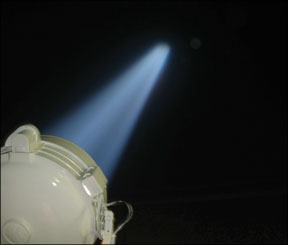
It was a good, late fall night for flying. Dark, but clear and crisp, with light winds. I was flogging a nearly new Skyhawk from the Washington, D.C., area along V222 down to Asheville, N.C., for a weekend in the mountains. The flight was smooth, so far, with the autopilot-less hawk needing only a gentle nudge every now and then to maintain altitude and heading. So far, the needles told me I was keeping it right on the airways centerline. The cabin heater was keeping us warm, the engine was droning along and my passenger was sleeping. We had another hour or so before starting to let down from our cruising altitude of 8000 feet. There was plenty of gas and ATC wasnt busy. The panel lights were turned way down. All was right with the world. As I neared the end of a very long airway leg terminating at Hickory, N.C., I could see the citys lights ahead. I also could see one particular light, waving around-a searchlight. Some used car dealer having a sale, no doubt.

Read More »

Heating And Cooling

A mechanic found the same problem on two identical aircraft:, “The carburetor heat control arm (p/n: D4F-7326-12-00-1) broke off the carburetor air box, causing uncontrolled selection of carburetor heat versus ram (cold) air intake.” The mechanic recommends installing thicker material on the carburetor heat control arm lever, or a different welding/heat treating process, or a different attachment provision altogether.

Read More »

The First 400 Feet

The standard missed approach is designed around a 200 ft/nm climb gradient. The minimum rate of climb youll need to maintain this gradient depends on groundspeed. For pilots of most IFR airplanes, these climb rates are easily achievable, but if your airplane is heavy, the density altitude is high, or youre laboring with reduced engine power you may have to decide before ever beginning an approach near minimums if youll have the climb capability to miss the approach if needed. In fact, the minimums for many approaches, especially in hilly or mountainous terrain, are driven not by obstacle clearance requirements for the approach inbound to the airport, but the requirements for terrain or obstacle clearance for the missed approach. If there are towers or hills under the missed approach segment you may not be permitted to descend as low prior to the missed approach point as you would be allowed to otherwise. At the minimum 200 foot per nautical mile climb rate (below), youll be two miles from the point you initiate climb before youre 400 feet above your lowest altitude. Theres a lot going on in the first two miles (the first 400 feet) when trying to climb out from a gray hole close to the unseen ground, so you need to properly manage this transition time to safely begin the missed.

Read More »

Revisiting The Brazilian Midair

As we noted in our January 2007 article, “Because it involved two very modern jets operating under IFR and equipped with the latest in collision avoidance equipment, and because it occurred in controlled airspace, this is an accident that simply should not have happened.” We could have added to that statement information regarding Brazils modern ATC system, along with a discussion of the hyper-accurate altimetry and navigation systems required in RVSM (reduced vertical separation minima) airspace implemented throughout the world between 1997 and 2005. In fact, its arguable the accident happened because of RVSM and the accuracy it demands. Think about it: In years past something called the “Big Sky Theory” applied to so much of the altimetry and navigation standards. That theory held that, even if ATC screwed up and violated separation standards or-as in this case-put two oncoming aircraft at the same altitude-the inevitable variables in tracking a VOR radial or selecting barometric pressure in a Kollsman window provided a margin of error against midair collisions. Instead, this midair collision occurred in spite of all the “slack” built into the system. As the computer-generated image on the facing page demonstrates, the two aircraft were pretty much at the same altitude and displaced only 60 or so feet laterally. In the scheme of things, those are “noise-level” errors, the values of which dont really matter. In years past, with less-accurate systems, you couldnt have put these two aircraft that close together if you tried. The other automation-related event helping ensure this tragedy involves the way Brazils ATC system computer inserts a flights “cleared” altitude into the datablock displayed on controllers screens. In the event, they were presented with ambiguous data showing what the NTSB described as both the Embraers requested and cleared altitude. As the NSTB summarized it, “a design in which two distinctly different pieces of information…appear identical on the display is clearly a latent error.” Brazilian authorities defended this data presentation by noting, “controllers have always operated the system in this manner,” according to the NTSB. The NTSB went on to note the original clearance received by the Embraer crew cleared them to maintain FL370. Upon reaching the Brasilia VOR (BRS), the flight turned northwest to follow airway UZ6. As the NTSB drily put it, “The automatic change to the cleared altitude field did not accurately reflect the status of [the Embraers] clearance.” See below for an excerpt of the relevant FAA/NACO en route chart.


Read More »

To Scud Run, Perchance To Buy It

Scud running is the technique of flying very low to stay out of crummy weather. It was taught during flight training and regularly practiced for the first several decades of flight when, initially, instrument flight was not an option and, later, only a small proportion of airplanes had instruments. It was most successful in relatively flat territory and almost suicidal in any sort of mountainous terrain. The first professional pilots in the U.S. were airmail pilots. To avoid weather, they often flew but a few feet above the planet. Even in daytime, the accident rate was not pretty, especially in the Alleghenies and Rockies. Trying to fly without the benefit of good instrumentation (and training in how to use it) or radio navaids meant that foul weather flying was lethal. Nevertheless, particularly in the mid-section of the country, scud running could be practiced so long as the visibility wasnt too bad (fog and snow were killers) because a pilot could motor along 30 feet above a road knowing he was above the power lines and that broadcast antennas were located in the towns. All radio was AM, not limited to line of sight. For economy, the towers were put up on or beside the broadcast stations, not out in the country. In the late 20s, Henry Fords airline running between his auto manufacturing plants boasted on the order of a 95 percent on-schedule record, simply because the pilots could fly incredibly low and not have to worry about hitting anything.

Read More »

Dangerous Passenger Tricks

Get any two or more pilots together for a bit of hangar flying and youll hear a lot of interesting tales of aerial travails-some of them actually true, albeit with perhaps a touch of modest embellishment. One topic always standing out as a regular, reliable crowd-pleaser is the story of the errant passenger. Sometimes these are humorous anecdotes passed pilot-to-pilot, with the commensurate amount of growth in awe and severity; sometimes these are more-cautionary stories, told by the first-hand participants or observers with the appropriate degree of warning. Among my favorites-yes, there have been just a few in my flying days-are the ones of an honest innocence at work. But the moral of almost all of them is to be clear and complete in briefing passengers, novice and experienced alike. Its required by the FARs (see the sidebar), and you just may avoid becoming a subject of a tale of an errant passenger trick gone bad.

Read More »

What You Wish For

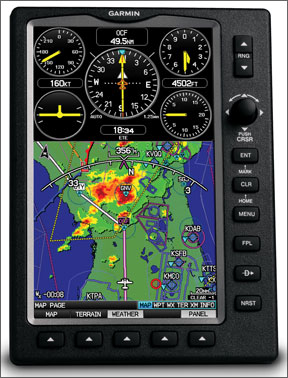
There is some really neat technology available on the general aviation market today, including some stuff that wasnt dreamed of a few short years ago. Even if it took a while, the microprocessor revolution finally made it to the average GA cockpit and, along with satellite-based broadcasting, has revolutionized the way we fly. One of the industrys success stories is the near real-time weather data available in the cockpit from sources such as XM Radio and WSI: Even some airline cockpits dont have this stuff. Garmin and others have helped along this “revolution” by marketing innovative products incorporating datalink capability and sold them by the thousands. Unfortunately, customer support-along with realization of how indispensable this data stream has become to operators and a concomitant corporate responsibility-havent followed. These failures on the part of Garmin and XM were borne out in early January when an apparent programming glitch blanked weather-data screens throughout the U.S. Literally overnight, thousands of Garmin-brand GPS navigators subscribed to XM Weather were unable to download data. To the extent anyone could get an answer for a few days, Garmin blamed XM and XM blamed Garmin. The lack of information from either of the two companies was stunning, especially given the ways in which these products are used.

Read More »

Not Ded Yet

Must saw your reply to my e-mail about dead reckoning on the back page of the November issue. Avoiding controversy is one thing, but getting it right is another. What I got out of the etymological research regarding dead reckoning was that before WWII there was no controversy over this term. With only a few abbreviations in ships logs to the contrary, “dead” was widely used in marine navigation (since the 17th century) and in the early days of aviation. The researcher claims to have examined hundreds of old books to come to this conclusion. It was only after the attack of the amateur folk etymologists starting in the 1940s that it even became an issue, and the battle has raged since. (And Barry Schiff has fallen prey to this, too.) The crux of the matter is, of course, the meaning of the word “dead.” The meaning that I had always heard was that “dead” in this case meant “precise,” “exact,” “accurate,” etc., and had nothing to do with death or stillness. (Dead as in “dead right,” or the “dead of winter” (middle or center of), or “dead on,” or “dead ahead,” or the original character of “Deadeye Dick” (the accurate marksman, not Dick Cheney). It is interesting to note that the rest of the English speaking world has not yet come to the height of this controversy. It seems only to be in America that we have fallen for the folk etymology. Consequently, when we navigate without reference to landmarks (or logs in the water) we are navigating by “Precise Calculation” for which many of us use the ancient term, “Dead Reckoning.” Thanks for listening! Shall we tackle the downwind turn canard next?

Read More »

The Right Way

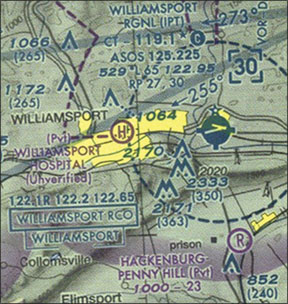
Ive always liked visiting unfamiliar airports; one can learn a lot by watching how other pilots deal with each facilitys different quirks. Its educational. At least the watching is-arriving at an unfamiliar airport can be nerve-racking. Or worse. My favorite unfamiliar airport story involves the Williamsport (Penn.) Regional Airport (IPT). This night flight was long enough ago that the Piper Aircraft Company still had a manufacturing presence on the field. I was a mere private pilot, working on my instrument rating. Although I was night-current, I took some extra precautions for this flight. I had plenty of fuel, for one thing, along with current VFR charts. Since I also was an instrument student, I brought along a set of approach plates, opened to IPTs airport diagram. I had reviewed the runway layout, made sure someone would be there to greet me and my passenger, and was well within the airplanes weight and balance limitations. The flight went smoothly and soon we were letting down through a clear night sky with the citys lights beckoning. Like a moth to the flame.

Read More »

New Parts, Old Problems

The FAA is encouraging owners and maintainers of Cessna T303, 336, 337 and all legacy, pre-1986 single-engine models to adhere to AD 87-20-03R2. The AD was issued because of pilot/copilot seat slippage due to the latch pin not properly engaging in the seat rail/track. The FAA states, “Compliance with AD 87-20-03R2 should have eliminated accidents and Service Difficulty Reports (SDRs). However, in the past decade we have seen a resurgence in the number of accidents [which] may indicate the inspections of the seat tracks are not being adequately performed or existing problems are not being corrected.” The FAA strongly suggests reviewing AD 87-2-03R2. Cessna SEB07-5R1 or MEB07-1R1 covers secondary seat stop installation.

Read More »
Pilot in aircraft
Sign-up for newsletters & special offers!

Get the latest stories & special offers delivered directly to your inbox.

SUBSCRIBE