Aviation Safety

March 16, 2009, Taos, N.M., Beech D35 Bonanza

The student pilot was landing at the non-towered airport after a cross-country flight when he made a “short approach,” did not use any flaps and used an approach speed about 30 knots faster than normal. The student pilot said he didnt use his normal checklist procedure and that everything seemed to be going “too fast” when the airplane landed on the asphalt runway with the landing gear retracted.

Read More »

March 16, 2009, Sanford, Fla., Piper PA-28-161

At about 2125 Eastern time, the airplane was substantially damaged following an engine fire on the runway. The flight instructor and student were not injured. Night visual conditions prevailed at the time. Upon coming to a stop on the runway after landing, the engine quit. The pilots contacted the tower to inform them of the situation.

Read More »

March 22, 2009, Butte, Mon., Pilatus PC-12/45

All 14 aboard were fatally injured and the airplane destroyed by impact forces, and a post-accident fire, when it crashed short of the runway at 1430 Mountain time. Visual conditions prevailed. The airplane originally departed Redlands, Calif., and flew to Vaca-ville, Calif., where passengers were boarded. The pilot then flew to Oroville, Calif., where additional passengers were picked up.

Read More »

March 7, 2009, Oceanside, Calif., Cessna 172R

At about 1750 Pacific time, the airplane made an off-airport forced landing following a loss of engine power. The private pilot and two passengers sustained serious injuries, and the airplane was substantially damaged. Visual conditions prevailed. During the landing sequence, the airplane touched down on flat ground and then collided with a ditch.

Read More »

The Correct Fuel

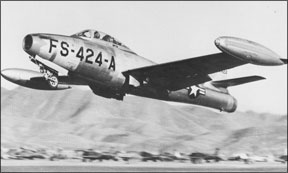
There are many stories about pilots loading jet fuel in a piston-engine aircraft, but using aviation gasoline in a jet engine is less dramatic. I had departed an air base in northern Japan on a cold January day, en route to a base in southern Japan, flying an F-84 fighter jet shortly after the end of the Korean War. During the flight at about 25,000 feet, I noticed the left tip tank was not feeding its main fuel tank. After landing at an emergency base in central Japan, the aircraft was refueled with 100-115 octane aviation gasoline, the only fuel available. While climbing out, I noticed the fuel was burning faster and at a higher engine temperature. The destination had a 100-foot ceiling and one mile visibility. Because of the rapid fuel burn, a diversion was out of the question. I made three ground-controlled radar approaches without seeing the runway because the controller kept losing me in clutter.

Read More »

Cracked, Loose, Failed

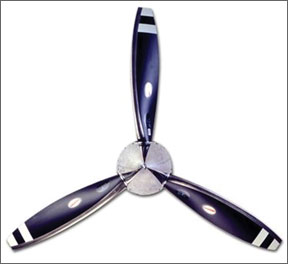
New deice boots were installed on all three blades of this Hartzell propeller, which later was mounted by the owners mechanic. One of the three boots came off after approximately seven hours of flying, resulting in a dent on the aircraft fuselage. When installing a new boot on the propeller, we observed the adhesive did not separate from the blade. The boots on this propeller are long strap boots. If properly positioned during spinner installation, it remains contained within the spinner. Since the two remaining boots remained attached, it is likely the boot strap was not positioned properly during spinner installation, resulting in the boot separating from the blade. Goodrich p/n 4E1188-3.

Read More »

Unapproved Parts

Keeping an older, or “aging,” aircraft airworthy is a balancing act of sorts. On one hand, its nice to simply replace rather than repair parts and components when they go bad. On the other had, and since some parts and components are increasingly rare, the cost of changing them out can be stratospheric. The balancing comes-at least for me-from deciding what to replace and what to repair. If I replaced every part or component presenting an issue, instead of repairing it, Id have no money left over to use for other parts and components. Or to fly the darn thing in the first place. Its no huge secret that many parts installed on older aircraft are generic automobile components from the era in which they were first designed. Items such as window cranks, ashtrays and the like certainly qualify, but so do many electrical components like relays and even generators. Parts like light bulbs and cabin speakers frequently can (and perhaps should) be replaced with a modern equivalent. Discussing modern lubricants is an entirely different subject, as is the “owner-produced” part. Meanwhile, operators of older aircraft often will find themselves needing, say, a new generator only to discover it is no longer available from traditional sources. Scrounging then becomes the order of the day, perhaps for a rebuilt example. Eventually, the scrounger will discover the generator was first used on, for example, a 46 Buick and some guy in Arkansas has a warehouse full of them hed be happy to sell. The only problem is they dont have the right part number or are missing a special diode. The situation then becomes one of convincing the FAA-certificated technician doing the work to sign off on the obviously identical-but-unapproved part.


Read More »

Instrument Rating: The First 100 Hours

Congratulations! Youve just passed your instrument practical test. A significant achievement, requiring much more discipline and learning than even the private pilot exam. Or maybe youve held your instrument rating for a while, but youve never developed a plan to improve your skills. You may have even let your skills erode in some areas, to the extent you couldnt pass every task if you had to retake the practical test today. Unfortunately, most pilots get handed the proverbial “license to learn” by a pilot examiner, then dont really know what to do next except “go out and fly.” To avoid aimlessness or atrophy of your instrument skills and the life-threatening danger aimlessness breeds, first ask yourself what type of flying-personal transportation, time-sensitive business flying, etc.-you plan to do. Commit to a goal, whether its simply maintaining your skills at basic IFR levels, advancing beyond your current capabilities, or aiming for airline transport pilot standards. Then map out a program for the next 100 flight hours to develop and hone the necessary skills. Emphasis should be on safety, aimed toward what you want to do with airplanes. Be serious, but keep it interesting, challenging and fun.

Read More »

Slow For Slows Sake

If youve heard this once, youve heard it a hundred times: “Im really behind the power curve today.” Youve heard it, but do you really know precisely what it means? Can you sketch the relevant graphs, fill in the data points, then relate it to the real, practical world of flying an airplane? Theres good reason to be able to do this, for a fundamental understanding of the basic lift/drag curves that remorselessly govern aircraft performance relate to directly to refined stick and rudder skills. It may be enough to have a good seat-of-the-pants feel for what the airplane is doing, but its far better to have both that and a lucid grasp of the physics. Where this applies most directly is in that great undersung skill we all had to learn to muddle through a private pilot checkride but havent used since: precise control in slow flight. Slow flight is undersung because its so rarely used where its of most practical advantage: high performance short field landings and adjusting the interval in a crowded pattern. Next time you fly, try this experiment: Set up your best shot at a short field landing and see if you can match the POH numbers for touchdown and rollout. Or set yourself the goal of always making the first turnoff on every runway and see if you make it. Chances are, you wont. Top performance in short-field work requires absolutely precise control of speed just above the stall. Most of us dont do this very well because it takes a lot of work and no small amount of nerve. With no compelling need to stuff the airplane into short runways, why bother? Who cares if you float 600 feet and make the third turnoff because you flew the approach 10 knots fast? Probably no one. On the other hand, that sort of laziness leads to skill atrophy and before you know it, youve smoked off the end of a runway that wasnt really very short.

Read More »

Practicing For Emergencies (Without Going Broke)

One of the sad realities of general aviation becomes apparent upon reading a score or so NTSB accident reports: While true in-flight emergencies are rare, pilots who do not fly for a living have a less-than-stellar record of success when they stare one in the face. It is a blunt corollary to the simple fact that anything a human doesnt practice regularly doesnt get done well the next time its needed. Thats why pilots who take recurrent training every six months tend to have far, far fewer accidents than pilots who only grudgingly take a flight review every 24. No matter how we try to sweep the mess under the rug, skills atrophy fast and anything we dont practice regularly we, sadly, screw up. Those who study human behavior have long been telling us this stuff, they just use bigger words. We know it. We know perfectly well that if we are faced with an emergency when we go flying tomorrow that how we handle it has already been determined. If weve thought about that particular emergency (or one very similar) and how we will deal with it, the odds of handling it correctly are astronomically higher than if we havent given it any thought. If weve actually rehearsed dealing with the emergency in the last six months, the odds that well deal with it correctly go way, way up. Being human, we do well what we do often. We do landings all the time. We dont do fires in flight nearly as frequently.

Read More »
Pilot in aircraft
Sign-up for newsletters & special offers!

Get the latest stories & special offers delivered directly to your inbox.

SUBSCRIBE