Aviation Safety

July 8, 2010, Estes Park, Colo., Champion 8KCAB Decathlon

At approximately 1430 Mountain time, the airplane was substantially damaged when it impacted mountainous terrain. The two pilots sustained minor injuries. Visual conditions prevailed. While crossing a mountain pass, the pilot attempted a 360-degree turn to gain additional altitude but flew into a strong downdraft that he could not escape. The pilot said the airplane was descending very steeply even with full power and with the airspeed at best rate of climb speed.
Read More »

Is That Too Much Airplane For You?

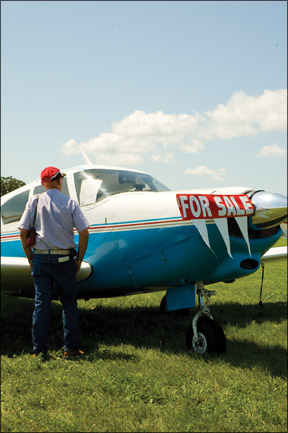
Years ago in a sleepy college aircraft economics class, we learned the pecking order of items to consider when acquiring an aircraft. The short list included the usual items of damage history, engine time, avionics, operating costs and a variety of other factors making obvious sense. But one aspect of aircraft acquisition we werent taught is an issue thats gained prominence in the current sales climate: the consequences of buying too much airplane. With used aircraft pricing at an all-time low, its easy to get sucked into a convincing fantasy that the airplane of your dreams is also one fitting your skills, operating budget and mission.

Read More »

From Denial To Final, II

There you are, droning along in cruise. Suddenly, theres a vibration, then a power surge, then combustion ends…and youre flying a glider. For a moment you hesitate-no one is immune from at least a split-second of indecision, most of us much longer-and then you realize you have an engine failure. You maintain control, point the aircraft in the direction of a place to land, then confirm the failure. If you have time and altitude you can try to restart the engine, but if the failure is catastrophic youll quickly find theres nothing you can do to fix the engine from the pilots seat. You are committed to a glide and a power-off landing.

Read More »

Open-Door Policy

The Cessna 150 I first soloed had a time-between-window-openings of about three hours. My instructor and I had suffered the event a couple of times on my way to soloing at-as luck would have it-about nine hours. Sure enough, as I lifted off the runway on my second touch-and-go, the window on the “far” side of the 150s “cabin” decided it was time I had some fresh air and noise. As if I needed another challenge. What I really needed was three hands: one for the yoke, one for the throttle and one to grab the window latch. Not capable of all three tasks, I climbed away from the runway to what I considered a safe altitude, loosened my death grip on the throttle, reached over, closed the window and latched it. After an otherwise uneventful circuit, I landed to pick up my instructor, who was still laughing. For all I know, he still is.

Read More »

Going Soft

My first time landing on something other than pavement was with an instructor in a Piper Arrow. I had yet to earn my private certificate, and we were out doing a combination of familiarizing me with a complex/high-performance airplane and transporting some items for the FBO. The most memorable occasion also involved an instructor: We were returning from a spin-training session to a grass strip just soaked by a passing shower. He landed long, locked the 152s brakes in standing water and we sluiced our way to within 30 feet of the fence at the far end. More than anything, that was a demonstration of how not to do it.

Read More »

Dont Be A Dipstick

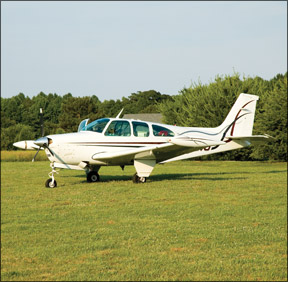
Being a pilot offers many opportunities to bring joy to non-pilot friends. Many ask for a ride to experience the world GA pilots take for granted. But caution needs to be taken when offering a dream ride. Especially during the preflight. It was a beautiful day to take my 1942 L-5 up to bore holes over southeast New Mexico. A buddy, who was big in one of those on-line aerial warfare games, always wanted to go up in a WWII aircraft. Well, the L-5 was the best I could offer-there definitely would not be any dogfights. So as I started my preflight, and while trying to answer a multitude of questions, it came time to check the oil.

Read More »

Broken And Cracked

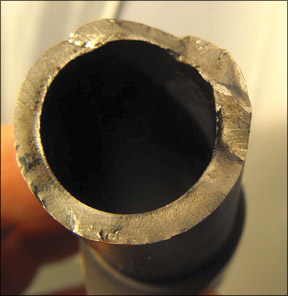
Before a touch-and-go landing, the pilot noticed did not receive a gear-down light for the left main gear. A safe landing was made, with minor damage and no injuries. Upon examination, one of the left main landing gear actuator hydraulic fittings (p/n: MS20822) was found broken flush with the actuator housing. Examination of the gear well and the general layout of components show the flex hose may have been stress loaded while the gear was retracted.

Read More »

NPAs: Stable Or Not?

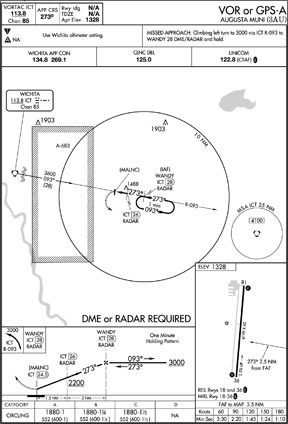
Over the past few years the FAA has added new non-precision instrument approaches at a remarkable rate-thousands of procedures with names like LNAV and VNAV, and ILS-comparable LPV approaches-2208 LPV approaches alone. The common denominator among these relative newcomers to an instrument pilots nomenclature is their dependence on the wonders of GPS, in particular, Wide Area Augmentation System-based (WAAS) GPS. The primary benefit of a WAAS-enhanced approach is availability of a pseudo glideslope generated by the in-cockpit GPS navigator, bringing ILS-like vertical guidance where theres no ILS.

Read More »

Train To Mitigate Risk

In the last decade, the general aviation fatal accident rate, which had been decreasing for some time, reached a plateau and has stubbornly resisted industry and FAA efforts to further reduce it. Hovering in the range of 1.20-1.38 fatal accidents per 100,000 flight hours, this safety record is widely considered a deterrent to general aviation growth and may be one of the reasons student starts have continued to decrease. As a community, we may have oversold the benefits of a new generation of technically advanced aircraft (TAA) to an emerging latent market of individuals who are not traditional enthusiasts and who wish to use these aircraft for safe transportation.

Read More »

Revamping Training

Thankfully, most of my operations are fairly routine, and not too demanding of my average skills. The trick, of course, is keeping them sharp and knowing when to avoid a situation demanding more than I have to give. Thats one result of being trained by older instructors instead of time-building youngsters and accumulating a bit of experience over the years.

Read More »
Pilot in aircraft
Sign-up for newsletters & special offers!

Get the latest stories & special offers delivered directly to your inbox.

SUBSCRIBE