Aviation Safety

October 17, 2010, Southern Pines, N.C., Loehle 5151 Mustang Experimental

The airplane was destroyed when it collided with trees at 1435 Eastern time. The private pilot was seriously injured. Visual conditions prevailed. The accident airplane was flying in formation with another airplane when the accident pilot reported his “wings were fluttering and he was losing control of the airplane.” The other pilot observed the accident airplane in a slow, banking turn.
Read More »

October 18, 2010, Warren, Vt.., Schempp-Hirth Ventus B/16.6

At approximately 1715 Eastern time, the glider was substantially damaged during a forced landing. The private pilot was not injured. Visual conditions prevailed for the flight, which originated with a tow at about 1400. After using ridge and thermal lift to reach 14,000 feet, the pilot used the dive brakes “quite a few times” to maintain a 500-fpm descent. The pilot entered the traffic pattern and was maneuvering on the downwind leg when he experienced a strong lifting force.

Read More »

October 18, 2010, Palestine, Texas, Beech A100 King Air

At 1253 Central time, the airplane was substantially damaged on impacting several birds. The pilot, co-pilot and three passengers were not injured. Instrument conditions prevailed. The pilot reported he was descending through about 4000 feet in IMC, when he saw a black flash, and heard and felt a “tremendous thud.” Both pilots reported there was no change in engine performance, pressurization or flight control feel. After assessing the damage the flight crew decided to return and landed uneventfully about 25 minutes later.

Read More »

With You Til 3000 Feet

It was a cold December morning as my roommate Tony and I drove toward the jump center. The Cessna 180 I had a job flying to feed my skydiving addiction was just touching down on the frost-covered grass. It was the jump center manager, returning from flying the days first load. “Ive got it all warmed up for you,” he said. After a quick preflight, I climbed into the battered plane and ran the pre-start checklist. My roommate crawled in the back, along with two other shivering jumpers. Soon, we were taxiing to the end of the field; I performed a run-up on the go. We bounced down the grass and lifted off well before the end of the 1800-foot strip.

Read More »

Failed, Leaking, Chafed

Upon opening the instrument air, pressure regulator and manifold check valve assembly for inspection, heavy corrosion of the ferrous components were noted. Large rust particles were contaminating instruments. The submitter recommends Beechcraft develop a service bulletin or kit installing an inline filter after the instrument air regulator but before the instruments.

Read More »

Retrofitting Restraint

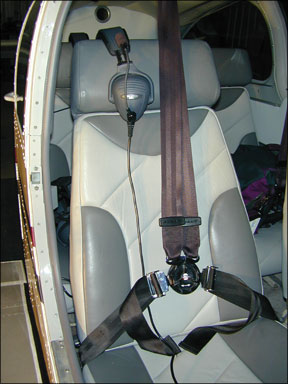
While none of us plan to crash our airplanes, stuff happens. The NTSBs database is replete with accident reports involving events like engine failures and ensuing off-airport landings where the engine started and ran fine after the investigators arrived. In many of them, plenty of fuel was aboard and carburetor ice was ruled out. Most of those reports go on to state the engine failed for unknown reasons. We cant choose when well have to set one down but-by avoiding hostile terrain like mountains and oceans, or flying only in daytime VFR-we can choose many of the conditions well experience. We also have the ability to maximize the likelihood of a favorable outcome.

Read More »

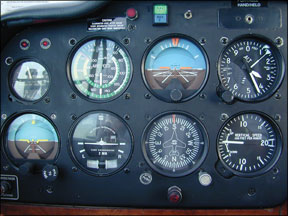
Partial-Panel Prep Tips

Instrument failure doesnt happen often. But when it appears in an accident report, its almost universally fatal. Instrument failure is part of the required syllabus for the IFR rating, and on the list of items to be included in an instrument proficiency check (IPC). While failures not resulting in an accident or incident arent reported, the record shows a casual, once-in-a-while demonstration of partial-panel skills doesnt prepare many pilots when an instrument actually fails in IMC. Here are 10 tips you can use in the course of every flight to prepare yourself for partial panel.

Read More »

Sim-Based Training?

I fly regularly, adding about 400 to 500 hours per year these days in a combination of ferry and instruction work. So why do I even think about simulator-based recurrent training? What good does it do to fly a sim when I get 60 or 70 real IMC approaches each year, along with lots of flight planning in real life? While Im certainly not the most experienced pilot out there, I still go in for simulator-based recurrent training. By contrast, the average general aviation pilot flies nowhere near that much. Instead, he or she might reasonably ask, “If I get a BFR, isnt that enough? After all, I only fly locally and the occasional cross-country for a $150 hamburger.” There are two basic answers, which are both simple and complicated.

Read More »

Five Diversion Details

Some days are like trying to nail Jell-O to the wall: Youve planned well, the airplane is ready and fueled, youre fit to fly the trip…only the trip isnt ready for you. Best-laid plans and all that, but along the way something changed. You have to divert. You need a new plan. Maybe its because Mother Nature threw up a wall with swirling black clouds spelling out, “Go away!” or spread soft-but-deadly IFR scud on the flight path of the VFR pilot. Maybe someone landing at your destination forgot to put down the gear before flaring above the airports only runway. The Fates can deal up a common ground loop or any one of a dozen other ways to effectively mark a big white “X” on your destinations runway.

Read More »

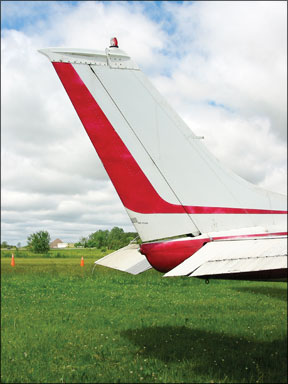
Got Rudder?

During checkouts of rated pilots, I usually ask them to explain why the rudder is on the airplane. More than half of rated pilots will tell me the rudder helps turn the aircraft, which is not only wrong but is a very dangerous belief. Less than half of pilots will correctly identify the main purpose of the rudder, to correct for adverse yaw. By failing to correctly understanding the rudders purpose, these pilots exhibit a failure in our training system. Moreover, by misusing the airplanes primary controls, they arent flying it properly or efficiently. This realization has many implications-an indictment of our training systems among them-but the dangers of misusing the rudder also must be acknowledged. Lets discuss the rudders proper role, plus the effects and dangers of misusing primary controls.

Read More »
Pilot in aircraft
Sign-up for newsletters & special offers!

Get the latest stories & special offers delivered directly to your inbox.

SUBSCRIBE