Aviation Safety

A Little Help, Please

One of the things keeping me formally involved in aviation for almost 40 years is the usually unquestioned willingness for all members of this community-pilots, mechanics, controllers and, at least some of the time, even the FAA-to pull together and help make the “system” work for us all. Of course, its sometimes difficult to envision all parties are working on our behalf when were on a vector 180 degrees from our destination. But the reality is the system we have wouldnt work nearly as well, or at all, if we all didnt try to help each other out from time to time.
Read More »

Physics 101

In Aprils “Using Ground Effect,” I think the author made an inaccurate and misleading statement concerning the aerodynamics of ground effect. The article wrongly asserts Newtons equal and opposite force has different effects when operating close to the ground as opposed to at altitude. He states, “At altitude, of course, theres no reaction between this downward forced air and the wing because theres nothing against which it can react.” If this were true, an airplane wing would not be able to fly when at altitude and only achieve lift when close to the ground.

Read More »

February 18, 2011, Reading, Penn., Cessna 177B Cardinal

The airplane was substantially damaged during an aborted takeoff at about 1415 Eastern time. The commercial pilot and passenger were not injured. Visual conditions prevailed. After flying in for lunch, the pilot and his passenger attempted to depart. The airplane accelerated and lifted off the runway normally. However, the elevator control was “frozen” and could not be moved.

Read More »

February 26, 2011, Kingston, N.Y., BAC 167 Strikemaster

At about 1332 Eastern time, the vintage military jet crashed into the Hudson River following an in-flight loss of airplane control. Visual conditions prevailed. The private pilot was killed and the airplane received substantial damage. Witnesses reported the pilot flew over the airport and performed a rolling maneuver, described as a roll or a barrel roll. Following the rolling maneuver, the airplane remained in the traffic pattern and the pilot executed a second pass down the runway centerline, at low altitude and with the landing gear retracted.

Read More »

A Tank Too Far

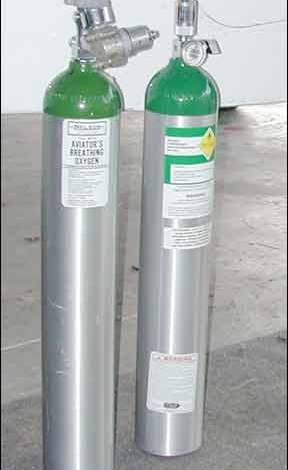
Although my airplane doesnt have a turbocharger, I regularly cruise at altitudes where supplemental oxygen is either required or strongly advised. My personal rule is to use it when above 10,000 feet msl for longer than an hour, or anytime at or above 12,500 feet. Thats during the day; at night, I use it when cruising above 8000 feet. But for the solo flight in question, I planned to be at or below my oxygen altitudes. Although I had a full bottle aboard the airplane, it was buried in the baggage area, under all the gear I needed for my two-week business trip.

Read More »

Cracks, Adjustments

A 1.5-inch long crack was discovered in the forward firewall doubler (p/n 0753600-24). The crack was located on the lower left quadrant of the doubler, and was centered around the top rivet attaching the parking brake control bracket to the firewall and firewall doubler.When the parking brake handle is pulled, this area of the firewall and doubler flex. The submitter suggests it is very probable that this flexing action has caused this crack.

Read More »

February 8, 2011, Columbia, Mo., Cessna 210N

At about 1430 Central time, the airplane sustained minor damage on contact with the runway when the landing gear was retracted during the initial landing roll. The pilot added power during the landing roll, climbed to lower the landing gear, and subsequently landed with it extended.

Read More »

February 10, 2011, Baltimore, Md., Piper PA-31-350

At about 2027 Eastern time, a Piper PA-31-350 was substantially damaged while in cruise flight. The solo airline transport pilot was not injured. Visual conditions prevailed. About 30 minutes into the flight, while cruising at 7000 feet msl on autopilot, the airplanes nose pitched down slightly. The airplane then pitched up slightly, followed by a downward pitch event, resulting in a 200-foot altitude deviation. The pilot disengaged the autopilot, re-leveled the airplane at 7000 feet and re-engaged the autopilot.

Read More »

February 10, 2011, Novato, Calif., Aeronca 7AC

The airplane experienced a total loss of engine power on approach for landing at about 1352 Pacific time. The pilot made a forced landing on a soft dirt field, and the airplane came to rest about 500 feet short of the runway. During rollout, the airplane collided with a fence, bending the right wing and lift strut. The airplane was substantially damaged, but the pilot was not injured. Visual conditions prevailed.

Read More »
Pilot in aircraft
Sign-up for newsletters & special offers!

Get the latest stories & special offers delivered directly to your inbox.

SUBSCRIBE