Aviation Safety

Non-Towered IFR Arrivals

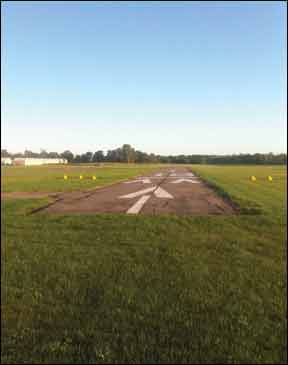
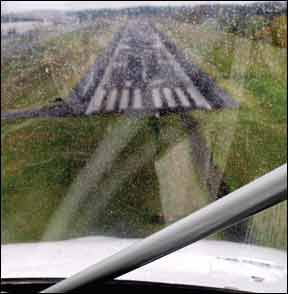
Congratulations. You just spent the last three hours in the clag, smoothly and calmly managing ATC, your GPS navigator and the autopilot while successfully piloting yourself and your passengers from Big City International to Non-Towered Regional for your business meeting. Breaking out on the GPS final, you cancel IFR and switch over to the CTAF to announce your straight-in approach, only to look up to see a Skyhawk-filled windshield. After the few moments of stark terror it takes to dodge the traffic, you slam the mains onto the runway and taxi in, still shaking, wondering what the heck just happened. Where did that guy come from, anyway?
Read More »

Shared Responsibility?

Among the three weather phenomena that get my greatest attention, thunderstorms occupy the top two slots (icing gets the third). It’s not that I’m scared of thunderstorms; rather, it’s that I respect them. I’ve been in them—on the ground—and close enough to them in the air that I understand their power and unpredictable nature. One of the last places I want to be is in an airplane in the middle of one. My main tactic when dealing with thunderstorms is to remain in VMC. I’ll enter IMC, but only if I know what’s on the other side, based mostly on my Mk. I, Mod 1 eyeball. When approaching a group of storms, I’ll maneuver the airplane to ensure what I’m looking at is clear sky and not just some sky-colored cloud hiding an angrier one.

Read More »

Check, Then Doublecheck

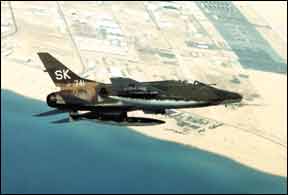
My older brother, Vincent, flying the big airplanes for TWA, had an easily remembered but profound saying: “check and doublecheck.” Basically, it meant to make sure all actions in the cockpit were given a second, or even a third, look, ensuring the proper actions had indeed been made. I vividly remember an occasion when that saying saved my life. I was flying an F-100 on a test mission out of Eglin Air Force Base, dropping some experimental high explosive bombs. One of the bombs did not drop, even though I had sent the release signal. The result was a very hazardous condition, called a “hung bomb.” The bomb might fall off at any time.

Read More »

Cracked, Contaminated

Engine oil was observed dripping out of the port side wing root. The ¼-inch aluminum oil pressure line (p/n 5600107-11) was routed over the top of a section of three-inch SCAT tubing. The SCAT tubing’s wire chafed a hole in oil pressure line. This airplane’s starboard line also was routed the same way and was rerouted to prevent chafing.

Read More »

Going All-Electric

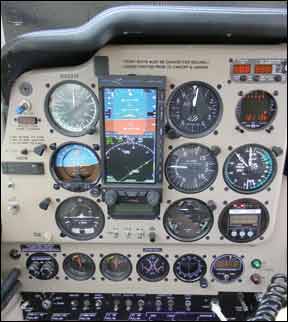
These days, vacuum- or air-pressure-driven instruments in an otherwise glass panel seem like the proverbial fish out of water: All that spiffy new technology parked next to stone-age holdovers. Vacuum/air pumps and the unreliable spinning gyros they feed are pre-WWII technology, heavy and involve problematic plumbing systems. The irony has many owners thinking of removing their air/vacuum system entirely. Though it’s not without its drawbacks—which we’ll get to—going all-electric has several benefits, including weight savings, simplified maintenance and troubleshooting, and elimination of the failure-prone dry pumps and plumbing once and for all.

Read More »

Is It Safe?

Anyone spending much time around personal aircraft sooner or later will be forced to confront the increased risk flying them can entail. It might be after a close call in the traffic pattern, or a rough-running engine without a decent landing area in sight. And we won’t even mention trying to intelligently discuss general aviation safety with a skeptical co-worker, nosy neighbor or unimpressed mother-in-law who’s convinced those little airplanes we fly are deathtraps. The fact is, flying personal airplanes does increase our risk of death or injury. So does engaging in many other activities—skiing, motorcycling, rock climbing, scuba diving—as well as things as mundane as commuting to work or taking a shower. Basically, everything we do carries some risk. Understanding and mitigating those risks is key to our longevity.

Read More »

ATC At The Crossroads

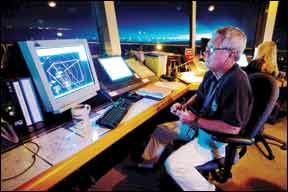
The U.S. air traffic control system is a living, breathing thing, one borne from necessity. As the system has matured, new procedures and technologies have been implemented, and many of those developments have impacted our cockpits. Even so, the men and women who staff the ATC system today perform many of the same basic tasks their predecessors tackled 50 or more years ago. Air traffic continues to grow—the airlines are doing okay, even as GA activity remains relatively flat—so plans are in place for even greater system automation, the Next Generation Air Transportation System, or NextGen. Meanwhile, the controller workforce also is undergoing changes, some of them self-inflicted, but all of them having an impact in our cockpits.

Read More »

Making The Field

I had just been hired to instruct in the manufacturer’s authorized pilot training program for the Beechcraft Bonanza. Part of my orientation was a check flight with Norm, the lead instructor of Bonanza training (whom I was replacing as he moved up the product line). We were in an older A36 about 4000 feet over Anthony, Kan., when he reached over and pulled the throttle, choking off the Bonanza’s tired, TBO-busting IO-520 engine. I immediately found the local airport, pointed the Bonanza toward it, and transitioned to a glide as I stepped through the emergency checklist from memory. Norm declared my restart efforts moot, so I pulled the vernier prop control to the low rpm position and committed to a glide.

Read More »

Revisionism

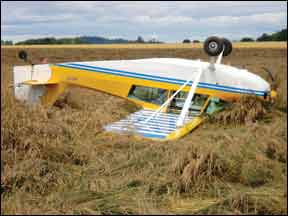
In April’s article, “Using Ground Effect,” you gave a reasonable explanation of it. In May, reader Dave Simpson wanted to correct your “error” and wrote, “Ground effect is almost exclusively caused by reduction of induced drag” and that reducing induced drag allows “us to fly with reduced angle of attack to maintain lift when flying close to the ground.” That’s nice, but what causes reduced induced drag when in ground effect? I think that Mr. Simpson has it backward and your article was correct.

Read More »

Two Forward, One Backward

We all love to bash the FAA, if for no other reason than the agency is so…bashable. Still, our favorite aviation agency also has done a few things right over the years. Its owner-produced parts policy, which allows owners to fabricate comparable but unobtainable components, is a good example. Recently, two other examples of the FAA doing something right came to light, even after initial signs were that it wouldn’t. Sadly, another example arose which, if implemented, appears to be a step backward. The first right item involves inspector authorization (IA) renewals. The IA designation to a technician’s airframe and powerplant certificate means he or she can return to service aircraft after their annual inspection is completed.

Read More »
Pilot in aircraft
Sign-up for newsletters & special offers!

Get the latest stories & special offers delivered directly to your inbox.

SUBSCRIBE