Aviation Safety

Seven IFR Prep Tips

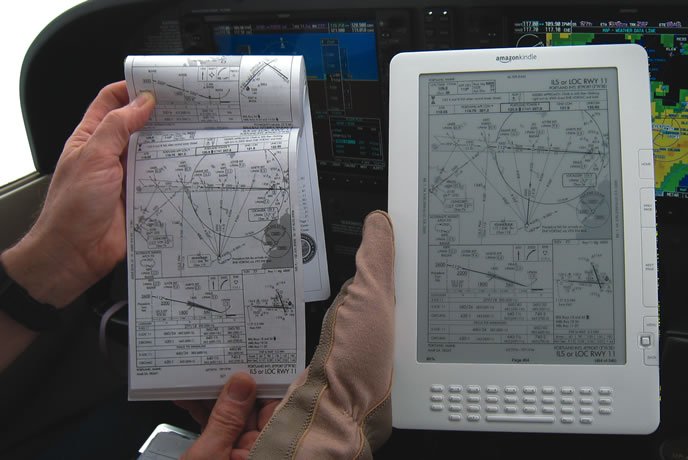
Approach, could you read back the arrival waypoints…we can’t seem to find that arrival….” The request got my attention because it came from the aircraft somewhere ahead of me in the soup of a thick overcast, headed to the same airport. The controller had just warned of a pending change to my arrival plans by changing those of the flight ahead of me. Taking that change as a cue, it was easy to turn to the last plastic-protector page in my little IFR folder—where I’d already inserted the appropriate page. It was less luck than experience, which had tutored me on the likelihood of a traffic conflict with another airport’s arrivals.
Read More »

A Pilot Training Reform Report Card

Two years ago, at AOPA’s Summit in Long Beach, California, both the association and the Society of Aviation and Flight Educators (SAFE) announced pilot training reform efforts. AOPA, alarmed at the pilot dropout rate, focused more intently on student retention while SAFE’s efforts zeroed in laser like on the relationship between training and safety and how poor training may reduce retention and flying activity in general. In the meantime, the NTSB just concluded a study on amateur-built aircraft safety and it focused a two-day forum exclusively on that topic. Two years later, it’s fair to ask: Have we made any concrete improvements in training? The short answer is that SAFE recognized from the outset that training reform would be an evolutionary process, not something that would occur overnight or even over months. The organization made a number of recommendations, including better accident analysis, improved flight training curricula and delivery, and CFI accreditation, to name three. We’ve seen significant progress on some of these issues, but less on others. Here’s a summary of where we stand.

Read More »

Silly Season

Unless you’ve been out flying the last few months, you’re probably aware 2012 is a presidential election year in the U.S. Take away all the posturing, the debates and the incessant television ads, and the average GA pilot is left with…temporary flight restrictions, or TFRs. The fun begins in earnest about the time you read this, with the GOP convention in Tampa, Fla., followed quickly by the Democrats’ confab in Charlotte, N.C. Even if you don’t live near one of those areas, an election-related TFR can pop up near you just about any time. What’s a pilot to do?

Read More »

The Briefers Are Busy

While Dave Higdon’s comment in his article “Blue-Sky Briefings” (March 2012) on “how and why any pilot would fly without a weather briefing defies logic” is self-evident, I would take issue with what I find to be a very counterproductive attitude on the part of numerous briefers over the years. I fly VFR frequently in the western U.S., and, unless it is severe clear, most briefings are prefaced by a standard admonition that “VFR is not recommended” (usually due to mountain obscuration) before the actual briefing has begun. When the briefing is completed and it seems clear to me that VFR is certainly reasonable and safe, I’m made to feel like an idiot when I proceed to file VFR after I’ve just been given a host of reasons not to do so

Read More »

Lack Of Commitment

Failure of a single’s engine is something on which primary students spend a lot of training time. In addition to running the emergency checklist and maintaining control of the airplane, looking for and maneuvering to land on a suitable surface are stressed. Managing the energy stored in altitude and airspeed is but one part of this training; properly performing the emergency checklist is another.

Read More »

Potpourri

A number of notable items have crossed my desk in recent weeks, some of which deserve a few pages of their own, some of which don’t. They all deserve mention, however.

Read More »

May 1, 2012, Three Rivers, Mich. Cessna 172M Skyhawk

The airplane hit a deer as the airplane lifted off after a touch-and-go. The CFI continued the takeoff and established the airplane was controllable. The CFI elected to divert to a nearby airport where emergency services were available, and landed without further incident. The right wing strut and right gear mount were bent and the right side of the fuselage was buckled.

Read More »

May 11, 2012, Rexburg, Idaho Champion 7GC

The airplane was substantially damaged at about 1810 Mountain time when it struck powerlines during a precautionary landing following a loss of engine oil pressure. The pilot/owner and his passenger were not injured. Visual conditions prevailed.

Read More »
Pilot in aircraft
Sign-up for newsletters & special offers!

Get the latest stories & special offers delivered directly to your inbox.

SUBSCRIBE