Aviation Safety

NTSB Reports August 2013: Recent General Aviation and Air Carrier Accidents

At about 0830 Eastern time, the airplane was substantially damaged during a forced landing. The engine lost all power shortly after takeoff. The airline transport pilot sustained minor injuries and a passenger was not injured. Visual conditions prevailed. The pilot reported taking off and climbed to 2500 feet msl when the engine began to vibrate and lose power, and the cabin began to fill with white smoke. The pilot shut down the engine and performed a forced landing to a soy bean field. During the landing roll, the airplane nosed over. The airplane was equipped with a Franklin 6A-350-C1, 220-hp engine. Initial examination revealed the No. 4 cylinder head was partially separated and the No. 4 cylinder piston was displaced.
Read More »

Gear Emergencies

I’ve really only had one landing-gear-related situation in many years of flying retractables. In that event, a brand-new gear motor—installed at annual—failed to extend the gear while airborne after several successful tests on jacks. After an uneventful landing, the motor was repaired and there were no further issues with that airplane or its landing gear system. Between the failure and the uneventful landing, however, the cockpit was a bit busy. Fortunately, the right-seater was a rated pilot and mechanic.

Read More »

Twin Takeoffs

Departing from a 4200-foot runway, the twin engine Beech B60 Duke lifted off after a 1500-foot takeoff roll. The landing gear was immediately retracted but at approximately 100 feet agl, a large puff of black smoke erupted from the left engine. Witnesses stated the airplane pitched up and then banked sharply to the left. At approximately 500 feet agl, the airplane banked 90 degrees to the left in a nose-down attitude, rolled inverted and impacted a building, killing the pilot and passengers. It was a classic VMC rollover accident, resulting from the pilot’s failure to establish and maintain an airspeed equal to or greater than the airplane’s minimum controllable airspeed in one engine inoperative (OEI) flight.

Read More »

Safer By The Hour?

Earlier this year, I passed the magical 1000 hours total time. I suspect I am safer. But whenever I read NTSB reports, they seem to cover the full range of pilot experience, so I have to question that assumption. Am I really safer or am I just likely to perform a different set of stupid pilot tricks to which pilots of my experience are prone? I certainly feel safer than I did at 100 hours, when I was still intimidated with how to enter the pattern at an unfamiliar airport. I also feel safer than I was at 500 hours, when my big concern was being able to fly an approach in actual IMC and how to properly enter a holding pattern using my fresh instrument rating. I know I can do these now, so I am a bit less intimidated.

Read More »

Avoiding Extreme Weather

As anyone who’s paid attention to Central U.S. weather the last few months knows, it’s been a particularly violent spring across “Tornado Alley.” Midwest storms made national news and reintroduced repeat targets—such as Moore, Okla. Well ahead of the storms and far in front of the inevitable miles of destruction images, Americans coast to coast shared ringside seats of the progressing destruction thanks to the coverage of storm chasers who shared real time some of the clearest videos and still images ever made of in-progress tornadoes. Most images came from a large contingent of ground-pounders but, more than ever before, much of the resulting imagery was captured through the efforts of people aboard aerial platforms, whether helicopter or fixed-wing.

Read More »

Master The Rudder

Rudder coordination is vital to stall and spin avoidance, which is where most attention to rudder coordination training is focused today (with good reason). But when you develop a feel for proper rudder input, you’ll not only manage high angles of attack correctly, you’ll also get better aircraft performance all around. Yes, even in the latest airplanes, there is still a need to stress proper rudder use in all phases of flight. If you’re an experienced pilot, you probably recall an instructor in your early days endlessly hounding you to “step on the ball” to coordinate with the rudder.

Read More »

High, Hot, Downwind

Straight and level can be boring, there’s no question about it. Occasionally racking over into a steep bank, or performing the commercial-certificate maneuvers when you don’t have to, are among the ways non-aerobatic pilots can relieve some of the monotony of using an airplane for transportation. For some, it’s all about showing off. Others may just want to challenge themselves, perhaps to see if they can still perform as they did on their checkride. And most of the time, that’s okay—a steep turn or max-performance maneuver every now and then usually won’t have an adverse consequence, presuming the airplane’s limitations are respected.

Read More »

Asiana 214

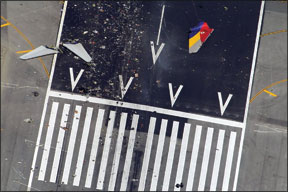
As this is written, the wreckage of Asiana Airlines Flight 214, a Boeing 777 that crashed while attempting to land at the San Francisco (Calif.) International Airport (SFO) on July 6, 2013, is still being examined. The accident was the first on U.S. soil involving a large jet transport since November 2001, and the first accident involving passenger fatalities aboard a U.S. scheduled carrier since 2009. It also was the first involving a fatality aboard a 777.

Read More »

Linkage

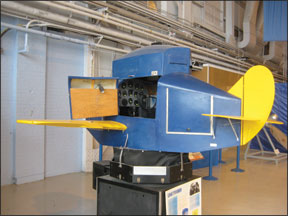
Opening the June 2013 issue, I was met with a lovely bit of nostalgia. The photo of the Link Trainer on page 5 could have been of the unit in which I took my first flight training, the summer of 1967. At the University of Illinois’ Institute of Aviation, I spent two hours in one of these before getting into an aircraft (a Champ 7FC). Over the summer of instruction, we went back to the Link again and again to hone skills. I had 11.2 hours total in the Link, and 30 hours total in the aircraft, when I got my license. I’m not sure how many hours of Link and aircraft time I had before I was allowed to fly visually. Of the 7 hours in the aircraft prior to solo, nearly half were behind polarized glasses and windscreen plastic.

Read More »

NTSB Reports July 2013: Recent General Aviation and Air Carrier Accidents

The pilot departed on a 1+50 cross-country flight with approximately 30 gallons of fuel in each wing tank (approximately 27 gallons usable fuel per side). The flight was uneventful until he started a descent from 8000 feet msl to 3000 feet, when the engine made “two pops” and “quit.” The pilot said there was no engine roughness, “It just stopped.” He made several attempts to restart the engine, but was unsuccessful. The pilot declared an emergency and landed in a field. Upon landing, the nose gear dug into the dirt and separated from the airplane.

Read More »
Pilot in aircraft
Sign-up for newsletters & special offers!

Get the latest stories & special offers delivered directly to your inbox.

SUBSCRIBE