Aviation Safety

On Your Tail

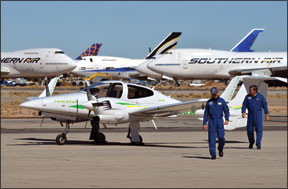
Of all the major components of a conventional airplane, the tail—empennage, if you prefer—may be the least understood. Yes, we generally know it’s there to help balance and stabilize the airplane’s attitude in flight, and to help control yaw and pitch, but that’s often the extent to which we paid attention in ground school. If we were paying more attention, we might have learned airplane tails come in many different shapes and sizes, and can be placed at either end of the airplane. They can be partially or totally omitted from some airplanes, while others might be considered to have more than one.
Read More »

Becoming Your Own Test Pilot

Very few airplanes get precisely “book” performance. Some do better, some don’t quite meet the specs. Meanwhile, common piloting techniques differ from those recommended by the pilot’s operating handbook (POH) or airplane flight manual (AFM). It’s up to you to determine what is “normal” for your airplane, and the way you fly it. To learn what even a type-certificated airplane will truly do and when, you need to test-fly the airplane. For a time, I was the lead instructor for Beechcraft Bonanza training for an international flight safety organization working at the Beech factory airport. Part of the training we provided included flight in the customer’s airplane. One of the items on the flight training syllabus was to show different flying techniques, and compare actual performance received to that predicted by the POH.

Read More »

In The Valleys Of Good And Evil

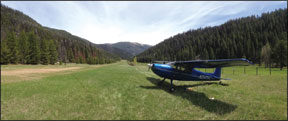
As long as you’re not worried about engine failure, the safest altitude is one that keeps you absolutely clear of terrain. The FAA has created a whole suite of acronyms to do this: Minimum sector altitude (MSA), minimum obstacle clearance altitude (MOCA), offroute obstacle clearance altitude (OROCA) are some examples. These acronyms and the numbers that go with them are designed to keep you above the rocks.

Read More »

Prepping For Your IPC

Maintaining your IFR currency isn’t that hard. Just fly and log in actual or simulated conditions six instrument approaches, “holding procedures and tasks” and “intercepting and tracking” electronic courses within the preceding six months, and you’re golden. Even if you find yourself slightly out of currency in the 11th month, you can go out with a safety pilot and fly the requisite approaches/holds/intercepts, regaining your ability to legally file and fly IFR. But after 12 full months of being out of IFR currency, you’ll need an instrument proficiency check, or IPC. There was a time, before the most recent revisions to FAR 61, when an IPC—previously known as an instrument competency check—wasn’t structured. That’s no longer the case.

Read More »

Losing The Flick

The Flick,” the big picture, is how situational awareness often is described. As short descriptions go, it’s a good one. The big picture can mean different things to different people, of course, but it generally breaks down into knowing where you are, where you’re going, what it’s going to take to get there and whether the resources to complete the flight are available. The resources can be any number of things. In particular, they usually boil down to keeping tabs on fuel, weather and terrain. Lose the flick on either one of these three, and you could find yourself in these pages.

Read More »

A Tale Of Two Flights

The thing with postponing or canceling a flight? One is sometimes left with a nagging feeling that maybe they could have made it and everything would have been fine. But, one then realizes that they’ll never know. Until now. I was supposed to fly home to San Jose, Calif., from Yerington, Nev. The route takes one just north of Topaz Lake and a few miles south of Lake Tahoe. The terrain is rugged and the area southwest of the Pine Nut Mountains is almost always bumpy. I called Flight Service for a briefing and got the news I expected: Winds of 60 to 70 knots were blowing out of the northwest and Airmet Tango was in effect.

Read More »

Resistance

The aircraft was descending when the pilot heard a loud “pop” from the copilot windshield (p/n 10138402522), which visual inspection revealed had cracked and shattered. Pilot requested “priority handling” and was informed he would be #6 for the runway. Due to factors such as night flight, unknown damage to copilot windshield and poor weather, the pilot declared an emergency and again requested priority handling, followed by an uneventful landing. Post-flight inspection revealed no obvious signs of foreign impact.

Read More »

The Coming Airman Certification Standards

The practical test standards (PTS) spell out the requirements for successfully completing an FAA checkride for pilot certificates and ratings. They have been around for nearly 30 years and, while an improvement over the previous flight test guides, they did not fundamentally alter the manner in which the applicant demonstrates compliance with the regulations. The general aviation community and FAA are developing a new concept of airman testing that will be embodied in completely new airman certification standards (ACS). The ACS, when implemented, will require applicants to integrate their knowledge, skills and risk management proficiency to demonstrate to the examiner they can do more than just perform standard training procedures and maneuvers.

Read More »

Camel, Meet Tent

Recent rants in this space discussed the FAA’s role in Washington’s ongoing budget battles and, especially, proposed low-activity tower closures. After a couple of weeks of air traffic slowdowns brought on by ATC staffing furloughs and primarily affecting airline passengers in the northeast, Congress demonstrated it can move quickly: It passed a measure basically exempting the FAA—but no other agencies—from the sequestration process and allowing it to move its money around to eliminate ATC slowdowns. So far, the FAA’s actions haven’t had a widespread impact on general aviation. That could change.

Read More »

More On Gadgets

The June 2013 edition of Aviation Safety arrived today. In Unicom, there is a question about gadget legality. You correctly quote FAR 91.21 (technically, 14 CFR 91.21) as saying that PEDs are legal on all non-commercial VFR flights and that the pilot in command makes the determination in non-commercial IFR operations. But more than one federal agency makes rules about electronics. The Federal Communication Commission makes a very clear statement prohibiting cellular telephone use aboard airborne aircraft. 47 CFR 22.925 states: “Cellular telephones installed in or carried aboard airplanes, balloons or any other type of aircraft must not be operated while such aircraft are airborne (not touching the ground).

Read More »
Pilot in aircraft
Sign-up for newsletters & special offers!

Get the latest stories & special offers delivered directly to your inbox.

SUBSCRIBE