Learning Experiences

Three Out Of Four

As a 1700-hour pilot with what I consider a set of prudent and safe practices, I knew my initial 10-hour engine break-in flights would be VFR-only. Certainly, there was no reason to take chances. After liftoff on my second hour of break-in flights, I reported in to our local tower to make them aware I was out there flying around their Class C airspace, near Lexington, Ky. As I reported my altitude, 3000 feet, and well below the cloud deck, the friendly controller politely responded, “We show your Mode C as 2400.”

Read More »

Get Down, Slow Down

I am an active pilot with Pilots ‘N Paws, and was returning home to Wilkes-Barre, Penn., in my Piper Lance filled with dogs bound for their foster homes. The flight was progressing normally until we started picking up some trace icing at 7000 feet, so we elected to climb to 11,000 to find clear air and shed any ice. Without a turbocharger, I was not surprised to see the manifold pressure resting at 21 inches at 11,000 feet. But as I leveled off at 5000 approaching home plate, manifold pressure remained at 21 inches instead of returning to the 24 inches expected.

Read More »

Snap, Crackle, Pop

The air was cool and the skies clear as my wife and I flew the return trip from Albuquerque to our home in California at 10,500 feet. Approaching Flagstaff, I noticed a cracking and popping sound coming through my primary radio. It was a new GPS/Comm unit and I wondered what could be interfering. It was annoying, but wasn’t really a big deal—or so I thought. Soon, I called Albuquerque Center but received no reply. I tried several times but was unable to establish contact. My only explanation was the mountainous terrain.

Read More »

Check, Then Doublecheck

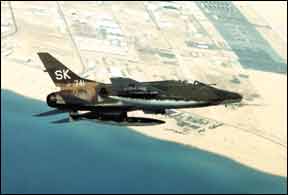
My older brother, Vincent, flying the big airplanes for TWA, had an easily remembered but profound saying: “check and doublecheck.” Basically, it meant to make sure all actions in the cockpit were given a second, or even a third, look, ensuring the proper actions had indeed been made. I vividly remember an occasion when that saying saved my life. I was flying an F-100 on a test mission out of Eglin Air Force Base, dropping some experimental high explosive bombs. One of the bombs did not drop, even though I had sent the release signal. The result was a very hazardous condition, called a “hung bomb.” The bomb might fall off at any time.

Read More »

Small Print Giveth, Too

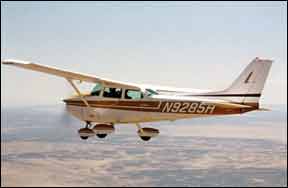
My Learning Experience has almost nothing to do with a near-death event and everything to do with knowing the FARs and understanding how they often can be used to our advantage when the chips are down. I was helping close friends who were preparing to ferry their cherry 172 from the east coast to their new home on the west one. Owing to their move, the airplane had been sitting for a few months, and needed some attention before it could be flown. The shop had taken its time, resulting in the airplane finally being ready the afternoon before their scheduled departure. I volunteered to do the post-maintenance check flight from the towered airport.

Read More »

Open-Door Policy

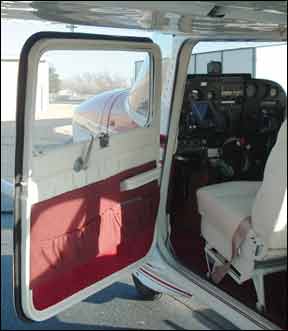
My earliest aviation-related learning experience came years before I earned my private certificate, or even soloed. I was a passenger in a Cessna 182 Skylane my father rented for a business trip to central Missouri. I dont remember all the details, but I was probably in elementary school, so it likely was during the summer. At the time, I was too young to see over the Skylanes seemingly massive instrument panel. We were droning along on the flight home, minding our own business, with my father flying from the left seat and me in the right, when a sudden rush of air and noise announced the pilots-side door had sprung open.

Read More »

DenAlt Denial

Today, Im flying as PIC aboard a Citation II air ambulance, with another captain as my co-pilot. We carry a nurse, medic and enough equipment to handle any critical-care situation. Every flight requires weight and balance calculations based on actual weights, checking weather to not only confirm its flyable, but is comfortable for a patient on a life port and allows the medical crew to work on the patient in flight. Temperature considerations for power settings and takeoff/landing distances are critical, and a constant eye on changing weather conditions goes without saying. Although we train in our primary lessons on weight and balance, and how temperature and altitude play on the performance of our airplanes, we tend to rush through those calculations when we fly the same plane all the time.

Read More »

Off The End

An aspiring pilot hanging out with other pilots will, from time to time, find him or herself riding shotgun with another, similarly afflicted individual. This is as it should be, since misery loves company. Since the person in the left seat for these flights often has more hours and experience than us, well often defer in-flight decisions or fail to speak up when we notice something amiss. Thats the wrong reaction. My first learning experience as a right-seater came shortly after earning my private. Suddenly, I was a senior member of the local Civil Air Patrol (CAP) composite squadron and there was a for-real search-and-rescue mission on.

Read More »

A Tank Too Far

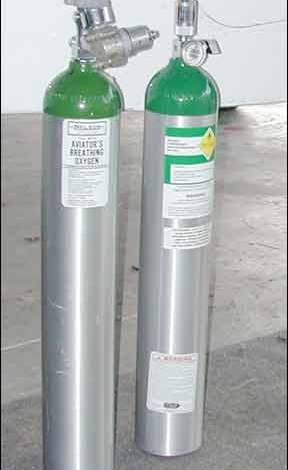
Although my airplane doesnt have a turbocharger, I regularly cruise at altitudes where supplemental oxygen is either required or strongly advised. My personal rule is to use it when above 10,000 feet msl for longer than an hour, or anytime at or above 12,500 feet. Thats during the day; at night, I use it when cruising above 8000 feet. But for the solo flight in question, I planned to be at or below my oxygen altitudes. Although I had a full bottle aboard the airplane, it was buried in the baggage area, under all the gear I needed for my two-week business trip.

Read More »

One Wing Wet

Like so many things in aviation, there are procedures for launching into IMC from a non-towered field: File a flight plan, get a clearance, then take off and fly the clearance. Things can get exciting if you get these steps out of order. Before a recent flight, I checked every available scrap of weather info. Nearby observations were reporting decent VFR, but weather at my rural strip appeared fairly low, with undefined visibility.

Read More »
Pilot in aircraft
Sign-up for newsletters & special offers!

Get the latest stories & special offers delivered directly to your inbox.

SUBSCRIBE